
Introduction
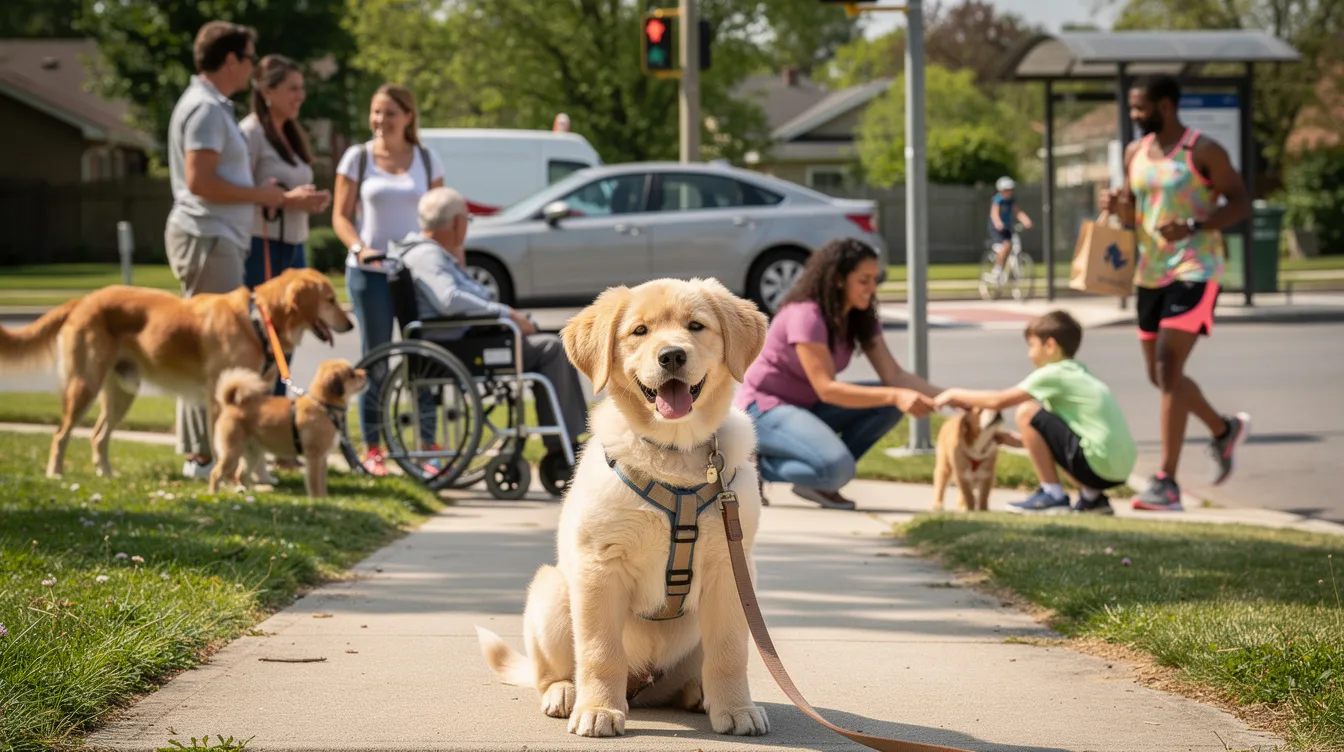
A puppy socialization checklist is a structured, evidence-based tracking tool that guides you through 100+ positive exposures your new puppy needs during the critical 8–16 week developmental window. This checklist covers interactions with people, other dogs, other animals, environments, sounds, surfaces, and handling procedures-systematically building the confidence your pup needs to become a well-adjusted adult dog.
This guide is designed for dog owners in the Phoenix metro area who want to give their puppy the strongest behavioral foundation possible. It covers what to expose your puppy to, how to do it safely, and how to track progress-but it does not replace professional training or behavior modification for existing issues. The distinction matters: socialization creates the emotional baseline that makes all future training more effective.
A puppy socialization checklist is a systematic tool ensuring puppies experience diverse stimuli-people, animals, sounds, surfaces, and environments-during their critical developmental window to prevent fear, anxiety, and aggression later in life. Socialization helps puppies build positive associations with new experiences, and high-quality socialization is more beneficial than sheer quantity.
By following this checklist, you can expect:
- A confident, calm adult dog comfortable in varied real-world situations
- Substantially reduced fear responses, reactivity, and aggression
- Better adaptability to novel environments and unexpected stimuli
- A stronger bond and clearer communication between you and your dog
- A solid foundation for advanced training, off-leash obedience, and therapy dog work
Understanding Puppy Socialization
Puppy socialization is the deliberate, controlled exposure of young dogs to a wide variety of stimuli during the period when their brains are most receptive to new experiences. It goes far beyond simply meeting strangers or playing with other dogs-it encompasses everything from walking on unfamiliar surfaces to hearing babies crying, from being handled by a vet to encountering electric scooters on a sidewalk. Done in a positive way, socialization shapes the neurological pathways that determine how your dog responds to the world for the rest of its life.
Incomplete socialization increases behavioral problems in dogs-dramatically so. A population study of approximately 6,000 pet dogs found that poor socialization, low activity, and urban living significantly increased odds of social fearfulness toward strangers and other dogs. Behavioral issues are the leading cause of death for dogs under three, largely because fearfulness, aggression, and anxiety lead to relinquishment or euthanasia. Positive experiences during socialization lead to calm and confident adults, making early exposure one of the most powerful investments you can make in your puppy’s future.
The Critical Socialization Window
The critical window for effective puppy socialization is up to 16 weeks of age. Dogs are most receptive to socialization between 3 weeks and 4 months, with the period of highest neural plasticity peaking between 8 and 12 weeks-the exact time most owners bring their new puppy home. Classic research by Freedman, King, and Elliot (1961) demonstrated that puppies removed from broader social exposure before 14 weeks developed severe withdrawal from humans, and recovery was not possible if key exposures were missed. Puppies should be socialized before 12 weeks old for the strongest effect, and socialization should occur before puppies are 18 weeks old at the latest.
This window coincides with naturally occurring fear periods-often around 8–11 weeks and again during adolescence. Understanding this timing is essential: introducing puppies to different things during the receptive phase builds resilience, while missing the window leads to a dog that defaults to fear, avoidance, or aggression when facing anything unfamiliar. UC Davis veterinary behaviorists recommend aiming for approximately 90 distinct, pleasurable exposures by 14 weeks.
Positive Association Building
The mechanism behind effective socialization is positive association building: pairing each new experience with treats, praise, and play so the puppy’s brain encodes the stimulus as safe and rewarding rather than threatening. Use treats to create positive associations with new experiences-every time your pup encounters something novel and receives a reward in a calm environment, you’re writing a positive entry into their emotional memory.
This matters because the opposite-a negative association-can be remarkably durable. A single overwhelming encounter with a loud noise, a rough stranger, or an aggressive dog can create a fear response that takes weeks or months of professional behavior work to address. Positive reinforcement is crucial during puppy socialization. The goal is not simply to expose your puppy to as many things as possible, but to ensure that every exposure registers as safe, fun, and rewarding. When done correctly, this creates an adult dog that approaches the world with curiosity rather than anxiety, setting the stage for the specific categories of systematic exposure covered next.
Essential Socialization Categories
With the foundation of positive associations in place, it’s time to break socialization into actionable categories. Established checklists like Preventive Vet’s “100 Things in 100 Days” and guidelines from the American Veterinary Society of Animal Behavior organize exposures into distinct groups. Puppies should experience 100 different stimuli by 100 days old, spread across six core areas. Here’s what to cover in each.
People Exposure (25+ Experiences)
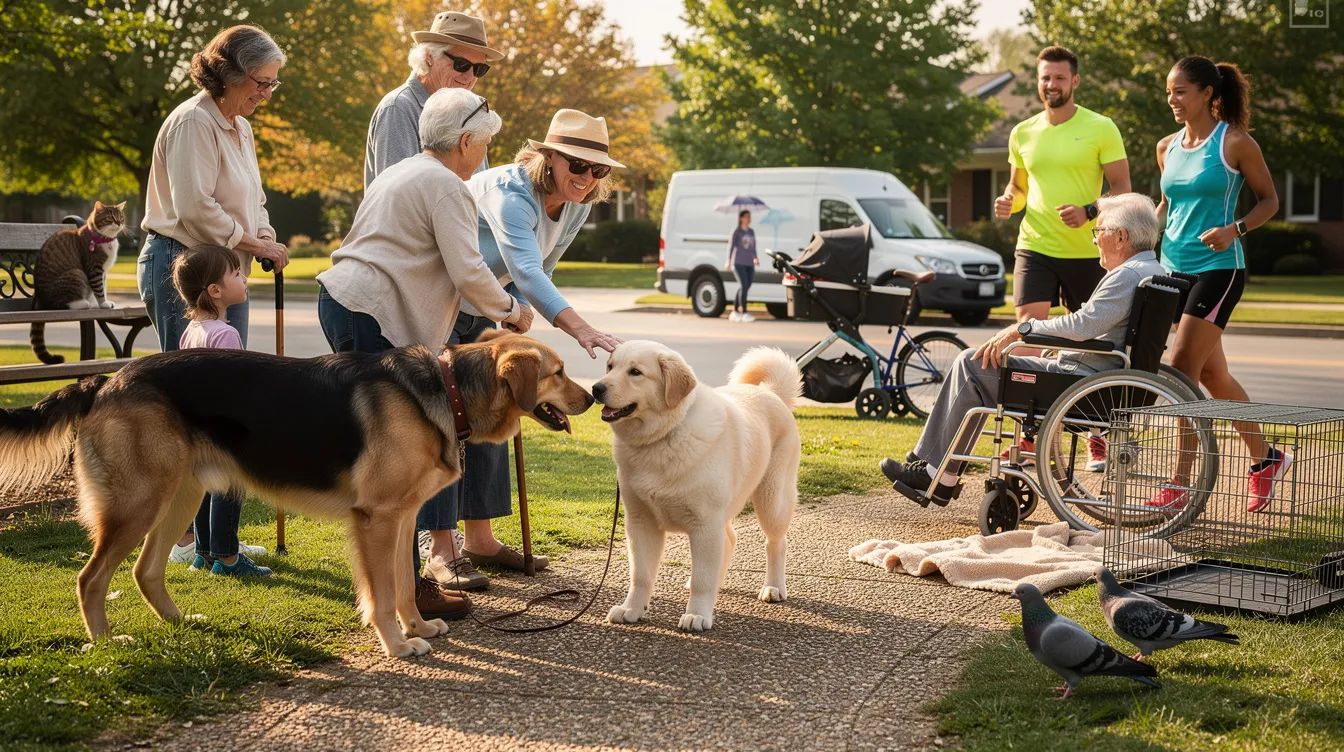
Puppies should meet different people and animals gradually, and the “people” category is where most checklists start. Your pup needs to interact with individuals of varying ages-toddlers, children, teenagers, adults, and elderly people. Include people of different ethnicities, genders, and body types. Expose your puppy to people wearing hats, sunglasses, hoodies, uniforms, and high-visibility vests. Don’t forget people using mobility aids like wheelchairs, walkers, and canes.
Specific experiences to check off include:
- Delivery workers approaching the front door
- Veterinary staff handling and examining your pup
- Strangers on walks offering treats with permission
- People with facial hair, loud voices, or unusual gaits
- Children running, laughing, and playing nearby
- Babies in strollers (expose your puppy to the sounds of babies crying at very low volume first)
- A person carrying plastic bags, umbrellas, or large boxes
In Phoenix, the cultural diversity of the metro area makes it feasible to introduce your puppy to a wide range of new people across neighborhoods, parks, and pet-friendly businesses.
Environmental Diversity (30+ Locations)
Introduce puppies to various environments like parks and stores to build broad environmental confidence. Socialization should be tailored to the puppy’s future environment-in the Phoenix area, this means accounting for desert terrain, extreme heat, and monsoon season alongside standard urban and suburban settings. Introduce puppies to various surfaces like grass, tile, gravel, sand, metal grates, carpet, and hardwood.
Key environments to visit:
- Busy urban sidewalks and quiet residential streets
- Pet-friendly stores and shopping centers
- Veterinary clinics (for happy visit socialization, not just when your pup is sick)
- Training facilities (consider scheduling a puppy training consultation to combine socialization with early learning)
- Parks, both busy and quiet
- Different rooms and floor types inside your home
- Cars, for short rides building up to longer trips
- Covered patios, parking structures, and outdoor dining areas
For Phoenix specifically, plan outdoor exposure during early morning or late evening to avoid dangerous pavement temperatures. Indoor environments like air-conditioned pet stores and training centers are great options during midday heat.
Sound Desensitization (20+ Audio Stimuli)
Introducing puppies to different sounds should begin at a low volume and gradually increase as your pup shows relaxed body language. Early exposure to household noises helps puppies adjust to their environment and prevents sound-based phobias that are among the most common behavioral problems in adult dogs.
Household sounds to cover:
- Vacuum cleaner, blender, hair dryer
- Doorbell, phone ringing, smoke alarm
- Washing machine, dishwasher, electric clippers
Environmental and outdoor sounds:
- Traffic noise, sirens, motorcycles
- Construction sounds, leaf blowers
- Thunder and monsoon rain (very relevant in Phoenix’s summer storm season)
- Fireworks (start with sound recordings at very low volume)
- Other dogs barking at varying distances
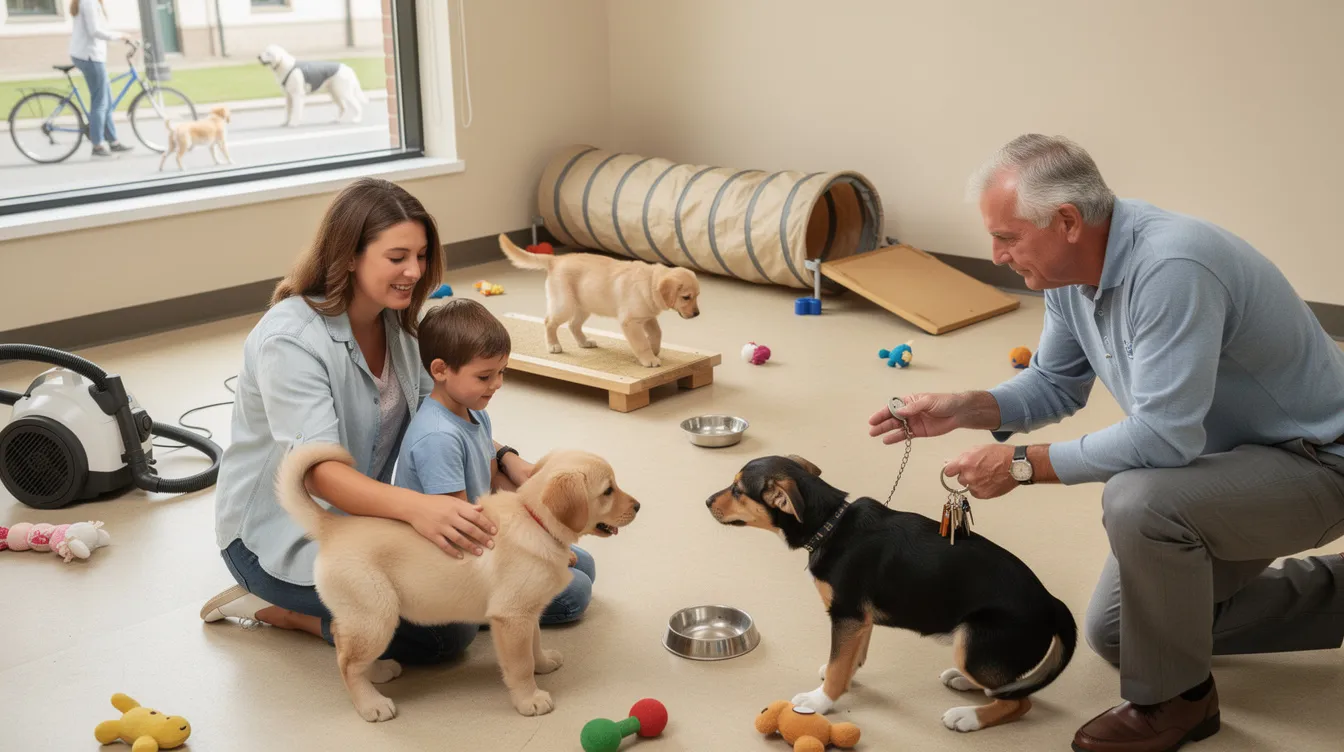
Use sound recordings played at low volume through speakers to introduce sounds you can’t control in real life-like fireworks or thunder-in a controlled environment. Pair every sound exposure with high value treats and praise. Gradually increase volume only when your pup remains calm and shows no stress signals.
With these categories mapped out, the next step is turning them into a daily practice you can maintain consistently throughout the socialization window.
Step-by-Step Socialization Implementation
Building on the categories above, effective socialization requires a structured daily approach. It’s not enough to know what to expose your puppy to-you need a reliable method that keeps sessions positive, short, and safe. Socialization should happen at the puppy’s pace to avoid stress, and monitoring a puppy’s body language is essential during socialization.
Daily Exposure Protocol
Follow this protocol each day during your puppy’s critical socialization window:
- Choose 3–5 new experiences from your checklist categories. Limiting daily novelty prevents your pup from becoming overwhelmed and ensures each exposure gets the attention it deserves.
- Start at a distance. When introducing your puppy to a new stimulus-whether it’s a person on a skateboard or a busy intersection-begin from far enough away that your pup notices but doesn’t react with fear. Puppies should not be forced to stay near frightening stimuli.
- Use high value treats generously. The moment your puppy notices the new stimulus, deliver a treat. Pair every new sound, person, surface, or environment with food, praise, or play to create positive associations.
- Keep sessions short-5 to 10 minutes per new experience. End on a positive note before your puppy shows stress. If your pup is happily engaged, that’s when to stop.
- Read body language continuously. Watch for stress signals like lip licking, yawning, crouching, trembling, whale eye, or freezing. These tell you to increase distance, reduce intensity, or end the session.
- Track progress daily using a checklist format. Grade each exposure: “Loved it,” “Neutral,” or “Fearful.” This reveals which categories need repeated, gentler work and which your puppy has mastered. Understanding the right age to start training helps frame this daily tracking within your puppy’s broader developmental timeline.
Consistency matters more than volume. A pup that has five well-managed, positive exposures per day will develop far more confidence than one dragged through twenty overwhelming experiences in a weekend.
Safety Considerations Comparison
One of the most common dilemmas facing puppy owners is balancing socialization with vaccination safety. Socialization should occur before puppies are fully vaccinated-veterinary behaviorists, including the American Veterinary Society of Animal Behavior, affirm that the behavioral risk of delayed socialization typically outweighs the infectious disease risk when proper precautions are taken. However, dog parks can expose unvaccinated puppies to contagious diseases, so controlled environments are essential.
| Activity Type | Pre-Vaccination (8–12 weeks) | Post-Vaccination (16+ weeks) |
|---|---|---|
| Puppy classes (sanitized facility) | Safe with proof of initial vaccines and deworming | Fully safe |
| Public sidewalks/parks | Carry your pup; avoid ground contact in high-traffic dog areas | Walk freely on leash |
| Meeting other dogs | Only with fully vaccinated, healthy dogs in secure spaces | Broader interaction safe |
| Pet-friendly stores | Safe if carried or in cart; avoid floor in busy stores | Walk on leash freely |
| Handling/grooming practice | Fully safe at home | Fully safe anywhere |
| Sound/environmental exposure at home | Fully safe | Fully safe |
| Dog parks | Avoid-high disease risk for unvaccinated puppy | Use with caution; monitor interactions |
Puppies should only be taken to public places after completing vaccinations for unrestricted ground access, but controlled environments can prevent overwhelming the puppy during socialization while still delivering critical exposure. Puppies can be exposed to vaccinated dogs in secure spaces even before their full vaccine series is complete. Socialization can include meeting other animals like vaccinated dogs and cats in controlled settings. For Phoenix owners, many local training facilities and board and train programs maintain strict biosecurity protocols that make early enrollment both safe and beneficial.
Common Challenges and Solutions
Even with the best checklist and intentions, Phoenix area puppy owners encounter obstacles. Here’s how to handle the most frequent ones.
Puppy Shows Fear or Stress During Exposure
If your pup shows fear-crouching, tucking tail, lip licking, trembling, or trying to flee-do not push through. Increase distance from the stimulus immediately and use higher-value treats (real meat, cheese) to rebuild a positive association from the safer distance. Break the experience into smaller steps over multiple sessions. For example, if your puppy is fearful of walking past a construction site, start a full block away and reward relaxed body language, then gradually close the gap over several days. Puppies should not be forced to stay near frightening stimuli; forcing exposure creates a negative association that is far harder to undo than simply going slower.
If fear responses are persistent across many categories, consider consulting a professional who specializes in animal behavior and early puppy development. Incomplete socialization increases risk of fear and aggression later, and a trainer can help you identify whether your pup’s reactions are within normal range or require more targeted intervention.
Limited Socialization Opportunities Due to Vaccination Schedule
This is one of the most common concerns, and it has a clear solution. Focus on “carry socialization”-hold your puppy or place them in a stroller or carrier while walking through new environments. Your pup still sees, hears, and smells the world without ground contact in high-risk areas. Use sound recordings at home to introduce thunder, fireworks, traffic, and other sounds at low volume. Let your puppy observe the world through windows and screen doors. Enroll in structured puppy classes that require vaccination proof and maintain sanitized floors. Puppies should experience new things before 18 weeks old, so waiting for full vaccination to begin all socialization is not recommended by any major veterinary behavior organization.
Overwhelming Puppy with Too Many New Experiences
More is not always better. Limit new experiences to 3–5 per day maximum. Watch for stress signals like excessive panting, loss of appetite, loose stool, or sudden disinterest in food and play. If your puppy seems overwhelmed, scale back to just one or two gentle new exposures per day and increase the amount of calm, familiar space in between sessions. Quality experiences in socialization are more beneficial than sheer quantity-a puppy that has three genuinely positive encounters will develop more confidence than one who had ten stressful ones.
Handling and grooming acclimatization is important for future veterinary visits, but this is an area where owners often push too fast. Start by simply touching your puppy’s paws, ears, mouth, and tail during calm moments at home, pairing each touch with a treat. Gradually progress to simulating a vet exam, introducing a harness, and practicing nail trimming with electric clippers or manual trimmers-always at your pup’s pace.
For puppies who continue to show behavioral problems or fear-based responses despite consistent socialization efforts, professional guidance on managing aggression can prevent issues from escalating into adolescence and adulthood.
Conclusion and Next Steps
Consistent socialization during the 8–16 week critical window prevents most behavioral problems that lead to rehoming, relinquishment, and euthanasia in dogs under three years old. The Texas A&M Dog Aging Project found that 99.12% of surveyed dogs exhibited at least one moderate or severe behavior issue-aggression in 55.6%, separation or attachment issues in 85.9%, and fear or anxiety in approximately 49.9%. Socialization prevents behavioral problems in dogs under three years old and is the single most cost-effective behavioral investment you can make.
Your immediate next steps:
- Download or create a printable checklist with 100+ items across all six categories (people, other animals, environments, sounds, surfaces, handling). Use Preventive Vet’s model or create your own.
- Schedule a puppy evaluation with a qualified trainer to assess your pup’s current socialization level and temperament. A puppy training consultation can give you a customized plan based on your puppy’s breed, age, and living situation.
- Begin daily tracking immediately. Record every exposure, grade your puppy’s reaction, and identify gaps weekly. Puppies are most receptive to socialization between 3–4 months old-every day counts.
- Plan your socialization routes. Map out Phoenix-area locations you can visit safely at different times of day, accounting for heat and monsoon season.
As your pup matures past the socialization window, the confidence you’ve built becomes the platform for basic and advanced obedience work, distraction-proof off-leash training, and even therapy dog certification. Well-socialized puppies learn faster, generalize skills more readily, and require less remedial behavior work as they grow. Understanding why adolescent dogs misbehave becomes much less relevant when the socialization groundwork is solid.
Additional Resources
- Printable checklist: Use the Preventive Vet “100 Things in 100 Days” checklist as a starting template, customizing it for Phoenix-specific stimuli like desert terrain, monsoon sounds, and extreme heat precautions
- Veterinary socialization guidelines: UC Davis Puppy Socialization provides science-backed protocols including vaccination-safe socialization strategies
- Sound desensitization tools: Play recorded thunder, fireworks, traffic, and household appliance sounds at very low volume through speakers, gradually increasing as your puppy shows relaxed body language
- Phoenix-area puppy-friendly locations: Pet-friendly stores, covered parks with early-morning access, air-conditioned training facilities, and veterinary clinics offering “happy visits” for socialization purposes
- Professional support: For puppies showing persistent fear, reactivity, or early aggression signs, schedule a puppy training consultation to get a professional assessment before the critical window closes
