
Introduction
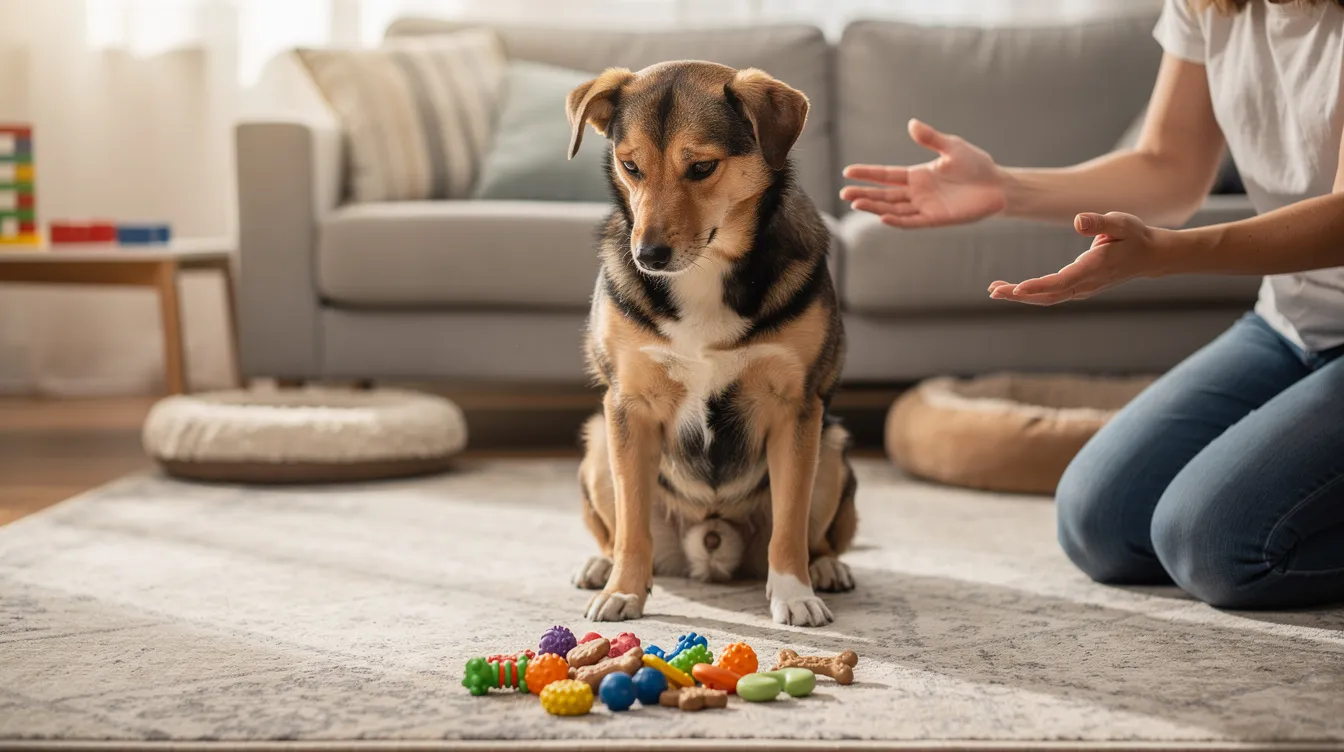
Impulse control games are structured activities that teach dogs to pause, think, and choose calm behavior instead of reacting on instinct. Whether your dog jumps on guests, steals food off the counter, bolts through open doors, or pulls relentlessly on the leash, these games address the root cause: a lack of self-regulation skills. Impulse control training helps dogs make better decisions by rewarding patience and thoughtful responses rather than impulsive reactions.
This guide covers 12 specific impulse control games organized into three categories-food-based, movement-based, and play-based-suitable for dogs of all ages and breeds. It’s designed for dog owners dealing with everyday impulsive behaviors and looking for a fun way to build better habits at home. While we’ll touch on progressive training protocols, this article focuses on practical games you can start today rather than advanced behavior modification for serious aggression or anxiety disorders.
Effective impulse control games teach dogs to pause and choose calm behavior. The core idea is simple: your dog learns that self-control unlocks rewards-whether that’s a treat, a toy, access to the outdoors, or the chance to play. Impulse control games can be played with toys or treats, and they work because they transform everyday moments into learning opportunities.
Here’s what you’ll gain from this article:
- 12 proven games across three categories to teach your dog patience and self-regulation
- A step-by-step protocol for progressing from beginner to advanced distraction levels
- Solutions to common challenges like low food motivation, over-excitement, and inconsistent results
- Science-backed understanding of why these games work and their real-world limitations
- A foundation for advanced training, including off-leash reliability and distraction-proof obedience
Understanding Impulse Control in Dogs
Canine impulse control refers to a dog’s ability to inhibit unwanted behaviors-to stop, consider the situation, and choose an appropriate response rather than acting on immediate drives. It’s sometimes called motor inhibition, emotional regulation, or delayed gratification. Impulse control is essential for polite dog behavior, and it goes beyond simple obedience. A dog that “knows” sit but still lunges at squirrels hasn’t developed the internal self-regulation to apply that knowledge under pressure.
This distinction matters because impulse control training integrates routine activities into learning opportunities. It builds the mental muscle your dog needs to respond reliably in real-world situations-exactly the kind of distraction-proof obedience that separates a well-trained dog from one that only listens in quiet rooms.
Why Dogs Struggle with Impulse Control
Dogs are instinct-driven animals. Chasing movement, grabbing food, greeting enthusiastically-these behaviors served their ancestors well but create friction in domestic life. When your dog jumps on a visitor, it’s not being “bad.” It’s following a deeply wired social greeting impulse without the self-control to moderate the response.
Poor impulse control connects directly to the most common behavioral complaints: a dog that struggles with door bolting, leash reactivity, food snatching, counter surfing, and inappropriate jumping. In more serious cases, impulsivity contributes to reactive aggression and difficulty around other dogs. Most dogs aren’t acting out of defiance-they simply haven’t learned that waiting and choosing calm behavior leads to better outcomes.
The Science Behind Impulse Control Training
Impulse control training works by repeatedly reinforcing the inhibition of a strong drive-food, movement, excitement-and rewarding the choice not to act impulsively. Over time, this builds neural pathways involving the prefrontal cortex, the brain region responsible for decision-making and inhibition. Research on delay of gratification in dogs shows that dogs can learn to choose a larger reward later over a smaller reward now, and that this capacity improves with training history.
However, recent science reveals an important limitation. A 2026 meta-analysis found that dogs’ performance on one impulse control task often didn’t correlate strongly with performance on another. A dog that waits patiently at a food bowl might still rush through doorways. This means you need to practice impulse control across multiple contexts and game types rather than assuming one game will fix everything. That’s precisely why this article covers 12 different activities across three categories.
With that foundation in place, let’s get into the specific games that build these skills.
Essential Impulse Control Games by Category
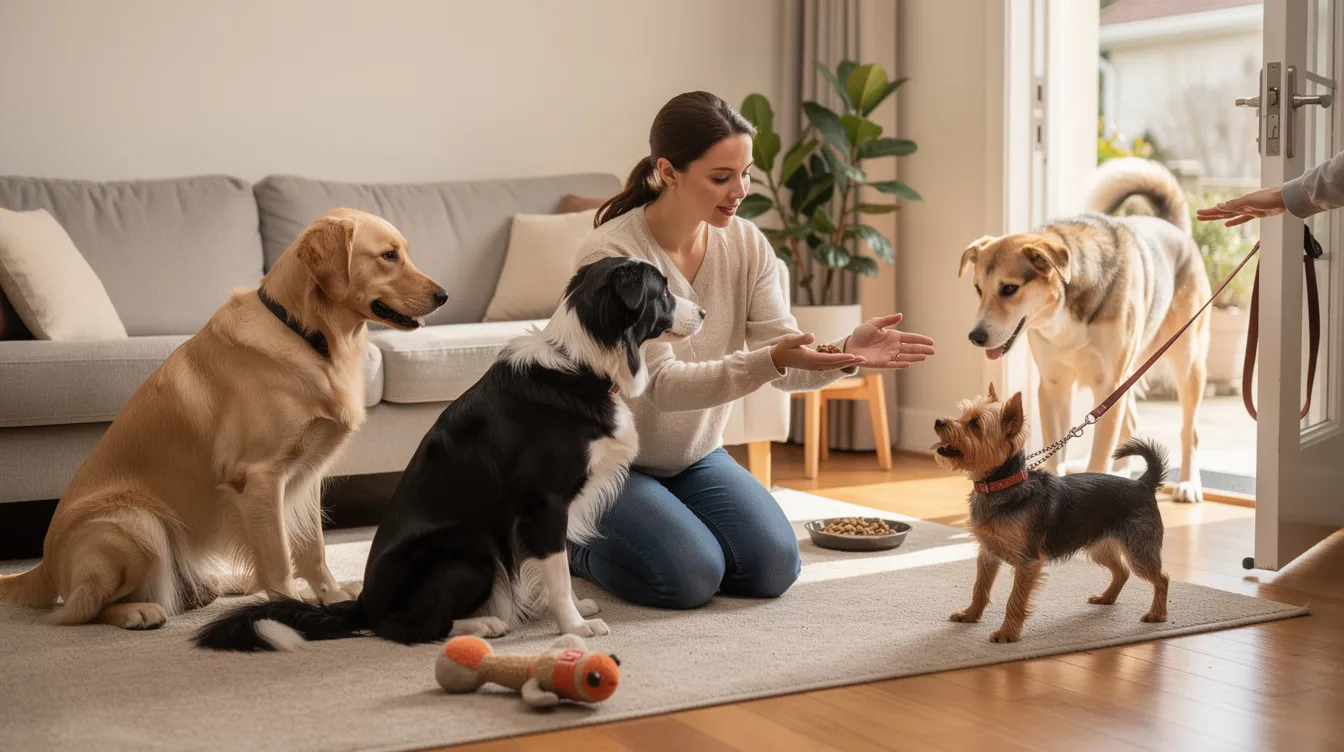
The games below are organized into three categories based on the primary drive they engage: food motivation, movement impulses, and play arousal. Gradually increasing challenge levels in games helps dogs build self-control, so each category starts with simpler exercises and progresses toward more demanding ones. Impulse control games improve dogs’ self-discipline through fun activities-and the variety keeps training engaging for both you and your dog.
Food-Based Control Games
Food-based games are often the easiest starting point because most dogs are naturally motivated by treats and meals. These exercises teach patience, delayed gratification, and the ability to disengage from temptation.
1. It’s Yer Choice (Closed Fist Game): The game “It’s Yer Choice” teaches dogs that self-control unlocks rewards. Hold a treat in a closed fist at your dog’s nose level. Your dog will likely lick, paw, and nudge your hand. The moment the dog moves away or makes eye contact, open your hand and deliver the treat. Using a closed fist treat helps dogs learn patience and self-control. Once your dog reliably backs off the closed fist, progress to an open hand; if the dog moves toward it, close your fist again. This great game teaches the foundational concept that calm choices earn rewards.
2. Leave It: The “Leave It” game encourages dogs to look away from temptations. Place a low-value treat on the floor and cover it with your foot or hand. Wait for your dog to disengage-look away, sit, or make eye contact with you. Mark that moment and reward from your other hand (not the floor treat). The “Leave It” command can be taught using low-value items first, then gradually increase difficulty with higher-value food. This game directly reduces food snatching behavior and counter surfing.
3. Wait at the Food Bowl: Teaching dogs to wait before meals reinforces impulse control during feeding. As Pat Miller describes in Whole Dog Journal, hold your dog’s food bowl at shoulder height, ask for a sit, and say “wait.” Slowly lower the bowl. If your dog moves, raise it back up. Only place the bowl down and give your release cue when the dog stays calm. Training improves a dog’s ability to wait for food, and this exercise transfers naturally to patience in other contexts.
4. Slow Treat Exercise: The “Slow Treat” exercise teaches dogs to wait for food delivered deliberately. Hold a treat and move it slowly toward your dog’s mouth. If the dog lunges forward, pull the treat back. Only deliver it when the dog stays still or moves gently. This builds control around the dog’s mouth and head, teaching that patience-not grabbing-gets results.
Movement and Door Control Games
These games target the physical impulses that create safety risks: bolting through doors, jumping out of cars, and rushing toward distractions. The “Wait at the Door” exercise teaches dogs to control impulses in situations where a split-second decision could mean danger.
5. Threshold Training (Wait at the Door): Approach an interior door with your dog on leash. Ask for a sit or wait. Slowly open the door-if your dog moves, close it. When the dog stays in position, open it wider. Only allow passage on your release cue. Dogs Trust recommends this as a foundational exercise because doorways are a primary source of over-excitement. Practice at every door in your house before moving to exterior doors. This is one of the most immediately practical control games you can implement.
6. Car Exit Control: Apply the same threshold concept to car doors. With the car parked safely, open the door slightly while your dog stays in a sit or down position. If the dog moves, close the door. Only release on cue. Start with the door barely cracked and gradually increase the opening. This game is critical for safety-a dog that bolts from a car near traffic faces danger.
7. Red Light, Green Light: The “Red Light, Green Light” game teaches dogs to wait before receiving rewards-and it’s a fun game for walks. Walk with your dog on a leash. Stop randomly (red light) and wait for your dog to sit or stand calmly with four paws on the ground. Mark calm behavior and continue walking (green light). If the dog pulls or jumps, stand still again. This teaches your dog that calm, patient behavior keeps the walk moving.
8. Go to Your Mat: “Go to Your Mat” helps dogs learn to settle and stay calm in different situations. Mastering the place command gives your dog a clear “home base” where the expected behavior is simply to lie down and relax. Start by luring your dog onto a mat or bed, rewarding the down position, and gradually increasing duration. Use this during doorbell rings, mealtime, or when guests arrive. Capturing calmness-rewarding dogs for naturally settling without prompts-reinforces this further.
Toy and Play-Based Control Games
Play-based games are where impulse control training gets genuinely challenging. Arousal is high, prey drive is engaged, and the dog’s excitement makes self-regulation hardest. These games build control in the situations that matter most.
9. Flirt Pole Control: Using a flirt pole teaches dogs to control impulses while chasing. A flirt pole is a long pole with a toy on the end-think of it as a giant cat toy for dogs. Let your dog chase the toy, then ask for a sit or down. The dog must hold position before the game resumes. Using a flirt pole can improve a dog’s self-control and recall, and using specific release cues can enhance impulse control during play. This is a great game for high-energy breeds that need both physical exercise and mental discipline.
10. Drop It During Tug Play: Tug with your dog, then ask for a “drop.” When the dog releases the toy from its mouth, immediately reward with either a treat or by resuming the game. If the dog won’t let go, freeze-don’t pull. Wait for the dog to release, then mark and reward. This teaches that dropping a high-value item leads to something equally good or better. Dogs learn to control impulses through positive reinforcement rather than force.
11. Structured Fetch with Release Cue: Structured fetch helps teach dogs self-control by adding waiting behaviors. Hold the ball, ask your dog to sit, and only throw when the dog stays calm. If the dog jumps or breaks position before the throw, hide the ball behind your back. Dogs can learn to wait for cues during fetch games, turning a reactive throwing-chasing loop into a structured exercise. When the dog returns with the ball, ask for a sit before throwing again.
12. Find It with Patience: Playing “Find It” teaches dogs to wait and retrieve items calmly. Have your dog sit and watch as you place treats or a toy around the room. The dog must hold a sit or down position until you give your release cue. Start with one hand placing a single treat in plain sight, then gradually increase the number of items and difficulty of hiding spots. This game combines impulse control with mental enrichment-the dog must patiently wait before searching.
Advanced Implementation and Training Protocols
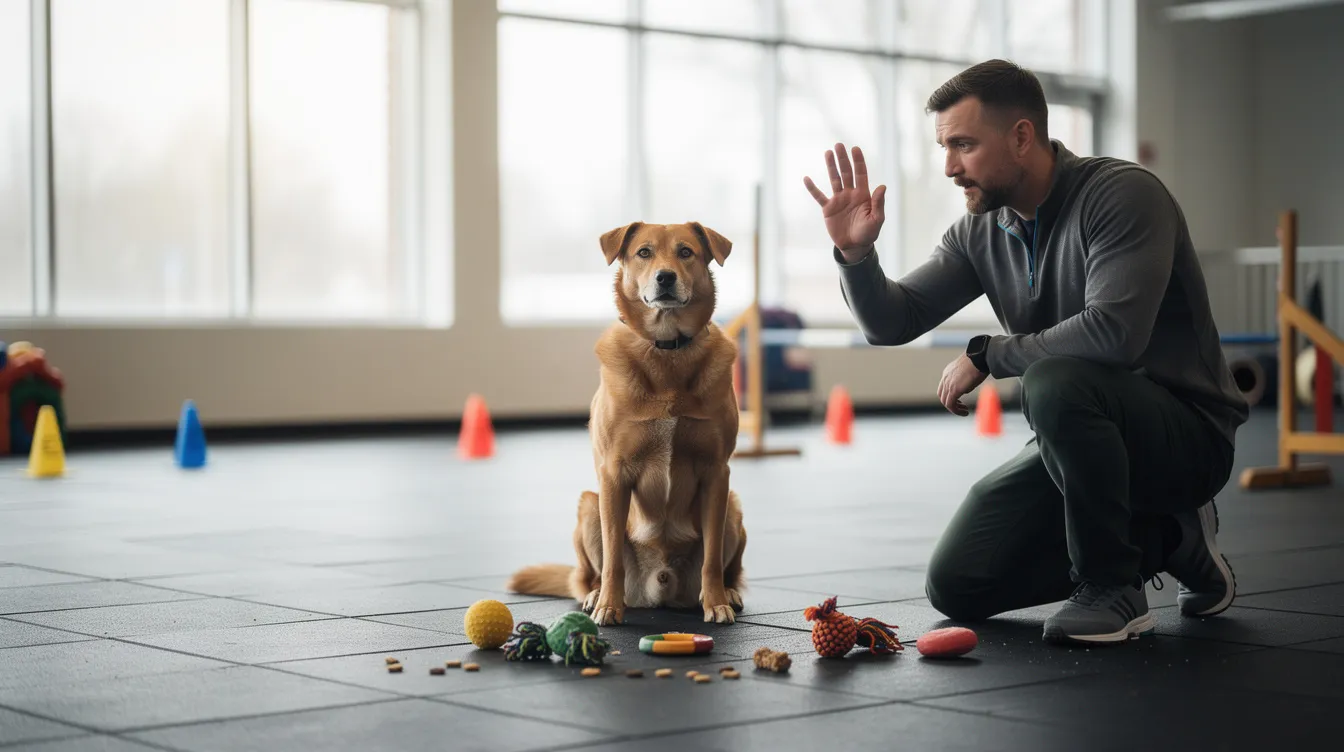
Now that you have 12 games in your toolkit, the question becomes: how do you implement them systematically? A structured approach produces faster, more reliable results than randomly cycling through activities.
Step-by-Step Training Protocol
This protocol works whether you’re starting with a puppy or an adult dog that struggles with impulse control. Short training sessions maintain dog engagement and prevent frustration-aim for 5–10 minutes per session.
- Assess your dog’s baseline: Identify what motivates your dog most (food, toy, play) and where impulse control breaks down (doors, meals, greetings, walks). Note breed tendencies-terriers and scent hounds often show higher impulsivity.
- Start with food-based games indoors: Begin with It’s Yer Choice and Leave It in a quiet room. These games require minimal setup and build the foundational concept that patience earns rewards. Positive reinforcement is critical in teaching dogs impulse control skills.
- Introduce clear release cues: Pick one word-“free,” “okay,” or “break”-and use it consistently. Every family member should use the same cue. The release cue tells the dog exactly when self-control has paid off.
- Add movement and door games: Once your dog reliably waits for food rewards, move to threshold training and car exit control. These require more physical control and involve higher-stakes situations.
- Layer in play-based games: Flirt pole control, structured fetch, and tug with drop engage higher arousal. Only introduce these after your dog shows solid food-based impulse control.
- Gradually increase distractions: Practice in progressively challenging environments. Training on neutral ground helps dogs generalize skills beyond familiar settings.
- Fade to intermittent reinforcement: Once behavior is reliable, stop rewarding every single success. Intermittent rewards actually strengthen behavior because the dog doesn’t know which repetition will pay off.
- Maintain through daily integration: Impulse control training integrates routine activities into learning opportunities. Ask for a wait before meals, a sit before leash attachment, a settle before door opening-every day.
Training Environment and Difficulty Progression
Impulse control games can transform high-energy dog behavior, but only if you progress at a pace your dog can handle. This table maps out a realistic progression:
| Location | Distraction Level | Success Criteria | Typical Timeline |
|---|---|---|---|
| Indoor, quiet room | Low | Dog reliably waits at food bowl, holds Leave It, settles on mat with few errors | Weeks 1–2 |
| Indoor, moderate activity (family moving, hallway) | Moderate | Dog holds wait with people walking by, door opening, household noise | Weeks 2–4 |
| Yard or controlled outdoor space | Moderate–High | Dog manages outdoor thresholds, handles birds, bikes, ambient noise | Weeks 3–5 |
| Public, low traffic (quiet park, empty parking lot) | High | Dog waits on leash with strangers at a distance, holds position on mat outdoors | Weeks 5–8 |
| Public, high distraction (dog-friendly locations, busy streets, other dogs nearby) | Very High | Dog remains calm through strong triggers until released; solid generalization | Weeks 8+ |
Timelines vary significantly based on age, breed, prior training, and consistency. Puppies under 12–16 weeks have limited capacity for patience-their inhibitory neural circuits are still developing. Keep sessions to seconds, not minutes. Adolescent dogs (roughly 6–18 months) often regress as hormones kick in, making consistent practice especially critical during this stage.
Common Training Challenges and Solutions
Even with the best games and protocols, most dogs hit predictable roadblocks. Here’s how to work through them.
Dog Shows No Interest in Food Rewards
Not every dog is food-motivated during training. Switch to super-high-value treats-real chicken, cheese, or freeze-dried liver instead of commercial training treats. Adjust meal timing so your dog trains on a slightly empty stomach (not starved). If food still doesn’t work, shift entirely to toy-based or play-based rewards. The Flirt Pole Control and Structured Fetch games work well for dogs driven by movement and chase rather than food.
Dog Gets Too Excited and Can’t Focus
High arousal directly impairs impulse control. If your dog starts jumping, spinning, or barking during training, shorten your sessions, lower the reward value temporarily, and intersperse calming exercises like Go to Your Mat between active games. Ensure your dog gets adequate physical exercise before training-a 20-minute walk or play session helps burn excess energy. Keep your own body language calm and your voice neutral. When a dog gets overstimulated, the best response is to pause, wait for the dog to offer calm behavior, then resume at a lower intensity.
Inconsistent Results in Different Environments
This is the most common frustration-and it’s backed by science. Research shows that impulse control doesn’t automatically transfer across different contexts. A dog that waits beautifully at the food bowl may completely fall apart at the front door. The solution is deliberate practice in varied locations. Use the progression table above and don’t skip steps. Train the same game in at least three different environments before considering it “learned.” A professional dog trainer can accelerate this process through structured board and train programs that expose dogs to dozens of environments in a compressed timeframe.
Multiple Dog Household Complications
Training impulse control with multiple dogs present creates competition, distraction, and jealousy. Train one dog at a time while the others are in a separate room. Use individual treats and cues. Once each dog has a solid foundation, begin practicing with other dogs visible but at a distance. Reward one dog for holding a wait while the other works-this teaches impulse control through observation. Stagger feeding and training times so every dog gets individual attention.
Conclusion and Next Steps
Consistent practice of impulse control games builds the foundation for reliable, real-world obedience. These 12 activities address the core reason most dogs struggle with behavior: they haven’t learned that patience and calm choices lead to better outcomes than impulsive reactions. Impulse control games can transform high-energy dog behavior into focused, responsive partnership-one short, positive session at a time. Training sessions should be kept short and positive for effectiveness.
Here’s how to start this week:
- Pick 2–3 games from the food-based category (It’s Yer Choice and Leave It are ideal first choices)
- Practice 5–10 minutes daily in a quiet indoor space with high-value treats
- Track three markers: how long your dog can wait, how quickly it disengages from temptation, and how many repetitions before it offers calm behavior without prompting
- Add one new game per week as your dog shows consistent success
For dogs with more significant behavioral challenges-reactivity, aggression, or deeply ingrained impulsive habits-these games provide a strong starting point, but professional guidance accelerates results dramatically. Off Leash K9 Training Phoenix offers comprehensive obedience programs and behavior modification that build on these impulse control foundations to achieve guaranteed, distraction-proof results.
Ready to take the next step? Contact Off Leash K9 Training Phoenix for a free phone consultation to assess your dog’s specific needs and build a personalized training plan.
Frequently Asked Questions
How long does it take for impulse control games to show results? Most dogs show noticeable improvement within 1–2 weeks of daily practice on food-based games. Generalizing to higher-distraction environments typically takes 4–8 weeks. Puppies and adolescent dogs may take longer due to developmental factors, while adult dogs with established bad habits need more repetition to override old patterns.
At what age should I start impulse control training? You can begin simple games like It’s Yer Choice as early as 8 weeks old, keeping sessions extremely short (30–60 seconds). Puppies have limited inhibitory capacity, so expect small wins. Adolescent dogs (6–18 months) benefit enormously because this is the period when impulse control often regresses. Adult dogs can learn at any age-it simply requires more patience and repetition.
Do certain breeds need more impulse control work than others? While all breeds benefit from self control training, high-drive breeds like terriers, herding dogs, and hound breeds often show more impulsive tendencies. That said, individual temperament matters more than breed generalizations. Off Leash K9 Training Phoenix works with all breeds and ages, and the games in this guide are adaptable to any dog’s drive level.
Can impulse control games replace formal dog training? These games build essential self-regulation skills, but they complement rather than replace comprehensive obedience training. Impulse control is the foundation-it teaches your dog how to listen-while structured training teaches the specific commands and behaviors you need in daily life. Together, they create a dog that’s both willing and able to respond reliably.
What if my dog gets frustrated during impulse control games? Frustration means you’ve increased difficulty too quickly. Back up to the last step where your dog was succeeding and rebuild from there. Dogs learn to control impulses through positive reinforcement, not through being set up to fail repeatedly. If the dog is whining, barking, or shutting down, shorten the session, lower the criteria, and end on a success.
How do I maintain impulse control once my dog learns these games? Integration is the key. Build impulse control into daily routines: wait before meals, sit before leash attachment, settle before the door opens. These micro-practices keep skills sharp without requiring dedicated training sessions. Impulse control training integrates routine activities into learning opportunities, making maintenance nearly effortless once the habits are established.
