
Introduction
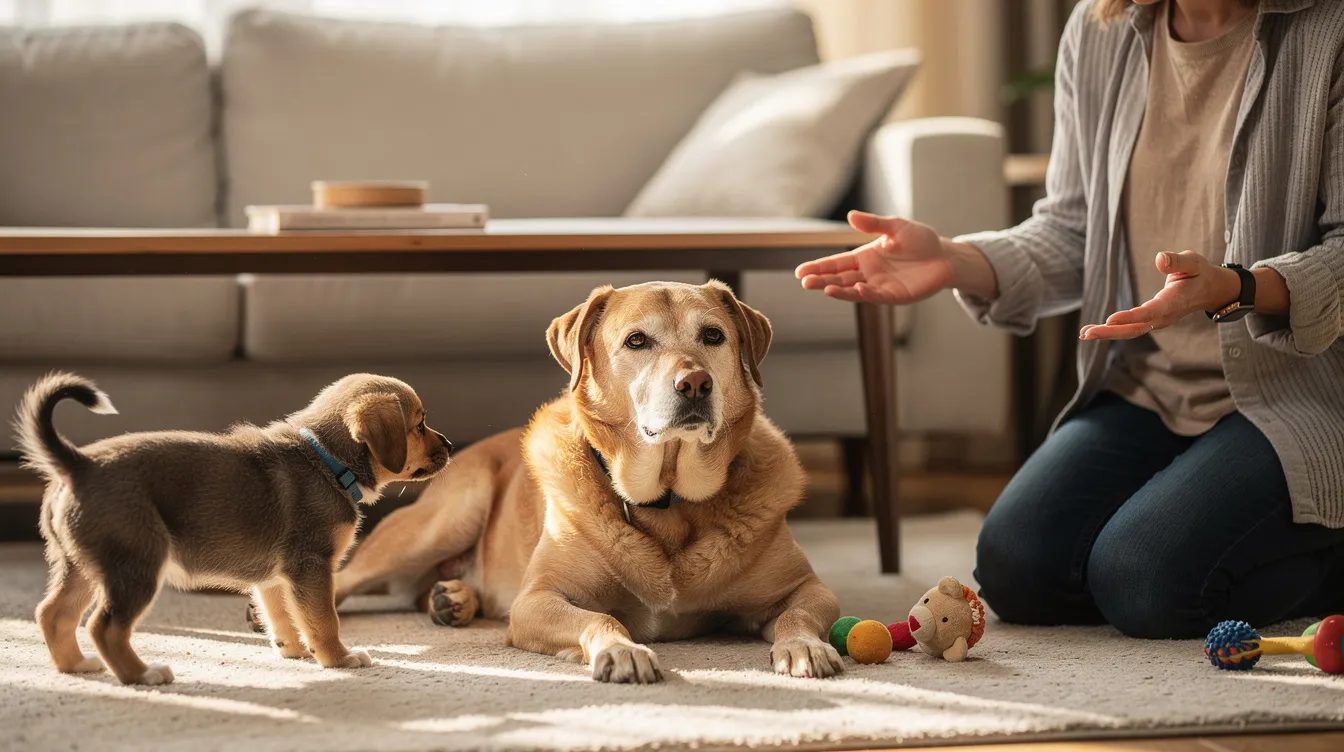
Introducing a new puppy to an older dog requires patience and planning – it is a structured process that unfolds over several weeks, not a single event you can rush through in an afternoon. First impressions matter when introducing a puppy to an older dog, and a bad first impression can take months to fix. Whether your current dog is a mellow senior Labrador or a still-active middle-aged shepherd, the steps you take before, during, and after that first meeting determine whether your two dogs become comfortable companions or sources of chronic stress for each other.
This guide covers everything from pre-introduction preparation (home setup, scent swapping, vaccination status) through first meeting protocols on neutral ground, the 2–4 week transition period at home, and long-term strategies for maintaining a peaceful multi-dog household. It is written for dog owners – particularly those in the Phoenix metro area – who already have an adult dog and are considering bringing home a new pup.
Here is the direct answer: successful puppy-to-dog introductions typically require 2–4 weeks of deliberate management, beginning with scent familiarization and neutral territory meetings, followed by progressive supervised interactions at home. Expect adjustment over weeks, not days.
By the end of this article, you will understand:
- How adult dogs and puppies communicate differently – and why that gap causes friction
- Exactly how to prepare your house, your resident dog, and yourself before the puppy arrives
- A step-by-step first meeting protocol using parallel walking on neutral ground
- Solutions for resource guarding, overwhelming puppy energy, and older dog rejection
- A realistic timeline so you know what to expect at each stage
Understanding Canine Social Dynamics
Dogs communicate through body language and vocalizations, and the way an adult dog processes social information is fundamentally different from how a puppy does. Understanding these differences is the foundation of a proper introduction – without it, owners misread normal corrections as aggression or allow puppies to push past boundaries that the older dog is clearly trying to enforce.
Adult dogs follow a structured set of social rules. Puppies have immature communication skills compared to adult dogs. The older dog offers feedback – growls, blocks, deliberate posture shifts – that the puppy is still learning to decode. When owners understand this natural teaching dynamic, they can support it rather than accidentally disrupt it.
Adult Dog Behavior Patterns
Mature dogs establish boundaries through a predictable set of signals. A stiff body, direct stare, or low growl tells another dog to back off. Body blocking – physically stepping between the puppy and a resource – is another common technique. Growling is a natural warning signal in dog communication, not a sign your older dog is “bad.” These corrections teach the puppy self-control, bite inhibition, and spatial awareness.
Territorial instincts also play a role. Most dogs feel ownership over their own space – their bed, their favorite spot on the couch, their food bowl. When a new dog suddenly appears in those spaces, the resident dog may escalate from warnings to more forceful communication. This is why introducing dogs in neutral locations reduces territorial behavior.
Resource guarding tendencies vary widely. Not every dog guards, and not all dogs guard the same things. Some guard food; others guard human family members or resting spots. Identifying your current dog’s triggers before the puppy arrives prevents preventable conflict.
Puppy Development Stages
Puppies between 8 and 12 weeks are in a critical socialization window. During this period, they are forming core attachments and learning what constitutes normal social interaction. Research published in Animals (2024) studying 107 adoption cases found that puppies adopted at one month or younger showed significantly higher fear, anxiety, and attention-seeking behaviors as adults compared to those adopted at four months or later – measured using the validated C-BARQ behavioral assessment. This underscores why the quality of early social experiences matters enormously.
Puppies learn social skills primarily from adult dogs. When an older pup or adult dog growls at a puppy for biting too hard, the puppy learns to moderate pressure. When the older dog walks away from play, the puppy learns that play has limits. But puppies tend to miss subtle cues – they may not yet understand a hard stare or a stiffened body posture. Their communication skills are still developing.
Energy levels compound the challenge. Puppies have bursts of high energy, short attention spans, and minimal impulse control. An older dog – especially one with arthritis, reduced vision, or hearing loss – may perceive this relentless energy as threatening or deeply annoying. A small, persistent puppy can even accidentally injure a big dog with mobility vulnerabilities.
Understanding these dynamics is precisely what makes the preparation phase so critical. When you know what to expect from both dogs, you can set up the environment to support success.
Pre-Introduction Preparation Phase
Proper preparation reduces stress for both dogs and dramatically improves outcomes. This phase ideally begins one to two weeks before you bring your new puppy home.
Home Environment Setup
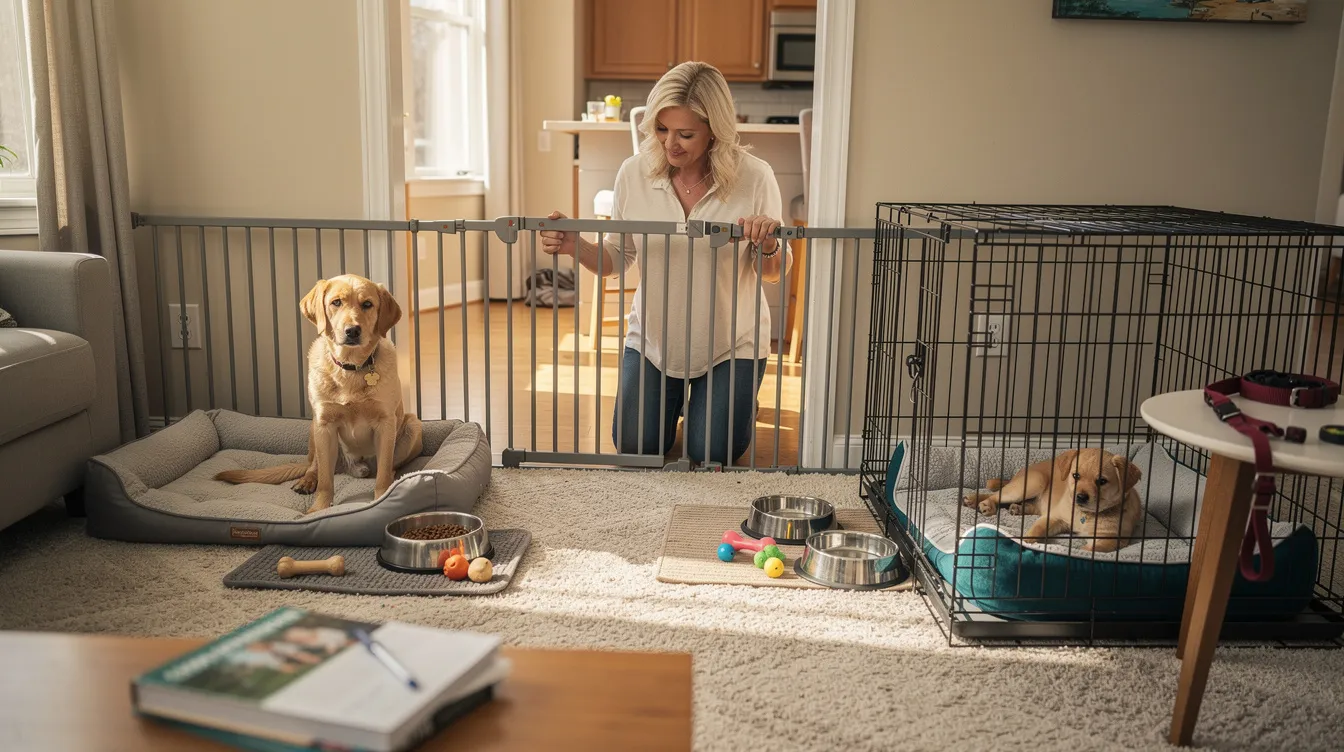
Create separate safe zones for each dog to retreat if needed. Use baby gates, an x pen, or crates to give each dog its own space. The older dog’s familiar areas – its bed, its preferred room, its usual resting spots – should remain undisturbed. Displacing your resident dog from its favorite spot to accommodate the puppy signals to the older dog that its status is threatened.
Set up individual feeding areas in a different room or behind physical barriers. Dogs eating side by side is a classic resource guarding trigger, especially during the first few weeks. Each dog should have its own bowls, bed, and toys. Remove high-value toys and treats before the puppy arrives to eliminate competition over prized objects.
Sleeping arrangements matter too. Your older dog likely has established rest patterns. Puppies need substantial sleep but on unpredictable schedules. Crate training the puppy from day one gives it a safe place to rest without disturbing the older dog – and gives your older dog guaranteed quiet time.
Vaccination Requirements
The older dog’s health issues should be evaluated before introducing a new dog. Schedule a veterinary consultation to confirm your existing dog’s vaccines are current – especially rabies, Bordetella, and leptospirosis if you plan outdoor introductions. Have the vet assess any mobility, joint, or sensory issues that could be aggravated by an energetic puppy.
For the puppy, core vaccines (distemper, parvovirus, canine adenovirus type 2, rabies) follow a series schedule. Puppies younger than four to six months often have incomplete immunity. Confirm vaccination status for both dogs and discuss parasite control – fleas, ticks, and heartworm prevention – with your veterinarian before the dogs meet.
Scent Introduction Protocol
Before the two dogs ever see each other, let them become familiar with the other’s scent. Exchange blankets, bedding, or toys between the dogs for one to two weeks before the introduction. Place the puppy’s blanket near the older dog’s resting area and vice versa.
Pair scent exposure with positive associations. When your older dog sniffs the puppy’s blanket calmly, reward that calm behavior with treats and praise. Watch for signs: relaxed sniffing and loose tail wagging indicate neutral or positive interest. Cowering, growling, or turning away indicate discomfort – slow down.
This gradual scent familiarization builds a foundation so the first meeting is not a complete sensory shock. It transitions naturally into the actual introduction process.
The Introduction Process
With preparation complete, the actual meeting follows a structured sequence: neutral territory first, then a careful transition into your own home. Supervision during introductions helps manage puppy behavior and prevents escalation.
First Meeting Protocol
Introduce dogs in a neutral location to reduce stress. Choose a neutral area – a quiet park, a friend’s yard, or any space that neither dog considers its territory. Avoid your house, your yard, or any location your resident dog regularly visits.
Follow these steps:
- Arrange two handlers – one person walking each dog. Both dogs should be on loose leashes. Keep both dogs on loose leashes during initial introductions; tight leashes create tension and restrict natural body postures.
- Start with parallel walking at a distance. Walk both dogs in the same direction, roughly 15–20 feet apart. Let them see and smell each other without pressure to interact. This parallel walking technique reduces confrontational energy.
- Gradually decrease distance. Over 10–15 minutes, slowly close the gap between the two dogs. Watch body language carefully. If either dog stiffens, fixates, or pulls aggressively, increase space immediately.
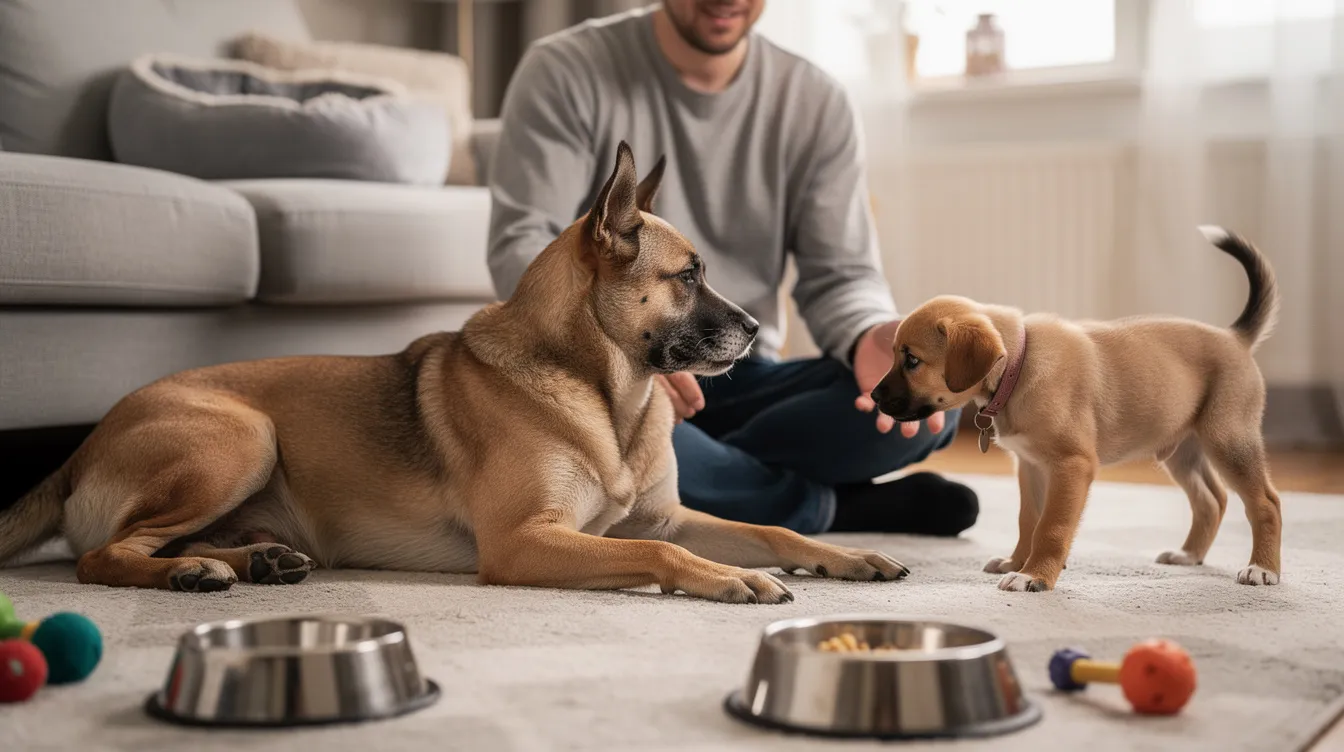
- Allow brief supervised greetings. When both dogs show relaxed signals – loose body, soft eyes, easy tail wag – allow them to approach for a few seconds of sniffing. Keep initial contact short. Initial interactions should focus on supervision instead of immediate play.
- End on a positive note. After a calm greeting, walk home together or separate on a good moment. Do not push for extended interaction during the first meeting.
Allow dogs to meet one at a time to reduce stress. If you have multiple dogs at home, introduce the new puppy to each dog separately before attempting group meetings.
Meeting Success Indicators
Observe body language for signs of comfort or stress during interactions. Monitor body language to prevent aggressive interactions.
| Positive Signs | Concerning Signs |
|---|---|
| Loose tail wag, relaxed posture | Stiff body, raised hackles |
| Play bow, mutual sniffing | Prolonged staring, lip curling |
| Taking turns initiating contact | Growling with hard eye contact, snapping |
| Retreats accepted without pursuit | Chasing, pinning, inability to disengage |
If you see concerning signs, calmly separate the dogs, increase distance, and try again later. Patience is critical as introductions may take several meetings. Reinforce calm behavior with treats during introductions to build positive associations.
Bringing Dogs Home Together
When transitioning to your own home, the entry protocol matters. Remove the older dog from the house temporarily. Bring the puppy home first and let it explore briefly. Then bring the older dog back in. This reduces the resident dog’s sense of territorial intrusion.
Start indoors with gates and physical barriers in place. Use house lines (lightweight leashes dragged on the floor) so you can guide either dog without grabbing collars. Supervise all interactions between the puppy and adult dog – no exceptions during the first week.
Feed each dog separately in its designated area. Give affection and attention to both dogs fairly, but always prioritize the older dog during initial interactions – greet it first, feed it first, give it first access to doorways. This respects the existing social structure.
Begin with short supervised sessions of shared time in the same space – five to ten minutes – and gradually increase duration as both dogs relax. This phase flows directly into the broader transition period.
Common Challenges and Solutions
The 2–4 week adjustment period is rarely smooth. Senior dogs may snarl, retreat, or show irritation. Puppies may ignore signals. Dogs learn how to behave around each other during introductions, but the learning curve has bumps. Supervised interactions are essential during the initial weeks.
Resource Guarding Between Dogs
Resource guarding is one of the most common friction points. Remove food and toys before introductions to prevent resource guarding, and maintain this practice during the transition period.
Feed each dog separately – in a different room, behind a baby gate, or in individual crates. Distribute toys individually during supervised time only. Train “leave it” and “trade” cues so both dogs learn to release objects on command. If guarding escalates to snapping or biting over beds, doorways, or human family members, consult a professional dog trainer with experience in multi-dog dynamics.
Overwhelming Puppy Energy
Puppies tend to have bursts of energy that exhaust older dogs. Scheduled separation periods using crates and gates give your older dog guaranteed rest. Use an X-pen or crate to limit the puppy’s free roam time and prevent it from monopolizing the older dog for play.
Teach the puppy impulse control through structured exercises: sit-stay, down, leave it, and mat work. Proper socialization with other puppies and other dogs outside the home channels energy productively. A separate study published in Applied Animal Behaviour Science found that puppies who completed standardized socialization programs from birth through six weeks showed better distraction tolerance and lower anxiety through their first year – effects that also benefit the multi dog household dynamic.
Respect the older dog’s boundaries and intervene if the puppy is too pushy. When the puppy learns that pestering the older dog results in separation (not punishment, just removal to its own space), it begins associating appropriate behavior with continued access to the older dog.
Older Dog Rejection or Aggression
Normal correction from an adult dog – a growl, a block, a short snap with no contact – is part of how the puppy learns. But when corrections escalate to hard bites, sustained chasing, or an inability to calm down, professional intervention is needed.
Recognize that not all dogs will accept a new puppy. Senior dogs in chronic pain, with sensory deficits, or with a history of aggression toward other dogs may find a young dog intolerable. The older dog’s quality of life must remain the priority. If your older dog seems persistently stressed after several weeks, consult a certified behaviorist or explore aggression-specific training programs rather than forcing companionship.
Separation anxiety can also emerge – in either dog. The older dog may become anxious when the puppy is present, or the puppy may become distressed when separated. Address these issues early with structured alone-time practice and, if necessary, professional behavior modification.
Success is measured by the ability of dogs to share a home peacefully – not by whether they become best friends on a specific timeline.
Conclusion and Next Steps
Introducing a new puppy to an older dog is a process that unfolds over a minimum of two to four weeks, and sometimes longer depending on temperament, health, and history. Proper introductions prevent aggression between dogs and lay the groundwork for years of peaceful coexistence. The core sequence – scent introduction, neutral territory meeting, supervised home transition, gradual integration – works because it respects each dog’s personal space and communication abilities.
Your immediate action steps:
- Assess your current dog’s temperament and health. Schedule a vet visit to evaluate mobility, pain, and vaccination status before bringing a puppy home.
- Prepare your home environment. Install baby gates, set up separate feeding zones, remove high-value treats and toys from shared areas, and establish crate training routines.
- Begin scent swapping one to two weeks before the puppy arrives.
- Execute the neutral territory introduction with two handlers, loose leashes, and parallel walking.
- Manage the transition period with consistent supervision, scheduled separation, and reinforcement of calm behavior with treats.
For complex cases – persistent aggression, resource guarding that does not resolve, or a senior dog showing signs of chronic stress – working with a professional dog trainer accelerates progress and prevents setbacks. Off Leash K9 Training Phoenix offers board and train programs designed to build distraction-proof obedience in both puppies and adult dogs, giving you reliable control during the integration process.
Additional Resources
- Free phone consultation: Off Leash K9 Training Phoenix offers consultations to evaluate your specific situation before you introduce a new dog to your current household.
- Puppy training programs: Structured puppy obedience lays the foundation for appropriate behavior around your older dog and in public settings.
- Behavior modification for aggression: For introductions involving dogs with a history of reactivity or aggression, specialized training can make the difference between a safe integration and a dangerous one.
- Phoenix-specific note: Given the extreme heat in the Phoenix metro area, schedule all outdoor neutral territory introductions for early morning or evening hours. Ensure shade and hydration are available for both dogs during any outdoor walk or meeting.
