
If you are searching for how to socialize an aggressive dog phoenix az, the first thing to know is this: socialization is not forcing a nervous or reactive dog into close contact. It is a slow, controlled training process that helps a dog feel safer, respond better, and build calm behavior around triggers.
Key Takeaways
- “How to socialize an aggressive dog phoenix az” means safe, slow, structured work, not forcing contact with people or other dogs.
- Safety, distance, and leash control are always the first steps for any aggressive dog in Phoenix.
- Obedience skills like sit, down, place, heel, and recall should be solid before closer social exposure.
- Gradual exposure, avoiding dog parks, and getting professional dog training support can help reduce setbacks and lower the risk of aggressive behavior getting worse.
- Many aggression issues can improve with a good plan, patience, professional guidance, and training that focuses on safer behavior, emotional responses, and clear communication.
What It Means to Socialize an Aggressive Dog Safely
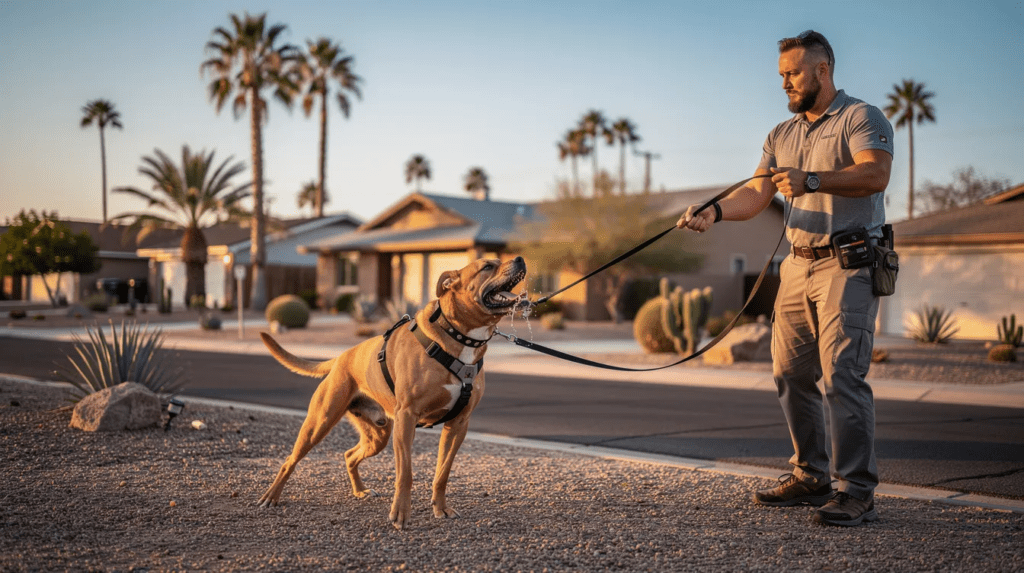
For a dog that lunges, barks, growls, snaps, or bites, socialization means teaching calm behavior around triggers. It does not mean off-leash play with other dogs in Phoenix, crowded classes, or nose-to-nose greetings with strangers. The goal is to help the dog notice a trigger and still think clearly.
Aggressive dog behavior can come from fear, anxiety, past trauma, pain, poor early socialization, frustration, or lack of structure. Many dogs react aggressively when they feel threatened or overwhelmed. In those moments, the dog may be trying to create distance from a trigger, so the goal is to understand the cause instead of assuming the dog is simply being stubborn or dominant.
This is why behavior modification matters. Many aggression training plans use desensitization and counterconditioning to help change a dog’s emotional response to triggers over time. These techniques work best when paired with safety, structure, obedience, distance control, and professional guidance when needed.
Pet parents in Phoenix should track what sets the dog off. Common triggers include other dogs, scooters, kids, men in hats, bikes, loud sounds, strangers, family members moving quickly, or one specific person. These details become key components of a structured aggression training plan.
Early socialization matters for puppies, but adult dogs can still develop better coping skills. The baseline should be realistic. It is important to maintain a realistic baseline when managing aggressive tendencies in dogs and not to force interactions that could stress them. Success may mean walking calmly past animals at a distance, not turning every reactive dog into a social butterfly.
Start With Safety, Distance, and Control
Safety is the first step before any aggressive dog training or social exposure. This protects you, your dog, other people, pets, and the wider community. In Arizona, dog owners can face liability if their dog bites someone in a public place or someone lawfully on private property, even if the dog has no known bite history.
Use secure equipment. A properly fitted collar or harness, a sturdy 6-foot leash, and strong leash control are crucial. For dogs with a bite risk, a comfortable basket muzzle may be part of the safety plan. Introduce the muzzle slowly with food, praise, and short practice sessions so the dog does not see it as punishment.
Distance is your friend. Identifying the dog’s threshold is essential for determining the distance at which they can see a trigger without reacting. Start far enough away that the aggressive dog can look at people, cars, or other dogs and still respond to cues, take food, and focus on the handler.
Watch for early signs of dog reactivity and stress:
- Stiff body
- Hard staring
- Tucked tail
- Ears pinned back
- Lip licking
- Yawning
- Whining
- Pacing
- Scanning the area
- Freezing
- Refusing food
If the dog reacts with barking or lunging, you are probably too close. Calmly create distance before the dog explodes. Reward calm behavior when the dog checks in, turns away, or follows a cue.
Phoenix adds extra challenges. Heat, hot pavement, urban noise, traffic, and crowded walking areas can make reactive dogs harder to manage. Plan training during cooler times of day, use shaded routes when possible, bring water, avoid hot pavement, and do not take dogs on City of Phoenix hiking trails when temperatures reach 100°F or warmer.
Busy areas such as Steele Indian School Park, Tempe Town Lake paths, narrow sidewalks, and crowded trails may be too much too soon. Choose quiet routes, shaded areas, and low-distraction times.
Build Obedience Before Close Social Exposure
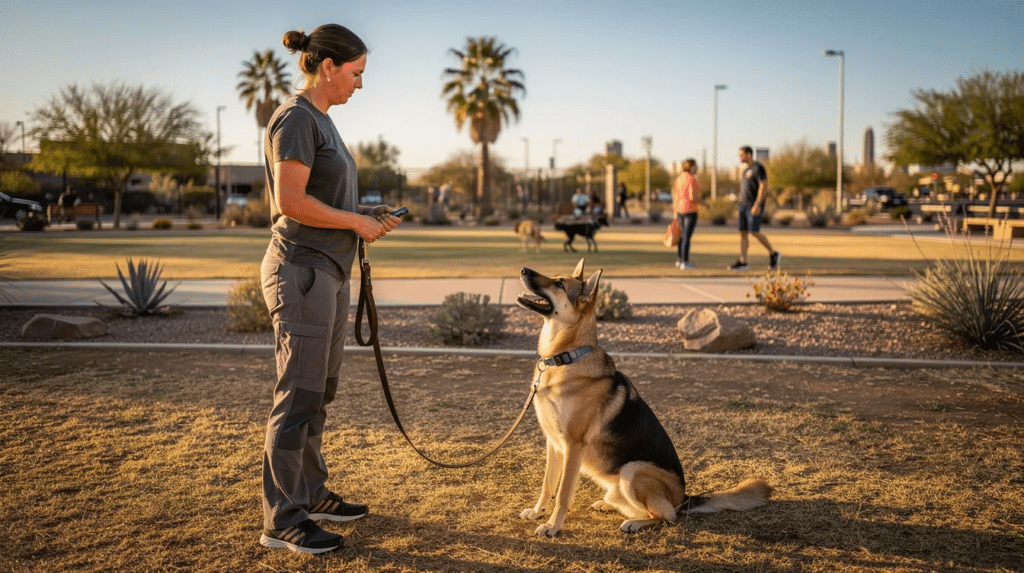
Strong obedience training gives pet parents tools to manage distractions and triggers. A dog that understands simple skills has more room to make better choices when life gets stressful.
Start in a quiet Phoenix home, yard, or room. Work on:
- Sit
- Down
- Place
- Heel
- Recall
- Focus around mild distractions
Keep sessions short. Five to ten minutes is enough for most dogs. Practice indoors first, then in the backyard, then on a quiet street, then near a calm parking lot. This helps the dog’s behavior generalize without flooding the dog.
The place command is especially useful. Teaching a dog to relax on a bed or mat while family members move around helps build impulse control. Over time, place can help the dog stay settled while a human visitor enters the home or while mild distractions happen nearby.
Use high-value rewards during training. Food, praise, play, and distance can help the dog build a better emotional response around triggers. Positive reinforcement supports desirable behavior without adding more fear, and it works best when paired with clear structure, good timing, and careful management.
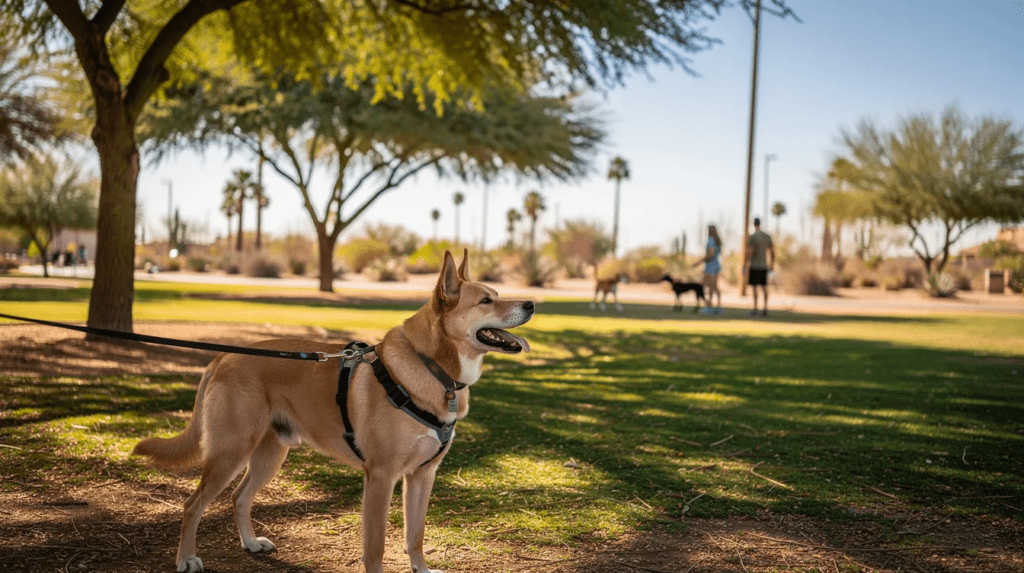
Gradual exposure should be boring at first. Let the dog watch people or distant dogs from a safe, shaded spot where the dog can stay calm and under control. Reward focus, soft body language, and calm choices. Socializing an aggressive dog requires a controlled, gradual approach focused on distance, safety, desensitization, and counterconditioning.
Avoid busy dog parks, farmers’ markets, daycare, and crowded Phoenix trails early in the process. Even if the dog needs exercise, uncontrolled contact can create setbacks and put other dogs or people at risk.
Common Mistakes to Avoid
Some well-meant choices can quickly make aggression and reactivity worse. Many dog owners try to help by pushing the dog closer to scary things, but this can backfire.
Avoid forcing the dog to “face their fears.” Walking straight into a crowd, dog park, or group of off-leash dogs can overwhelm the nervous system. When most dogs are pushed over the threshold, they cannot learn. They are just trying to survive the moment.
Do not let the dog practice lunging, barking, or growling on every walk. If the scary thing moves away after the dog reacts, the dog may learn that aggressive behavior works. This can strengthen the habit.
Avoid reacting with yelling, hitting, intimidation, or harsh corrections. For aggressive dogs, poor timing or heavy-handed corrections can add stress and make triggers feel worse. Any training tool should be used carefully, with professional guidance, and as part of a plan that teaches the dog what to do instead.
Reward-based techniques can help build trust and teach safer replacement behaviors. This does not mean letting the dog do anything. It means showing the dog what behavior is expected, rewarding better choices, and avoiding unnecessary fear or pressure during training.
Skipping help can also be risky. If a dog is already biting, snapping, redirecting on the handler, or cannot calm down around people or dogs, professional guidance is important. Look for a trainer or behavior professional with experience handling reactivity, aggression, safety planning, and controlled exposure.
When choosing help, look for a trainer who explains their process clearly, sets realistic expectations, uses safe handling practices, and has experience with reactivity or aggression cases. Certifications and ongoing education can be helpful, but the most important thing is whether the trainer can build a safe, practical plan for your dog.
A qualified dog trainer can help build a training plan for aggression training, reactive dog training, obedience, and safer exposure. Effective behavior modification for aggression takes consistent practice, patience, and the right level of support. Some dogs improve faster than others, while serious aggression, bite history, or deep fear patterns may take much longer. There are no quick fixes for serious behavioral issues.
Final Thoughts
Learning how to socialize an aggressive dog is a long-term process built on safety, structure, patience, and clear communication. The goal is not to force contact. The goal is to help the dog feel safer and make better choices around triggers.
Calm behavior at a distance, solid obedience, and gradual exposure give aggressive dogs in Phoenix their best chance to improve. Aggression in dogs can be connected to fear, stress, frustration, pain, or past experiences. Addressing the behavior early can help reduce risk, improve control, and prevent the dog from practicing unsafe reactions.
Effective aggressive dog training should look at the root cause of the behavior and use a step-by-step plan to build safer responses. For many dogs, that includes obedience, management, distance control, desensitization, and counterconditioning.
If your dog growls, snaps, bites, or leaves you feeling scared or overwhelmed, do not wait for the problem to become more serious. The right plan can make a real difference in your dog’s life and help your pet become a safer, more confident loyal companion.
For Phoenix-area owners whose dogs lunge, bark, growl, or struggle around people or other dogs, reach out to Off Leash K9 Training Phoenix for a professional assessment and a structured, in-person training plan.
FAQ
These FAQs cover extra concerns Phoenix pet parents often have when dealing with an aggressive dog, reactivity, and safe socialization.
How do I know if my dog is too aggressive to be around other dogs at all?
Repeated lunging, snapping, biting attempts, stiff fixed staring, or an inability to calm down around other dogs means the dog is not ready for close contact. Keep distance, use obedience and rewards, and speak with a professional before planning off-leash play or nose-to-nose greetings.
Can I still exercise my aggressive dog safely in Phoenix?
Yes, but choose low-stress options. Early-morning or late-evening leash walks in quiet neighborhoods, structured obedience practice, sniff walks, puzzle feeders, and controlled training in secure private areas can help. Avoid busy dog parks and crowded routes while your reactive dog is still learning.
Will medication alone fix my dog’s aggression issues?
Medication can sometimes reduce anxiety, but it does not replace behavior modification or obedience training. Work with a veterinarian for medical support, especially if pain or sudden behavior changes are involved. A trainer can then help create a step-by-step plan.
How long does it usually take to see progress with an aggressive dog?
Progress depends on the dog’s history, triggers, bite risk, environment, consistency, and training plan. Some dogs show improvement within weeks, while serious aggression can take months or longer. Regular check-ins with a trainer can help adjust the plan as the dog improves.
Contact Us
If your dog struggles with obedience, leash manners, reactivity, or public behavior. Contact us Today Off Leash K9 Training Phoenix to discuss professional training options that fit your dog’s needs.
