
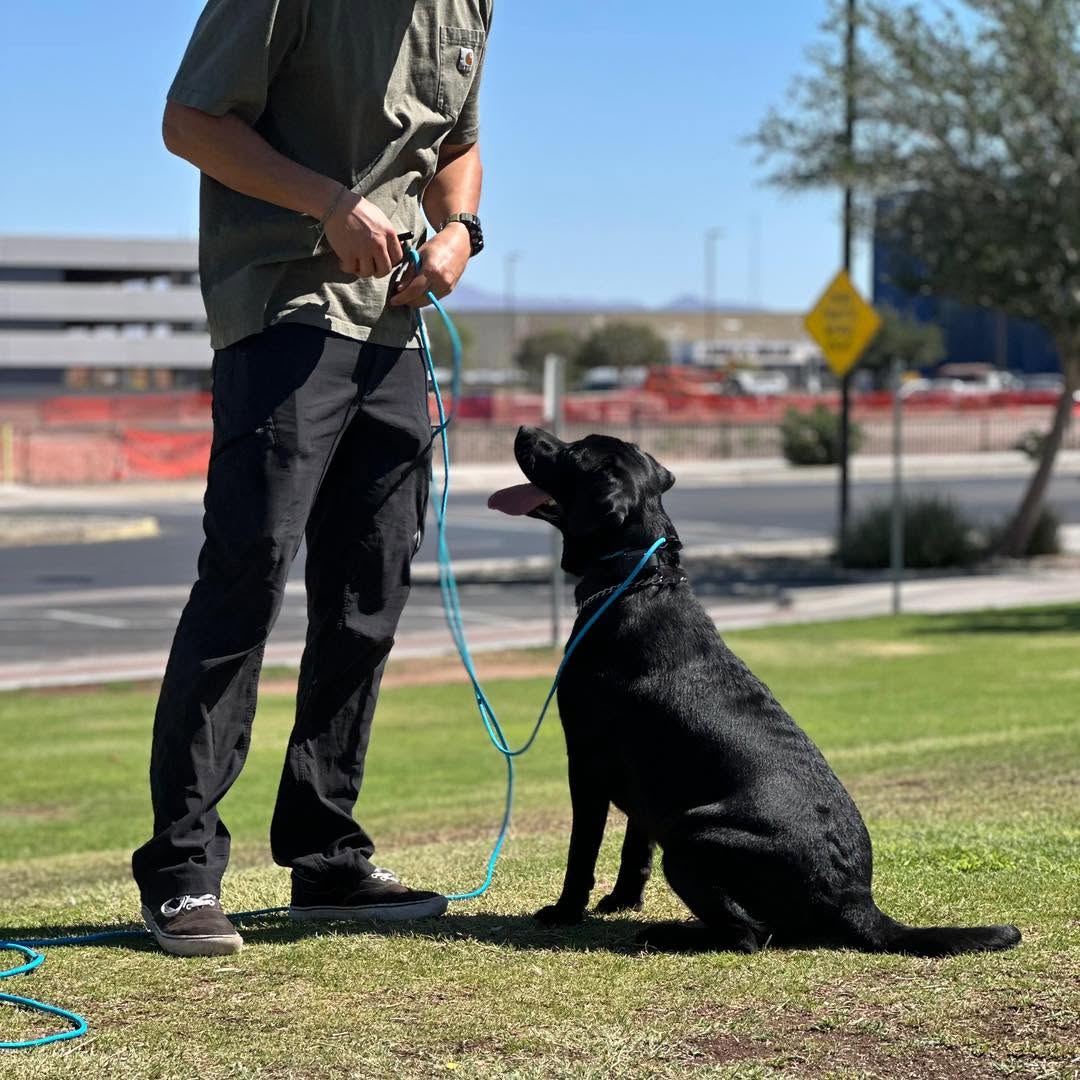
Learning how to teach a dog to drop it starts with one principle: make releasing the object more rewarding than keeping it. This cue can help your dog release something dangerous before swallowing it, but it cannot guarantee safety. This guide breaks the process into concrete phases you can start in your living room and gradually practice during supervised outdoor activities. If you suspect your dog has swallowed medication, a sharp object, or anything else harmful, contact a veterinarian immediately.
This article covers positive reinforcement methods for puppies and adult dogs, with both treat-based and toy-based approaches. If your dog growls, snaps, or stiffens when you approach an item in their mouth, stop the exercise and seek professional guidance. This guide is for Phoenix-area dog owners at every experience level, from first-time puppy owners to those helping adult dogs learn new habits.
The core method: offer your dog something better than what is in their mouth, mark the moment they release, and reward them. As your dog learns the trade, introduce the verbal cue and gradually practice without showing the reward first. Learning speed varies, especially when distractions or more valuable objects are involved.
Here is what you will gain from this guide:
- A clear definition of the “drop it” cue and how it differs from “leave it”
- A step-by-step training plan with treat and toy versions
- A structured progression from indoor practice to supervised outdoor practice
- Troubleshooting tips for running away or holding onto objects
- Guidance on when guarding or aggression requires professional help
Understanding the “Drop It” Cue
The “drop it” cue signals your dog to release an item already in their mouth. It is a single, consistent word or short phrase (“drop it,” “out,” or “release”) that every household member uses identically. Teaching a dog to drop an item on command is an essential safety skill; Teaching “drop it” may help prevent your dog from swallowing dangerous objects, such as small toys or discarded food. However, the cue does not replace supervision, keeping hazardous items out of reach, or seeking prompt veterinary care when necessary.
Beyond emergency use, “drop it” can make everyday play smoother. It helps dogs release a ball during fetch, pause a tug game, or give up a shoe without a chase. If you need help building these skills, explore dog obedience training in Phoenix and ask the team about your dog’s specific training goals.
“Drop It” vs. “Leave It”
“Drop it” and “leave it” apply at different moments. Use “drop it” when the object is already in your dog’s mouth and you want them to release it. Use “leave it” when you want your dog to ignore or move away from something before picking it up.
A Phoenix-area example: your dog spots a discarded burrito wrapper on the sidewalk and moves toward it. That is a “leave it” situation. Your dog has already grabbed the wrapper and is chewing. That is “drop it.” Both cues are useful, but supervision and preventing access to dangerous objects remain important.
How Dogs Naturally Think About Possessions
Dogs may value objects for their taste, texture, novelty, or the attention they receive. A sock can become especially interesting if picking it up starts a chase. Avoid turning retrieval into a keep-away game; use a calm trade instead when it is safe to do so.
This is where the trade principle enters. Offer something your dog values more than the object they hold, then reward the release. Returning a safe toy during some repetitions can help your dog learn that letting go does not always end the fun.
The upcoming steps use this trading-up logic and clear rewards to make “drop it” a game your dog looks forward to.
Core Techniques for Teaching Your Dog to Drop It
With the mindset of cooperation over confrontation established, the training itself is straightforward. Effective methods for teaching a dog to drop an item rely on positive reinforcement: the dog releases, gets rewarded, and wants to repeat. You can choose a treat-based method, a toy-based method, or combine both depending on what motivates your dog.
Start in a quiet room with enough space for your dog to move comfortably. Keep other pets and distractions away during early practice.
Method 1: Teaching “Drop It” Using Treats
This method works best for food-motivated dogs, beginners, and puppies still building impulse control. Set up in a calm room with 5-10 soft, high-value treats (cooked chicken, freeze-dried liver, or commercial training treats about the size of a pencil eraser) and a low-value toy your dog will hold but is not obsessed with. Start training with low-value toys before using high-value ones.
Let your dog hold the toy, then offer a treat without reaching for the toy. When they release it, mark the moment with a consistent word such as “yes” and give the treat immediately. Once they readily release during trades, say “drop it” just before offering the treat. Retrieve the toy only when your dog has moved away from it and remains relaxed.
Repeat in short sessions of about 3-5 minutes, ending sooner if your dog loses interest. As the cue becomes familiar, practice saying “drop it” before showing the treat. Reward successful releases, and return to an easier trade if your dog needs help.
Method 2: Teaching “Drop It” with Toys and Play
For dogs who prefer play to food, try a two-toy trade. Choose two dog toys of similar value that are appropriately sized and in good condition.
Let the dog hold Toy A. Animate Toy B by bouncing it, squeaking it, or dragging it on the ground to make it exciting. Start by offering Toy B and rewarding your dog for releasing Toy A. Once your dog consistently makes the exchange, say “drop it” just before the expected release. Reward the response by continuing the game with Toy B. Pick up Toy A while the dog is engaged with Toy B; repeat multiple swaps per session. The dog learns that “drop it” does not end the fun. It starts a new round. The American Kennel Club’s guide to trading items also explains how positive exchanges can help dogs become comfortable releasing objects.
For tug, pause the movement and wait for a voluntary release. Mark the release and restart gentle play as the reward. If your dog does not let go, use a second toy or a treat rather than pulling harder. Avoid sharp movements, and stop the exercise if your dog stiffens, growls, or snaps.
Adding the Verbal Cue and Hand Signal
Once the dog reliably releases during trades, transition the verbal cue to work on its own. Say “drop it,” pause one second, then present the treat or second toy. Over several sessions, slowly delay the appearance of the reward so the dog begins to drop on the cue alone, anticipating the trade. Eventually, the word itself triggers the release.
A hand signal is optional. Choose a visible gesture that does not involve reaching toward your dog’s mouth. To teach it, show the gesture just before giving the familiar verbal cue, then reward the release. Practice gradually before expecting your dog to respond to the gesture alone.
As a practical checkpoint, aim for successful releases in at least 8 out of 10 easy indoor trials across several sessions, with relaxed body language. This is a training guide, not a guarantee of safety or readiness for every setting. Continue rewarding the behavior after your dog learns the cue.
Step-by-Step Training Plan: From Living Room to Real-World Distractions
With the core techniques understood, structure your practice into phases so you do not increase difficulty too quickly. Keep sessions short; about 3-5 minutes a few times a day is a starting point, adjusted to your dog’s interest and comfort.
Phase 1: Indoor Foundations
Start in a calm room with no other pets or children nearby. Begin with a low-value dog toy that is appropriately sized and in good condition. Practice a few successful trades using a high-value treat or a second toy as the reward, then stop before your dog loses interest.
A detail that matters: sometimes give the object back after the drop. If the dog always loses the item permanently, they learn that “drop it” means “gone forever” and become less willing to comply. Toss it back to them, let them hold it for a moment, then cue “drop it” again. Over several days, you should see the dog dropping items faster, with less need to wave the treat near their nose. Log your sessions; tracking the number of successful drops per day helps you see progress and identify sticking points.
Phase 2: Increasing Value and Mild Distractions
Once easy trades are going well, try a more interesting dog toy. Add mild distractions separately, such as turning on the TV at low volume. Practice in different rooms, but change only one part of the exercise at a time. Do not use edible chews or food containers to make the exercise harder.
The cue, timing, and reward stay identical; only item value and surroundings change. Gradual distraction scaling helps teach drop commands in various environments. End each session while the dog is still engaged and succeeding. Quitting on a happy note prevents frustration for both of you. If the dog refuses to drop a particular item, step back to a lower-value object and rebuild from there.
Phase 3: Outdoors and Walks
Move to a secure backyard or patio before heading to public spaces. Then practice on leash in a quiet outdoor area using a familiar dog toy you bring with you. Let your dog hold the toy, cue “drop it,” and reward the release. Do not use wrappers, litter, or unknown objects for practice. Choose comfortable conditions and avoid hot pavement.
Add movement through fetch in a secure, enclosed area: toss a suitable toy and cue “drop it” when your dog returns. Increase distance only after nearby practice is going well. Keep your dog leashed in public areas where required, and do not treat a successful drop cue as proof that off-leash activity is safe. An emergency release cue requires separate training; introducing a new word during an emergency will not make your dog understand it.
Troubleshooting: Common Problems When Teaching “Drop It”
Not every dog picks up “drop it” on the same timeline. Some behaviors, like growling or snapping, require professional intervention rather than more repetition at home. Patience and calm handling matter more than session length. Avoid punishment, which tends to worsen guarding and avoidance.
Problem 1: Dog Runs Away with the Item
The dog grabs an object and bolts, turning the situation into keep-away. Chasing may make the game more rewarding. Practice with safe toys in a quiet room, prevent access to tempting household objects, and reward your dog for staying nearby. Avoid cornering your dog or using a leash to pull them toward you for an item.
Give the item back after the drop frequently. When a dog backs away with something and the owner always confiscates it, the dog learns that approaching you with an item means losing it. Flip that equation: drop it means treat plus getting the toy back.
Problem 2: Dog Clamps Down or Initiates Tug When You Reach
Some dogs tighten their grip when a hand approaches. Stop reaching or pulling. If your dog remains relaxed, offer a trade without trying to take the object. If they freeze, growl, or snap, give them space and seek professional guidance rather than moving a treat closer to their face.
If a particular object triggers a death grip, go back to lower-value items. For tug games, build a structured routine: say “take it” to start, “drop it” to stop, then restart the game as the reward. The dog learns the sequence, and “drop it” becomes just a pause before more fun, not a threat.
Problem 3: Guarding, Growling, or Nipping Over Items
Stiffening, lip curling, growling, or snapping when someone approaches a valued item can indicate resource guarding. Stop the exercise and give your dog space. These signs call for an individualized assessment rather than repeated attempts to take the item. If your dog stiffens, growls, or guards possessions, review the ASPCA’s guidance on food guarding and seek appropriate professional help rather than attempting to take the item by force.
Do not force the item away or punish growling. Keep children and other pets away, and use barriers to prevent approaches during meals or chew time. Remove tempting objects only when your dog is elsewhere. Consult your veterinarian and a qualified behavior professional, especially if the behavior is new, escalating, or involves snapping or biting. You can also review Phoenix aggression training options and ask whether the team can appropriately address your dog’s situation.
Conclusion and Next Steps
“Drop it” is a useful safety cue built through a simple loop: trade the item for something better, mark the release, and practice from low distractions to more challenging settings. It can help reduce the risk of swallowing something dangerous, but supervision and environmental management remain essential. Keep practice short, consistent, and calm.
Start here:
- Pick one cue word (“drop it,” “out,” or “release”) and gather high-value treats or a second toy.
- Practice a few easy indoor trades, ending while your dog is still comfortable and interested.
- Add difficulty gradually after consistent success across several sessions, rather than following a fixed weekly schedule.
- Stop trading exercises and seek professional guidance if your dog stiffens, growls, snaps, or guards an item.
For help choosing an appropriate training approach, explore dog obedience training at Off Leash K9 Training Phoenix or call [(623) 294-1788 (line 6232941788)](tel:6232941788) for a free consultation. Ask the team about your dog’s needs, including whether work on “drop it” can be included in a suitable program.
Frequently Asked Questions
How do I teach my dog to drop something on command?
Start with a low-value toy and offer a treat your dog enjoys. When your dog releases the toy, immediately reward the behavior. Repeat the exchange until your dog consistently lets go. Then introduce the verbal cue “drop it” just before the expected release. Gradually practice with different toys and environments.
What should I do if my dog refuses to drop a toy?
Avoid pulling the toy from your dog’s mouth or chasing your dog. Instead, offer a more appealing treat or another toy to encourage a voluntary exchange. Start with objects your dog does not strongly value. If your dog stiffens, growls, or guards possessions, stop the exercise and seek guidance from a qualified behavior professional.
What is the difference between “drop it” and “leave it” in dog training?
“Drop it” asks your dog to release something already in their mouth. “Leave it” asks your dog to avoid picking up or interacting with an object in the first place. Both commands can help manage potentially dangerous situations, but they serve different purposes and should be taught separately.
Can you teach a puppy to drop it?
Yes. Puppies can begin learning “drop it” through short, positive training sessions using appropriate toys and treats. Start with simple exchanges in a quiet environment. Keep sessions brief, reward voluntary releases, and gradually introduce distractions as your puppy becomes more comfortable with the cue.
How long does it take to teach a dog to drop it?
There is no fixed timeline. Some dogs learn the basic exchange quickly, while others need more practice before responding reliably. Progress depends on your dog’s experience, motivation, the value of the object, and the training environment. Consistent practice helps build reliability, but no command is guaranteed to work in every situation.
Should I force my dog to open their mouth when teaching “drop it”?
No. Forcing your dog’s mouth open or pulling objects away during routine training can create stress and may increase defensive behavior. Instead, encourage your dog to release items voluntarily through positive exchanges. If your dog has swallowed something potentially dangerous, contact your veterinarian immediately rather than relying on training alone.
Additional Resources
These extras are not required reading but support deeper practice:
- Related training skills: “Leave it,” recall, and settling on a designated spot can support everyday management. Explore puppy training in Phoenix and ask which foundations are appropriate for your puppy’s age and needs.
- Daily practice log: Track each session with columns for date, item used, number of successful drops, location (living room, backyard, sidewalk), and distractions present. Reviewing this log week over week reveals patterns and tells you when your dog is ready for the next phase.
- Age considerations: If you are wondering when to start training, puppies can begin learning “drop it” as early as 8 weeks with shorter sessions and softer toys. Adolescent dogs going through behavioral regression also benefit from revisiting the basics.
