
Introduction
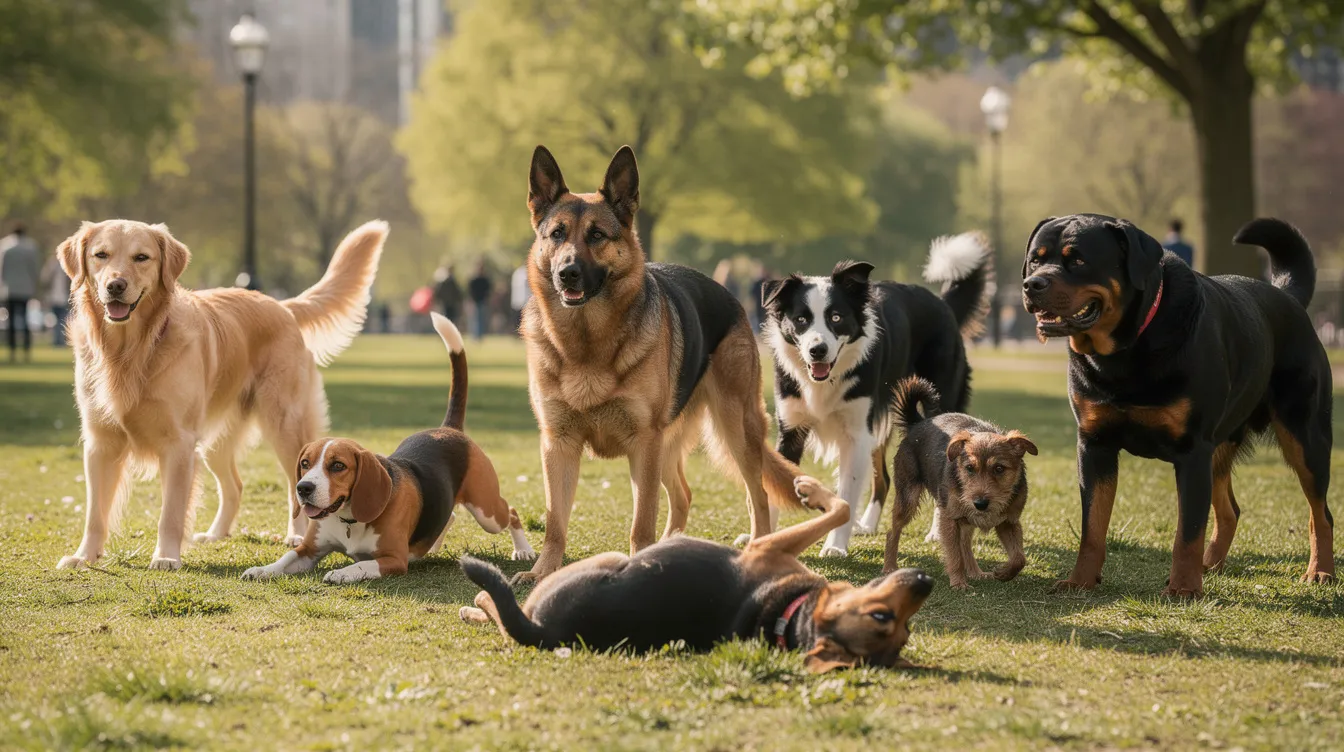
Dogs communicate primarily through posture, tail movement, ear position, and facial expressions. Every interaction with your dog involves dozens of these silent signals, most of which pass unnoticed by owners who haven’t learned to read them. This dog body language guide breaks down the specific cues your dog uses to tell you how they feel, what they want, and when they need space.
This guide covers the major body language signals (tail, ears, eyes, mouth, posture), how to interpret emotional states by reading multiple signals together, and how to avoid the most common misinterpretations. It does not cover breed-specific medical conditions, vocalization analysis, or olfactory communication. The target audience is dog owners in the Phoenix area who want to strengthen their relationship with their dogs, improve training outcomes, or better understand behavioral concerns before or during professional training.
Dogs use nonverbal cues such as tail posture, ear position, and facial tension to communicate emotions ranging from calm contentment to anxiety, fear, or aggression. Understanding a dog’s body language requires considering the overall context and multiple signals, not reacting to a single cue in isolation.
After reading this guide, you will be able to:
- Distinguish between a relaxed and happy dog and one showing early signs of stress
- Identify displacement behaviors and calming signals before they escalate
- Read your dog’s entire body as a connected communication system
- Respond appropriately to warning signs of fear or aggressive behavior
- Apply body language reading to improve training sessions and daily interactions
Understanding Canine Communication
Dog body language is the primary method dogs use to express emotions, intentions, and comfort levels. Unlike humans, who rely heavily on spoken words, dogs communicate through a coordinated system of physical signals. Owners who learn to read canine body language report fewer behavioral surprises, and research supports the connection between body language literacy and training success. A study on dogs’ body language and learning achievement found that dogs displaying forward ears, high tail carriage, wide-open eyes, and a closed mouth performed measurably better in operant conditioning tasks.
The Whole Body Approach
Deciphering dog body language means reading a dog’s entire body at once, not fixating on a single feature. A wagging tail does not always mean a happy dog; the American Kennel Club notes that the direction, speed, and height of a wag all modify its meaning. Tail wagging indicates emotional arousal, not just happiness. A dog with a fast wagging tail, pinned ears, and a tense body is communicating something very different from a dog with a loose, sweeping wag, soft eyes, and a relaxed body.
Treating body signals as isolated data points leads to misinterpretation. PetMD warns that reading a single signal like a tail wag without checking ears, eyes, and posture is a common source of owner error. The whole-body approach means scanning tail, ears, eyes, mouth, posture, and weight distribution together before drawing any conclusion about a dog’s emotional state.
Context and Individual Differences
Environment, past experiences, and individual personality all shape how a dog expresses body language. A rescue dog with trauma history may display stress signals faster and at lower thresholds than a dog raised in a stable home from puppyhood. An individual dog’s baseline behavior matters: some dogs carry their tails naturally high, while others hold them low even when relaxed.
In Phoenix, context is especially relevant. Summer temperatures regularly exceed 110°F, which means panting, open mouths, and drooling are often thermoregulation responses rather than stress indicators. Owners need to compare their dog’s behavior in comfortable conditions against what they see during heat exposure or in triggering situations. Similarly, a dog lifting paws or shifting body weight on hot pavement is responding to surface temperature, not necessarily expressing anxiety.
With these foundational concepts established, the next step is learning the specific signals that make up the canine communication system.
Essential Body Language Signals
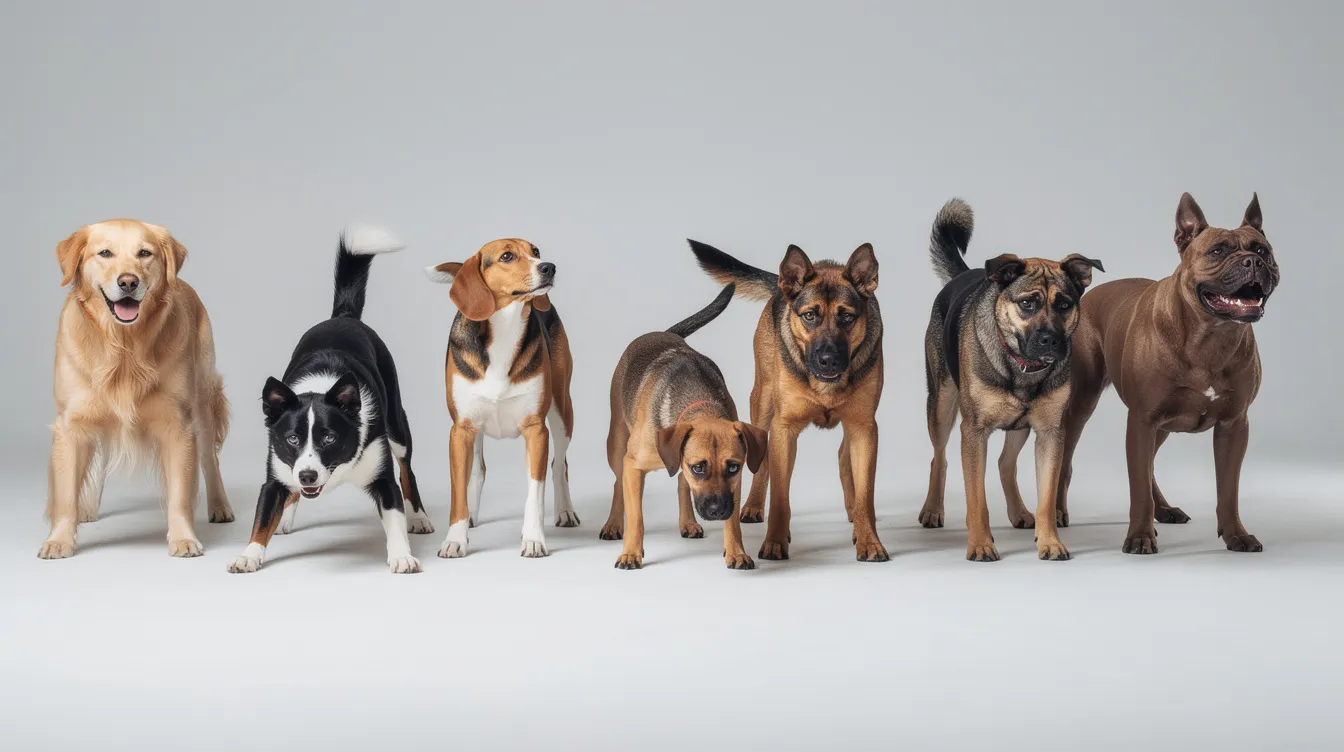
Each region of a dog’s body broadcasts information about how the dog feels. The signals below are organized by body part, but remember: they only tell the full story when read together.
Tail Communication
A dog’s tail is one of the most expressive parts of the body, but also one of the most misread.
Position matters first. A tail held in its neutral position (which varies by breed; level with the spine for most medium breeds, curled over the back for Akitas, low-hanging for Greyhounds) indicates a calm state. Tail high and rigid signals alertness or confidence; paired with a stiff posture and direct eye contact, it can indicate arousal or a precursor to aggressive behavior. A tucked tail indicates fear or discomfort in dogs. A dog’s tail tucked between their legs, pressed against the belly, signals that the dog feels threatened or overwhelmed.
Movement adds another layer. Dogs wag their tails for many reasons beyond happiness. Slow, broad wags typically accompany relaxed greetings. A fast wagging tail with small amplitude often signals high arousal, which could be excitement or frustration. Research has shown that dogs tend to wag more to the right when responding to positive stimuli and more to the left with negative stimuli. A stiff, slow wag with the tail high is a very different signal from a loose, sweeping wag at neutral height.
For certain breeds with docked tails or naturally short tails, reading tail communication requires extra attention to the tail base and whatever movement remains visible.
Facial Expressions and Eye Contact
A dog’s eyes reveal its internal state with surprising precision.
Soft eyes suggest a dog is calm and happy. The lids are relaxed, the forehead smooth, and the gaze is unfocused or gently directed. This is the look of a relaxed and happy dog at rest. Contrast this with a hard stare: direct eye contact, dilated pupils, and a rigid facial expression. Aggressive dogs have a stiff posture, raised hackles, and a hard, direct stare. When you see this combination, the dog is communicating a warning.
Whale eye (sometimes called “side eye”) appears when a dog turns its head away but keeps its eyes on a stimulus, making the white sclera visible. This typically signals anxiety or a feeling of being trapped. Look-away behavior may signal discomfort, de-escalation, or a request for more space.
A dog’s mouth carries its own set of messages. A relaxed mouth with the tongue hanging loosely indicates comfort. A tense mouth with tightly pulled lips, visible facial tension, or baring teeth signals discomfort or defensive intent. Lip licking often signals anxiety in dogs; a quick tongue flick outside of eating or drinking contexts is one of the earliest displacement behaviors dogs display under social pressure. Yawning can indicate stress in dogs when it occurs outside of normal tiredness or waking-up contexts. Turid Rugaas, who popularized the term “calming signals,” identified both lip licking and yawning as behaviors dogs use to reduce tension and avoid conflict.
Ear Positioning and Body Posture
A dog’s ears communicate attention, mood, and intent. Forward-facing ears signal interest or alertness. Ears pinned back indicate anxiety or fear in dogs. For breeds with floppy ears, the ear base and the tension at the attachment point provide the readable signal rather than ear tip direction.
Body posture ties everything together. Relaxed dogs have loose, bouncy movements with even weight distribution on all four paws. An alert dog stands tall with weight shifted forward and muscles tense through the shoulders. A fearful dog exhibits cowering, tail tucking, and avoidance behavior; a lowered body, trembling, and avoidance of eye contact make up this cluster. An aggressive stance features a rigid frame, raised hackles, forward lean, and body weight loaded onto the front legs.
Raised hackles (piloerection along the spine and shoulders) deserve special attention. Raised hackles can indicate excitement or stress, not just aggression. A dog shakes off (a full-body shake when not wet) as a way to release tension after a stressful moment.
Key points for reading multiple signals: never rely on one signal alone. A wagging tail with pinned ears and whale eye tells a different story than a wagging tail with soft eyes and a relaxed body. Cluster the signals, then interpret.
Advanced Interpretation and Practical Application
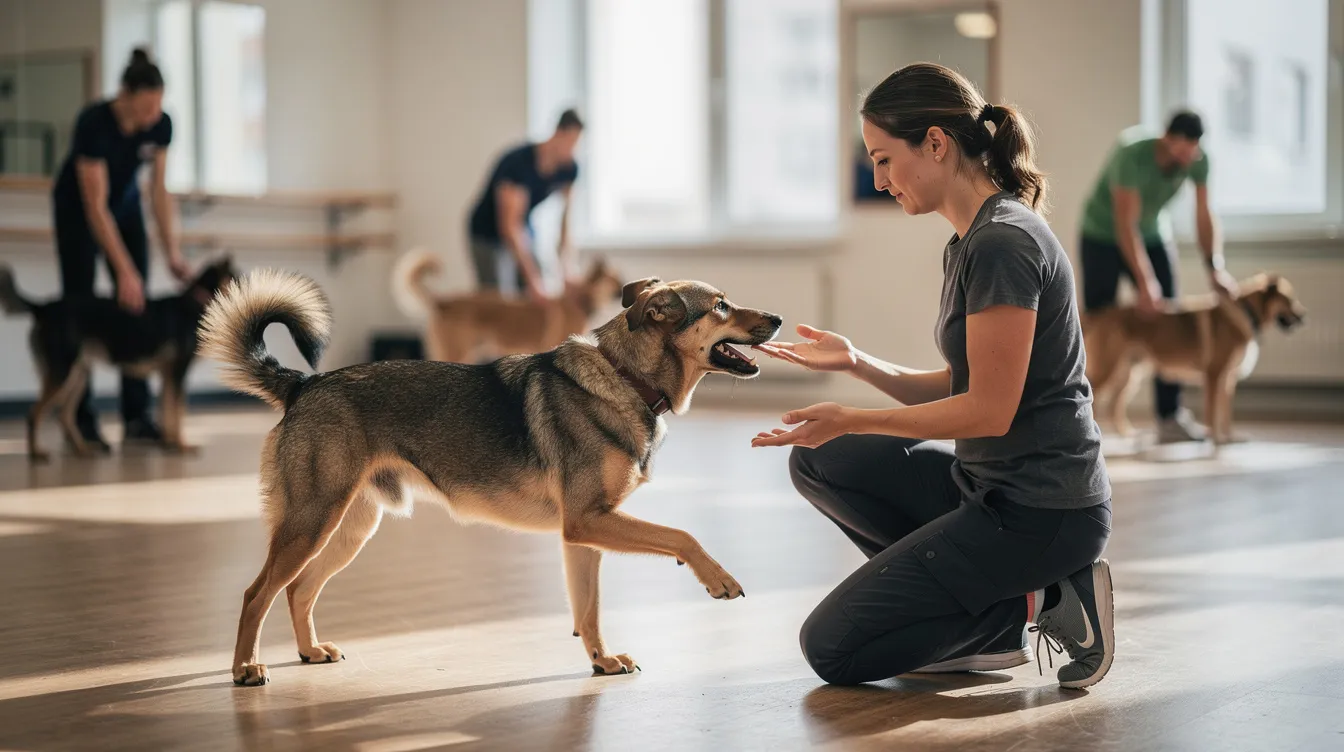
Once you can identify individual body signals, the next skill is combining them into an accurate read of your dog’s emotional state and knowing when to act.
Reading Emotional States
Use this five-step process whenever you need to assess how your dog feels:
- Observe the entire body. Scan tail, ears, eyes, mouth, posture, and movement before forming a judgment. A dog shows signs of stress through clusters of signals, not single cues.
- Consider the current context. Is it 115°F outside? Is a stranger approaching? Did another dog just bark? Context separates heat panting from stress panting and curiosity from threat response.
- Look for signal clusters. Lip licking + whale eye + tucked tail points toward anxiety. Soft eyes + neutral tail + loose body confirm comfort. Different signals from dogs can indicate varying emotional states, including comfort and fear.
- Assess intensity. Mild stress looks like a tongue flick or a single yawn. Moderate stress involves whale eye, a low tail, and body tension. Freezing is a behavior indicating high stress or the potential for a negative reaction. A dog freezes when it has exhausted subtle signals and is deciding between flight and fight.
- Respond appropriately. Give space for mild stress. Remove the trigger for moderate stress. For escalation toward aggression (stiff posture, direct stare, baring teeth), increase distance immediately and consult a professional.
Stress Levels and Warning Signs
This table summarizes how signals cluster at different stress levels:
| Signal | Relaxed | Mildly Stressed | Highly Stressed | Aggressive/Defensive |
|---|---|---|---|---|
| Tail | Neutral or broad sweeping wag | Low, slow wag | Tail tucked tight against belly | Tail high, stiff, minimal movement |
| Ears | Natural position (forward or floppy) | Slightly back or frozen forward | Pinned flat against head | Forward and rigid |
| Eyes | Soft eyes, minimal sclera visible | Whale eye, gaze averted | Wide, dilated pupils, hard avoidance | Direct stare, focused and unblinking |
| Mouth | Relaxed, tongue hanging if warm | Tongue flick, single yawn | Panting unrelated to heat, tense mouth | Lips curled, baring teeth, snarling |
| Body | Loose wiggly body language, even weight | Slight crouch, weight shifted back | Trembling, cowering, freezing | Rigid frame, raised hackles, weight shifted forward |
A veterinary clinic study documented that lip licking appeared in approximately 80% of dogs during examination, and tail tucking occurred at comparable rates. These behaviors increased during peak-stress moments of the visit. Dogs show excitement by bouncy, high-energy movements and play bows; when those loose movements disappear and are replaced by stillness or rigidity, the dog’s internal state has shifted.
When you observe repeated freezing, a stiff direct stare combined with tail high and raised hackles, or any snapping behavior, seek professional help. These patterns indicate a dog that has moved past subtle communication and into a reactive state. Aggressive dog training programs are designed to address exactly these scenarios through structured behavior modification.
Common Challenges and Solutions
Even attentive owners misread their dogs. Three patterns account for most errors.
Misreading “Submissive” Behaviors
A dog rolling on its back may be scared or seeking comfort, not asking for a belly rub. The submissive grin (teeth exposed with a tense mouth, squinted eyes, and a lowered body) looks superficially like friendliness but often accompanies appeasement or anxiety. Similarly, a raised paw or paw raise during an interaction can signal uncertainty rather than a trick prompt.
What to do: If a dog exposes its belly while showing other signs of stress (lip licking, whale eye, tucked tail), give the dog more space instead of reaching in to pet. Watch for the body to soften and the tail to relax before initiating contact. Reward the dog’s relaxed body language rather than forcing closeness. Let dogs come to you for interaction.
Confusing Play Signals with Aggression
A play bow means a dog wants to play. Loose, bouncy movements, mirrored behavior between dogs, and relaxed facial expressions characterize healthy play. Dogs show excitement by bouncy, high-energy movements and play bows. The distinction from aggression lies in body tension: play involves a relaxed body, while conflict involves a tense body with rigid limbs. A happy dog at play has open, soft eyes and easy movements. A dog in conflict has facial tension, a hard stare, and weight loaded forward.
What to do: Monitor interactions between your dog and other dogs closely. If you cannot tell whether body posture is playful or aggressive, call a break. Separate the dogs briefly. If one dog shows loose, wiggly body language and the other has stiff posture or is avoiding interaction, the play is no longer mutual. Understanding how to manage these situations is a core part of socialization training for reactive dogs.
Ignoring Subtle Warning Signs
Subtle signs like lip licking, yawning, and looking away are the earliest indicators that a dog feels uncomfortable. These calming signals appear before any growling, snapping, or biting. Owners commonly dismiss them because the same behaviors occur in non-stressful contexts (yawning when tired, licking lips after eating). The difference is repetition and context: a nervous dog that yawns three times during a greeting while showing whale eye and a low tail is not sleepy.
What to do: Treat early signs as communication, not noise. When you see a tongue flick, a yawn, or gaze avoidance during a social interaction, reduce the pressure. Increase distance from the perceived threat, stop petting, or move to a quieter area. Avoid direct eye contact when greeting a dog, and approach dogs from the side, not head-on. Hugs are often perceived as threatening by dogs. Responding to subtle signals prevents escalation to fear-based aggression. If your dog repeatedly shows these patterns in specific situations, consider a puppy training consultation or professional assessment to address the underlying triggers before they intensify.
Conclusion and Next Steps
Reading canine body language is a trainable skill, not an innate talent. The difference between an owner who catches a tongue flick and one who misses it often determines whether a dog’s stress resolves quietly or escalates into a bite. Dogs communicate through their entire body; your job is to watch the whole picture, factor in context, and act on what you see.
Start building this skill today:
- Spend five minutes each day observing your dog at rest, during play, and during transitions (leash on, visitors arriving, mealtime). Note your dog’s baseline signals for each state.
- Document your individual dog’s unique patterns. Some dogs default to a higher tail carriage; others rarely show whale eye. Knowing your dog’s normal makes deviations visible.
- Respond to early warning signs the first time you see them. Give your furry friend space, reduce stimulation, or remove the trigger. Do not wait for growling or snapping to take action.
At Off Leash K9 Training Phoenix, body language reading is built into every training session. Trainers watch for the signals that indicate a dog is in a learning-ready state (forward ears, neutral tail, focused eyes) versus a stressed state, and they adjust pace accordingly. This approach supports both off-leash obedience training and behavior modification for dogs with anxiety or reactivity. Understanding dog language is the foundation of balanced training methods that build trust between handler and dog.
Additional Resources
- Free phone consultation: If your dog shows repeated stress signals, freezing, or other signs that concern you, a professional assessment can identify the triggers and build a plan. Contact Off Leash K9 Training Phoenix for a no-cost initial conversation about your dog’s behavior.
- Board and train programs: Dogs with severe anxiety, fear-based reactivity, or aggression toward other animals benefit from immersive training environments where professionals read and respond to body signals throughout the day. The 2 Week Board and Train and Aggression Board & Train programs are structured around continuous body language assessment.
- Veterinary advice: If stress signals appear alongside excessive drooling, appetite changes, or sudden behavioral shifts, consult your veterinarian to rule out pain or medical causes before pursuing behavioral training.
