
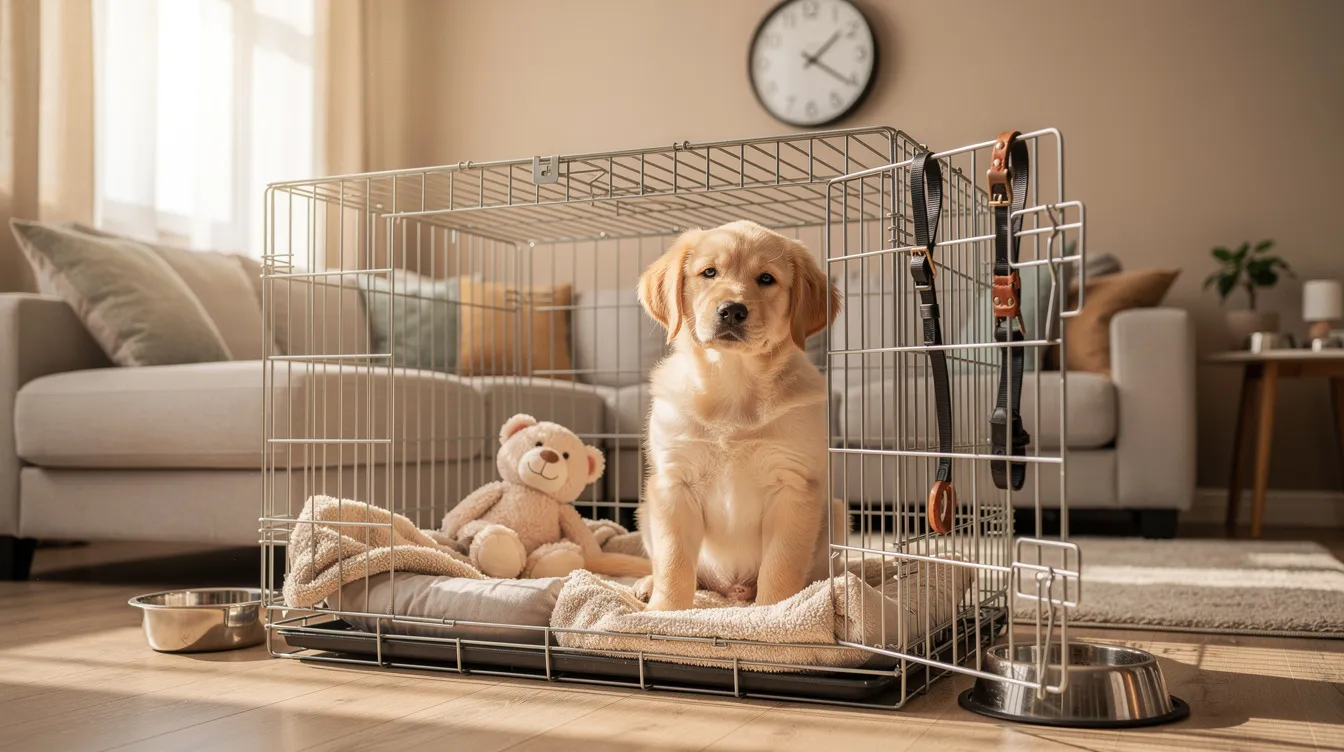
Introduction
A structured crate training schedule is the single most effective tool for house training a new puppy, regulating sleep, and preventing potty accidents. Puppies between 8 weeks and 6 months old need predictable daily routines built around their bladder capacity, sleep requirements, and energy levels. Without a consistent crate schedule, owners face more indoor accidents, disrupted nights, and a puppy that never learns to treat the crate as a safe and comfortable space.
This guide covers daily crate training schedules for puppies from 8 weeks through 6 months. It targets new puppy owners and anyone struggling with timing, consistency, or integrating crate time into a busy household. Breed-specific nuances and advanced obedience fall outside this scope; here, the focus stays on building the foundational daily routine that everything else rests on.
A puppy crate training schedule should follow intervals of 1 to 4 hours during the day (depending on the dog’s age), paired with overnight crating and middle-of-night potty breaks for young puppies. Puppies can hold their bladder for about one hour per month of age, so an 8-week-old pup needs a bathroom break roughly every two hours, while a six-month-old puppy can typically hold it for six hours.
By the end of this guide, you will have:
- A structured daily routine specifying when to crate, when to offer a potty break, and when to schedule play time and meals
- Age-appropriate crate duration guidelines tied to your puppy’s bladder development
- A method for integrating potty training directly into your crate schedule to reduce accidents
- Evening and overnight protocols that produce peaceful nights for both you and your pup
- A plan for building long-term positive association with the crate so it becomes a safe space, not a source of stress
Understanding Crate Training Schedule Fundamentals
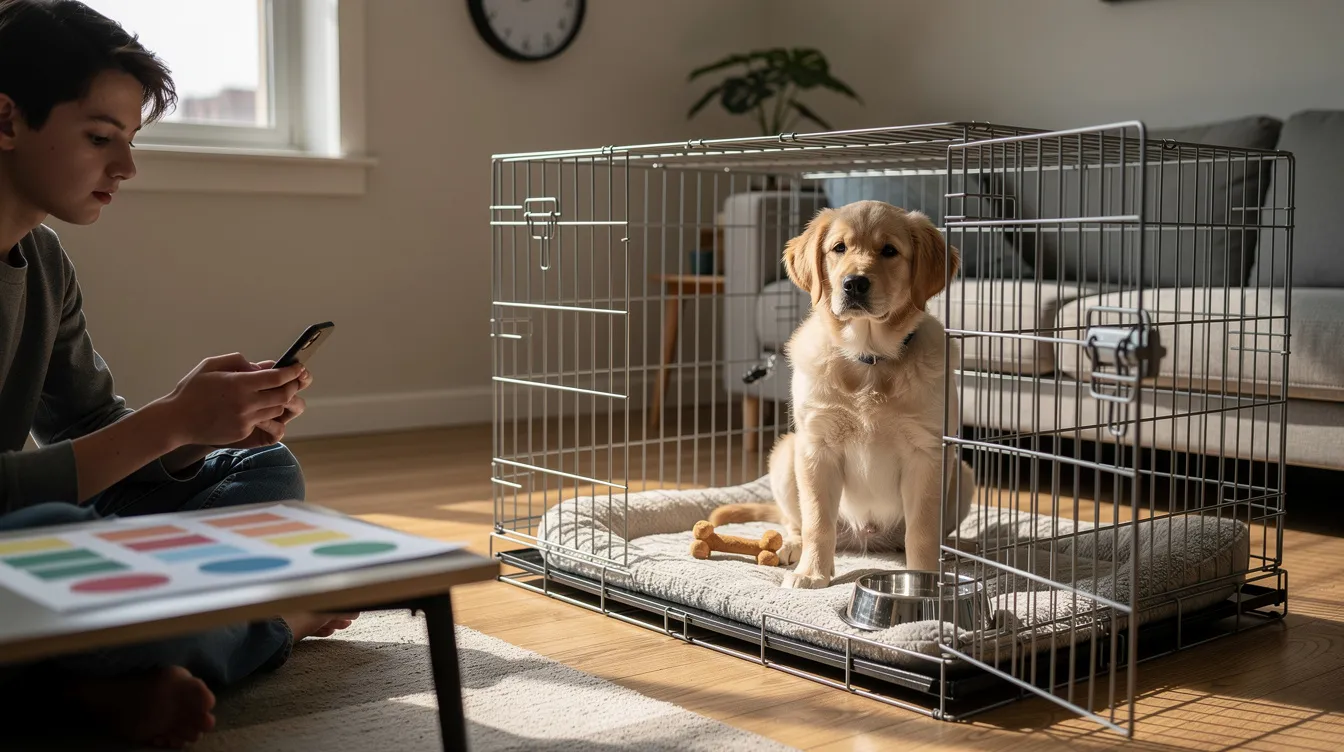
An effective crate training schedule pairs every crate session with a potty break before and after, a feeding window, and a play or exercise period. The sequence matters more than raw duration: crate/rest, then potty, then play or food, then back to rest. Crate training requires consistency and a predictable routine. An effective crate-training schedule balances activity and quiet time. Dogs instinctively avoid soiling their sleeping area, which is why the crate works as a house training tool; the puppy learns to hold it until the next scheduled break.
Duration alone (“how many hours in the crate?”) misleads owners. A puppy crated for three hours at the wrong point in its feed/sleep cycle will have an accident regardless. The AKC recommends taking a puppy outside within a few minutes of eating because digestion triggers the need to eliminate. That timing link between meals and potty breaks is what makes a schedule effective.
Crate training helps with housebreaking puppies effectively. It also regulates sleep: young puppies at 8 weeks sleep 18 to 20 hours per day, and enforced naps in the crate prevent the overtiredness that leads to puppy biting, barking, and erratic behavior. A predictable routine also helps prevent separation anxiety, because the puppy learns that being alone in the crate always ends with the owner returning at a consistent time.
The Science Behind Puppy Sleep and Crate Time
Puppies need 18 to 20 hours of sleep a day at 8 weeks old. By 3 to 4 months, that drops to roughly 14 to 16 hours. These rest periods are not optional; rapid neurological and physical growth depends on them. The crate supports these natural rest cycles by giving the puppy a quiet, enclosed comfortable space where it can fall asleep without household distractions from kids, older dogs, or foot traffic.
Bladder control develops alongside age. Puppies can hold their bladder for one hour per month of age. An eight-week-old puppy can hold their bladder for about two hours during the day (some sources note up to three hours, particularly overnight when metabolism slows). By 4 months, a puppy manages roughly 4 hours. This biological timeline is the backbone of every crate schedule: it tells you the maximum interval between potty breaks at each stage.
Age-Based Crate Duration Guidelines
Here are specific crate time limits by age, based on bladder capacity and sleep needs:
- 8 to 10 weeks: Daytime crate sessions of 30 to 60 minutes. Potty break after every nap, meal, and play session. Overnight stretches of 2 to 3 hours between breaks.
- 10 to 12 weeks: Crate sessions up to 2 hours during the day. Overnight breaks every 3 to 4 hours. Bladder control improving but still limited.
- 12 to 16 weeks: Daytime crate periods of 3 to 4 hours. Many puppies begin sleeping through the night (6 to 8 hours) by 4 months, with one break if needed.
- 4 to 6 months: Daytime crate sessions of 4 to 6 hours. Puppies under six months should not be crated for over four hours during the day without a break. A six-month-old puppy can typically stay in a crate for six hours. Most sleep through the night.
Gradually increasing the duration of crate time prevents stress in puppies. If your pup is whining, having potty accidents, or refusing to settle, the session length is too long. Proper crate training can take several days to weeks; allow the puppy to progress at its own pace.
These timing guidelines translate directly into a practical daily routine, which the next section builds out hour by hour.
Creating Your Puppy’s Daily Crate Schedule
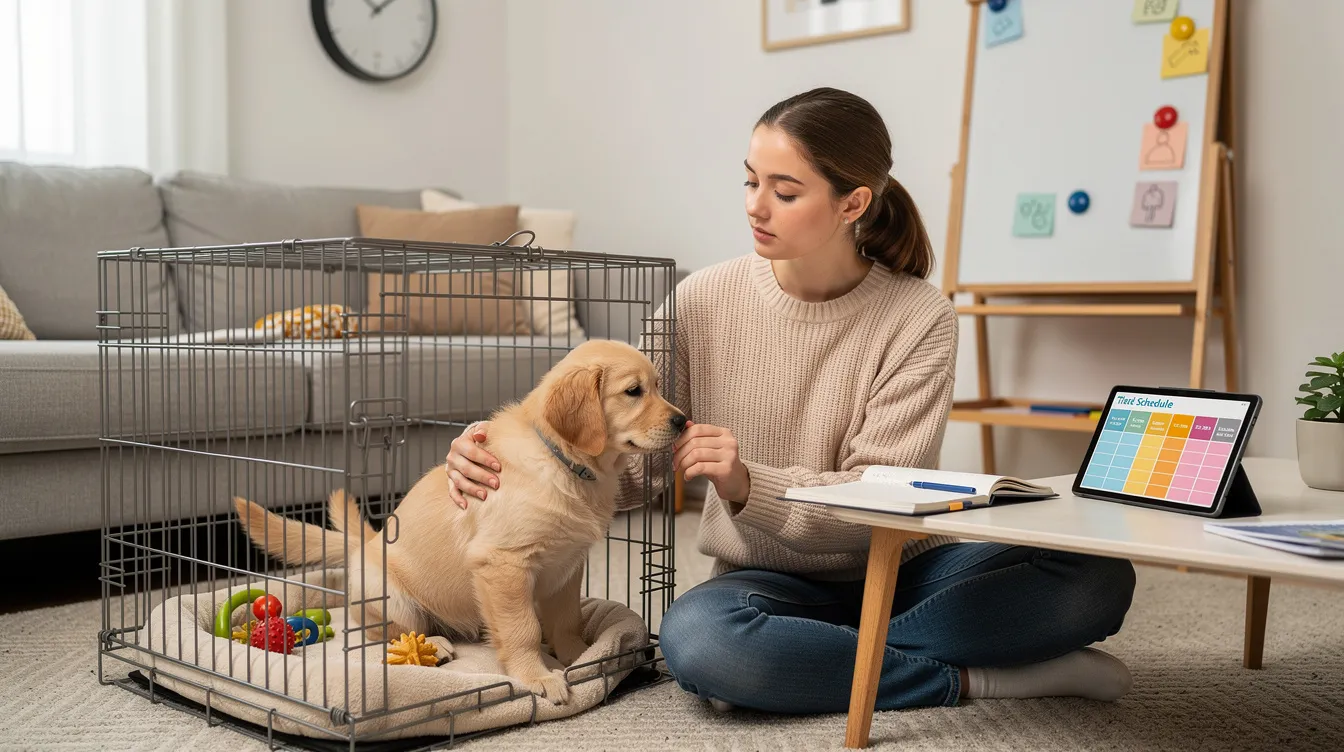
With age-appropriate durations established, the next step is mapping them onto a real day. The core pattern repeats: wake from crate, potty break, meal or play, short training, then back to the crate for rest time. Puppies should be taken outside immediately after waking, eating, and playing.
Morning Routine Integration
Wake at a consistent time, ideally between 6 and 8 AM. The first action is a potty break outside; do not stop for anything else. After elimination, come back inside for the first meal. Feed breakfast inside the crate with the food dish placed at the back to build positive associations. Use treats to encourage your puppy to enter the crate. After the puppy finishes eating, take it outside again within 10 to 15 minutes, since digestion triggers the need to go.
Following the post-breakfast potty break, allow 15 to 20 minutes of play time or a short walk, then crate the pup for a morning nap. For an 8- to 10-week-old puppy, this nap lasts roughly 30 to 60 minutes. For a 3- to 4-month-old puppy, extend that to 1.5 to 2 hours. Close the door calmly; leave a bully stick or favorite toy inside so the pup settles without fuss.
Midday Schedule Structure
After the morning nap, repeat the cycle: potty break first, then a short play or training session, then lunch (if your pup is still on three meals per day, which is typical until around 4 months). Feed your puppy meals inside the crate to create positive associations. After lunch, another outdoor potty break, then a brief play period before the afternoon crate nap.
For owners with work schedule conflicts, this midday window is where planning matters most. A puppy under 4 months cannot hold it through an 8-hour workday. Arrange for a dog walker or midday visit to break up the stretch. If no one is available, use a puppy-proofed room or exercise pen with a designated potty area rather than leaving a young puppy locked in a crate for longer periods than its bladder allows. Young puppies require frequent potty breaks to prevent accidents.
Mid-afternoon follows the same logic: crate for rest, potty upon waking, brief activity, then settle again. The goal is ensuring enough exercise and mental stimulation between naps so the pup is ready to rest when crated. Introduce the crate in a familiar area of the house so the puppy treats it as part of its normal environment, not an isolated room.
Evening and Bedtime Protocols
Schedule dinner several hours before bedtime. If bedtime is 9 to 10 PM, feed dinner around 6 PM. This gap gives the puppy time to digest and eliminates one source of overnight accidents. After dinner, spend time on a walk, gentle play, or a short training session. Avoid high-energy activity in the last hour before bed; a calm environment helps the pup wind down.
The bedtime routine should be predictable: final potty break at 9 to 10 PM, then into the crate with a chew toy or treat. The crate should remain a positive space and not be used as punishment. Place the crate near your bed during the first weeks so the puppy senses your presence and you can hear whining that signals a genuine bathroom break. Dim the lights, lower noise, and let the puppy fall asleep on its own.
Overnight, puppies younger than 4 months typically need at least one middle-of-night potty break. Set an alarm for 2 to 3 hours after bedtime (for 8 to 10-week-old puppies) or 4 hours (for 12- to 16-week-old puppies). Take the pup out quietly, no playing, no excitement, then straight back into the crate. By 4 to 5 months, most puppies sleep through the night without a break.
The full daily routine follows a repeating loop: crate, potty, eat or play, potty, crate. The next section provides week-by-week implementation and a comparison table you can adapt to your puppy’s age.
Sample Schedules and Implementation Strategies
Building a daily routine from scratch works better when phased in over several weeks rather than imposed all at once. Crate training can take several days to establish, and rushing the crate training process increases resistance.
Step-by-Step Schedule Setup Process
Start implementing a structured schedule during your puppy’s first week home.
- Week 1: Establish consistent wake-up and bedtime crating. Add 1 to 2 short daytime crate sessions (half an hour to one hour each). Focus on making the crate a safe place with treats, a favorite toy, and meals served inside. Gradually increase crate time as your puppy becomes comfortable. Leave the crate door open during non-crate periods so the puppy can explore at its own pace.
- Week 2: Add a midday crate rest session. Extend each session by 15 to 30 minutes if the puppy settles without distress. Begin tightening the potty schedule so breaks happen at fixed times rather than on demand. Track accidents to identify timing gaps.
- Week 3: Implement the full daily schedule with consistent wake, meal, play, and crate times. A sample schedule includes playtime, meals, and crate time in repeating cycles throughout the day. By now, the puppy should enter the crate with minimal resistance if positive association has been established.
- Week 4: Fine-tune based on your puppy’s individual response. Reduce overnight breaks if the puppy sleeps through. Extend daytime crate sessions a bit longer as bladder control improves. Note which times of day produce the most potty accidents and adjust accordingly.
Age-Specific Schedule Comparison
| Age Range | Daytime Crate Sessions | Maximum Duration | Overnight Breaks |
|---|---|---|---|
| 8-10 weeks | 4-5 short sessions | 1-2 hours | Every 2-3 hours |
| 10-12 weeks | 3-4 sessions | 2-3 hours | Every 3-4 hours |
| 12-16 weeks | 2-3 sessions | 3-4 hours | 1-2 breaks |
| 4-6 months | 1-2 sessions | 4-6 hours | Most sleep through the night |
These numbers represent general guidelines. A right-size crate is essential for puppies; the crate should be large enough for the puppy to stand, turn around, and lie down, but not so large that it can use one corner as a toilet. Toy breeds may have smaller bladder capacity than the table suggests. Large breed puppies with high energy needs may require more exercise between sessions. As a general rule, if you see consistent potty accidents inside the crate, shorten the duration and add a potty break.
As your puppy grows, revisit the table monthly and adjust. The transition from the 8-10 week row to the 4-6 month row should feel gradual, not abrupt. Each week, the puppy earns a bit more crate time through demonstrated bladder control and calm behavior.
Common Schedule Challenges and Solutions
Even with a solid training schedule, three obstacles come up repeatedly for new puppy owners.
Puppy Whining During Scheduled Crate Time
Whining falls into two categories: a signal that the puppy needs a potty break, and attention-seeking behavior. If the puppy was just outside and has not eaten or drunk water recently, the whining is likely attention-seeking. Ignoring minor whining teaches puppies that quiet behavior leads to exiting the crate. UC Davis recommends against opening the crate door in response to whining, because doing so reinforces the behavior. Wait for even a few seconds of quiet, then reward with a calm release. If the pup whines within an hour of eating or drinking, take it outside for a quick potty break; this is an exciting time for puppies, and their bodies move fast.
For persistent barking or distress, revisit the basics. The session may be too long, the crate may be in an isolated room, or the puppy may not yet have a positive association with the space. Step back to shorter periods, add a treat or bully stick, and rebuild. If barking persists despite these adjustments, addressing the root cause early prevents it from becoming a habit in older dogs.
Work Schedule Conflicts with Ideal Crate Timing
An 8-hour workday exceeds safe crate duration for any puppy under 6 months. Puppies under six months should not be crated for more than four hours. Solutions that work in practice: hire a dog walker for a midday visit, ask a neighbor or family member to stop by, or use doggy daycare 2 to 3 days per week during the early months. If none of these are available, set up a puppy-proofed exercise pen attached to the crate with access to a designated potty area. This is not ideal for potty training (it teaches the puppy to eliminate indoors), but it prevents the stress and health risks of over-crating.
Structure your home schedule around the gaps. If you leave at 8 AM and a walker arrives at noon, the puppy’s morning routine (wake, potty, breakfast, play, crate) should wrap up by 8 AM. The walker handles the midday cycle. You pick up the afternoon and evening routine when you return. Consistency within each block matters more than having one person do every step.
Inconsistent Family Member Participation
When multiple people share puppy duty, the schedule fragments unless everyone follows the same plan. Post the crate schedule visibly (kitchen whiteboard, shared phone calendar, printed chart on the fridge). Assign specific time blocks to specific people. Use the same verbal cue for potty (“outside”), the same treat for crate entry, and keep the crate in the same location.
Kids in the household need clear rules: no opening the crate door during naps, no feeding the puppy outside of scheduled meals, and no using the crate as a time-out space. The crate should remain a positive space and not be used as punishment; if a puppy associates the crate with being scolded, the entire crate training process breaks down. Addressing early puppy behavior problems as a household, rather than individually, keeps everyone on the right track.
These challenges are solvable with planning. The payoff is a well-behaved puppy that treats its crate as a safe space and a potty schedule that holds up under real-life conditions.
Conclusion and Next Steps
A consistent crate training schedule produces a puppy that sleeps through the night, has fewer potty accidents, and rests calmly when left alone. Building a positive association with the crate through treats, meals, and a comfortable space inside makes the crate a place the puppy chooses, not dreads. The schedule itself is straightforward: match crate duration to your puppy’s age, pair every crate session with a potty break, and keep feeding, play, and rest on a predictable loop.
Your immediate next steps:
- Identify your puppy’s age bracket in the comparison table and set your starting crate durations accordingly.
- Establish consistent wake-up and bedtime times this week; these two anchors structure everything else.
- Track potty breaks and accidents for the first 7 days. Look for timing patterns and adjust the schedule where gaps appear.
- Gradually increase crate time by 15 to 30 minutes per week as your puppy demonstrates calm behavior and bladder control.
As your puppy grows and masters the crate routine, the foundation you have built transfers directly to more advanced training. Off-leash reliability, dealing with potty refusal outdoors, and behavior modification all depend on the self-control and routine a puppy develops through consistent crate training in the first 6 months.
Additional Resources
Off Leash K9 Training Phoenix offers puppy training consultations to help align your crate schedule with your household’s specific needs, including customized potty schedules and strategies for working owners. Their 2-week board and train program includes structured crate training during the stay, so your puppy returns home with established habits.
For puppies showing signs of distress when left alone, review the guide on dog separation anxiety and crate training, which covers graduated alone-time protocols that pair with the schedule outlined here.
