
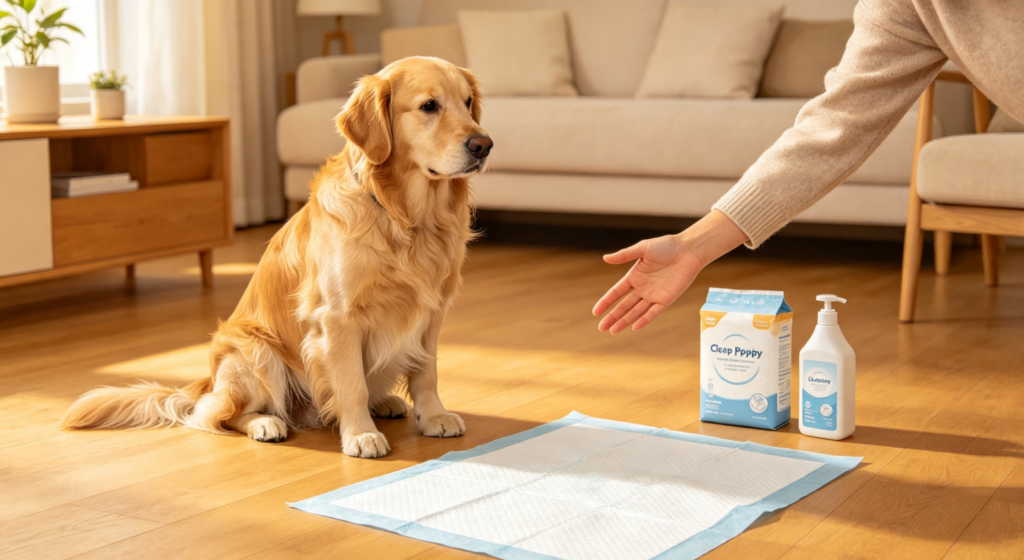
Finding urine on a doorway, furniture leg, wall, guest’s bag, or newly delivered box can be frustrating, especially when your dog is otherwise house-trained. Learning how to stop a dog from marking in the house starts with identifying what kind of urination is occurring and why it is happening.
Indoor marking is not always a house-training failure. Dogs may leave small amounts of urine as scent communication, in response to another animal, because of household stress, or after a change in their surroundings. Medical problems can also look like marking, so a sudden change should not automatically be treated as a training issue.
The most effective response usually combines veterinary guidance when needed, thorough cleaning, close supervision, a predictable potty routine, trigger management, and training that makes redirection easier.
Key Takeaways
- Marking usually involves small amounts of urine, often placed on an object or vertical surface.
- A large puddle is more likely to be house-soiling, urgency, incomplete house-training, or a medical problem.
- Both male and female dogs can mark, including dogs that have been spayed or neutered.
- Sudden indoor urination should be discussed with a veterinarian.
- Enzymatic cleaners help remove the odor that can draw a dog back to the same area.
- Gates, leashes, crates, and supervised confinement prevent repeated practice while new habits are being built.
- Punishing a dog after finding urine does not teach the desired behavior and may increase fear or stress.
- Obedience commands support supervision and redirection, but commands alone do not resolve medical conditions or anxiety.
Is Your Dog Marking or Having an Accident?
Before changing your training plan, look carefully at the amount, location, posture, and timing of the urination.
Signs that suggest urine marking
Your dog may be marking if you notice:
- A few drops or a small amount of urine
- Several small spots in different locations
- Urine placed on a wall, furniture leg, doorway, curtain, box, bag, or other object
- Leg lifting or a brief squat near a specific item
- Marking after smelling an area where another animal has been
- Marking shortly after a visitor, pet, or unfamiliar object enters the home
Marking commonly occurs on vertical surfaces, but it can also happen on horizontal objects or areas.
Signs that suggest house-soiling
The behavior may be a potty accident rather than marking if you find:
- A full puddle in one location
- Urination after the dog has been indoors too long
- Accidents in a puppy that is still learning where to go
- Urination during the night or while sleeping
- A senior dog forgetting previously reliable habits
- Increased thirst or larger-than-normal amounts of urine
Excitement-related and submissive urination are also different from marking. These usually happen during greetings or emotionally intense interactions and may be accompanied by crouching, lowered posture, a tucked tail, or excessive excitement.
Rule Out Medical Problems First
A previously house-trained dog that suddenly begins urinating indoors should be examined by a veterinarian before the behavior is treated as deliberate marking.
Urinary infections, bladder irritation, urinary stones, pain, increased urine production, incontinence, age-related cognitive changes, and other medical conditions can affect a dog’s elimination habits.
Contact your veterinarian promptly if your dog:
- Strains or repeatedly attempts to urinate
- Produces very little urine despite repeated attempts
- Has blood or unusual discoloration in the urine
- Appears painful while urinating
- Begins drinking or urinating much more than usual
- Leaks urine while resting or sleeping
- Suddenly loses previously reliable house-training
The veterinary-authored guide from VCA Animal Hospitals on dog marking behavior explains why a physical examination is particularly important when indoor urination begins suddenly.
Why Dogs Mark Inside the House
Urine marking is a form of scent communication. The dog is leaving information in a location rather than simply emptying a full bladder.
Identifying the likely trigger helps determine which management changes will be most useful.
New animals or people
A new dog, cat, roommate, baby, frequent visitor, or pet sitter can change the scent and social structure of a home. Some dogs respond by marking entry points, shared spaces, bedding, or the belongings of the new person or animal.
Scents from other animals
A visitor may carry another animal’s scent on shoes, clothing, bags, or equipment. Dogs may also react to animals visible through windows, doors, patios, or fences.
Moving or changing the home
Moving into a new house, rearranging furniture, installing new flooring, remodeling, or bringing home unfamiliar items can trigger investigation and marking.
Dogs moving into a property where other animals previously lived may detect odors that people cannot notice.
Household stress or routine changes
A new work schedule, fewer walks, longer periods alone, changes in feeding time, construction noise, or conflict between household pets can increase uncertainty.
Marking related to anxiety or frustration should be addressed by identifying the source of stress, not simply by correcting the urine itself.
Hormonal influences
Intact male dogs are commonly associated with marking, especially around sexual maturity. However, intact females, neutered males, and spayed females can also mark.
Spaying or neutering may reduce marking influenced by reproductive hormones. It does not guarantee that an established behavior will disappear, particularly when the dog has practiced it repeatedly or when anxiety and environmental triggers are also involved. Discuss the health and behavioral considerations with your veterinarian.
Incomplete house-training
Some behavior described as marking is actually incomplete house-training. This is common in puppies, recently adopted dogs, dogs coming from kennels, and dogs that were previously allowed to eliminate indoors.
Owners of young dogs can learn more about early routines and house-training foundations through puppy training in Phoenix.
How to Stop a Dog From Marking in the House
Indoor marking is rarely solved by one spray, command, or correction. Use the following steps together so your dog has fewer chances to repeat the behavior and more opportunities to practice the correct habit.
1. Clean every marked area thoroughly
Dogs may return to areas that still contain urine odor, even when people can no longer smell it.
Use a cleaner specifically labeled as an enzymatic pet urine cleaner. Follow the product directions and test it on a hidden section of fabric, flooring, or furniture before treating a large area.
The cleaner must reach the full area affected by urine. A surface wipe may not be enough if urine has soaked into carpet padding, upholstery, wood, baseboards, or grout.
Do not use scent alone to judge whether the area is clean. A UV flashlight may help identify older spots, although it can also reveal substances unrelated to urine.
2. Prevent unsupervised roaming
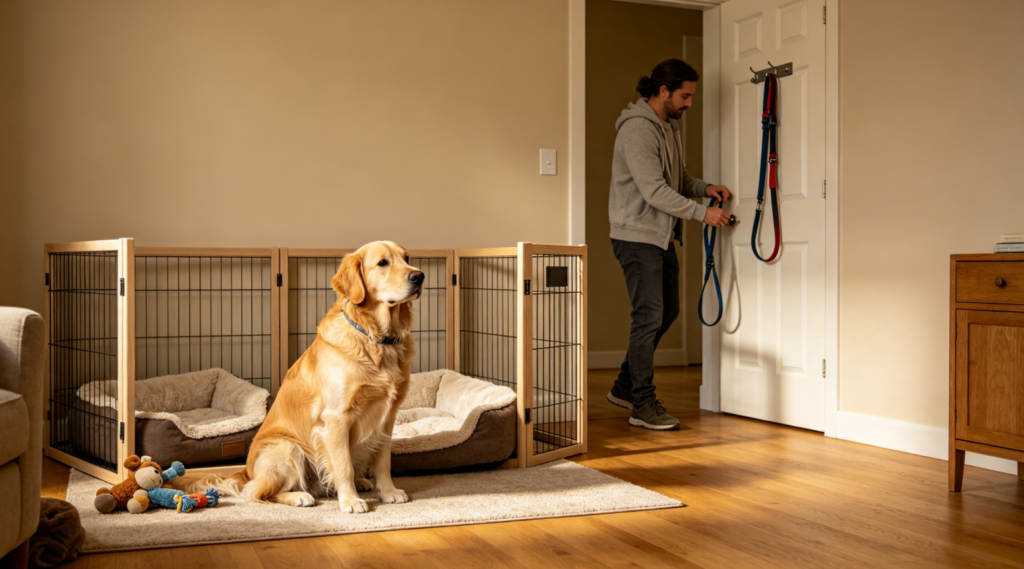
Every successful indoor mark allows the behavior to be repeated. Temporarily reduce the amount of space your dog can access.
Useful management options include:
- Keeping the dog in the same room as you
- Using a lightweight leash indoors under supervision
- Closing doors to problem rooms
- Installing baby gates
- Blocking access to frequently marked furniture
- Using a crate only when the dog is already comfortable and properly crate-trained
- Using an exercise pen or easy-to-clean gated area when a crate is not appropriate
Management is not a permanent solution by itself. It prevents rehearsal while you work on the cause and rebuild the desired routine.
3. Watch for pre-marking behavior
Many dogs investigate an area before marking. You may notice prolonged sniffing, repeated returns to the same object, circling, backing toward a surface, shifting posture, or beginning to lift a leg.
Calmly call your dog away before urination occurs. Ask for a familiar behavior such as Come, Sit, Place, or Down, and reward the response. If you believe your dog actually needs to empty their bladder, take them to the designated outdoor potty area. If the behavior appears to be true marking, continue redirecting the dog while addressing the underlying trigger.
Avoid shouting, chasing, or startling the dog. The goal is to interrupt and redirect, not create fear around urination or your presence.
4. Restart a clear outdoor potty routine
Even a house-trained adult dog may benefit from a temporary return to basic house-training.
Take your dog outside:
- After waking
- After meals
- After active play
- After drinking a large amount
- Before and after visitors arrive
- Before entering a room that has been marked
- Before being left alone
- Before bedtime
Use the same outdoor location when practical. Give your dog enough time to eliminate, then reward immediately after the dog finishes.
Do not turn every potty trip into play before elimination occurs. The dog should first learn that going outside and eliminating leads to praise, a reward, and access to other activities.
5. Keep a marking log
A simple record can reveal patterns that are easy to miss.
Record:
- Date and time
- Location
- Amount of urine
- Surface or object marked
- People and animals present
- Activities immediately before the incident
- Time since the last outdoor break
- Changes in routine
- Possible outside triggers
You may discover that the marking occurs only near a window, after a specific dog walks past, when guests bring bags inside, or during tension between household pets.
That information helps you change the environment instead of repeatedly reacting to the result.
6. Manage known triggers
Once you identify a pattern, reduce exposure while training is underway.
Examples include:
- Closing curtains when neighborhood dogs pass
- Using privacy film on low windows
- Moving guest belongings out of reach
- Introducing new furniture one room at a time
- Supervising closely after deliveries
- Separating pets during high-tension situations
- Providing separate resting, feeding, and resource areas
- Increasing predictable walks, play, and rest periods
If marking occurs alongside growling, guarding, lunging, or ongoing conflict between dogs, the household may need a broader behavior plan. Review dog aggression and reactivity training for verified Phoenix training options.
Aggression training should focus on safer management, improved control, and changing responses to triggers. It should not be presented as a guarantee that aggression or conflict will be completely eliminated.
7. Use obedience to support redirection
Obedience does not directly remove the motivation to mark. It gives owners practical ways to manage movement, interrupt investigation, and guide the dog toward another behavior.
Helpful commands include:
Come: Brings the dog away from a high-risk area before marking occurs.
Place: Gives the dog a defined location to settle while visitors enter, groceries are carried inside, or new objects are introduced.
Down and extended Down: Encourages calm stationary behavior instead of wandering from room to room.
Off: Interrupts unwanted interest in an object or area.
Loose Leash Heel: Helps owners maintain structure while moving the dog through the house or transitioning outside.
Owners who need a stronger command foundation can review dog obedience training in Phoenix.
8. Do not punish urine found later
A dog cannot be shown the correct alternative through a delayed correction. Scolding after discovering a dried or unattended spot may cause the dog to become worried around you without understanding what should change.
Quietly clean the area and adjust your management plan.
Ask:
- How did the dog gain access?
- Was the dog taken outside recently enough?
- Was a trigger present?
- Did supervision lapse?
- Does the dog need a medical evaluation?
- Is the household following the same routine?
Treat each incident as information that helps refine the plan.
9. Use belly bands only as temporary protection
A belly band may help protect furniture and flooring while you supervise and retrain a male dog. It does not teach the dog to stop marking.
The band must be checked frequently and changed immediately when wet. A damp band left against the skin can cause irritation or infection.
Continue supervising for marking posture even when a belly band is being worn. The goal is still to interrupt and redirect the behavior, not simply absorb the urine.
When Professional Help May Be Appropriate
Consider professional support when:
- Marking continues despite veterinary clearance and consistent management
- The dog cannot reliably respond to basic redirection
- Marking occurs alongside anxiety or distress when left alone
- Household pets are showing tension, guarding, or reactivity
- Family members are struggling to maintain one consistent routine
- The dog has several obedience and household behavior concerns
- You cannot identify the trigger
A dog trainer can help with obedience, household structure, owner timing, and consistent redirection. A veterinarian or veterinary behaviorist may be more appropriate when medical problems, significant anxiety, compulsive behavior, or medication questions are involved.
Off Leash K9 Training of Phoenix offers private obedience and immersive Board and Train programs. These programs can support broader obedience and household management goals, but they should not be described as a guaranteed cure for urine marking.
You can also review the company’s available training programs without including pricing in this article.
Final Thoughts
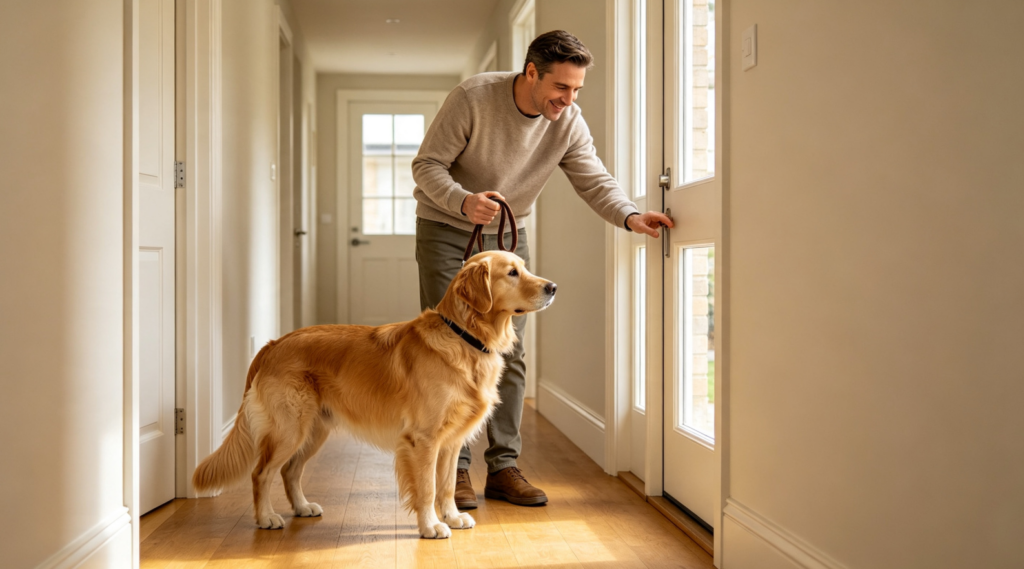
Learning how to stop a dog from marking in the house requires more than covering the odor or correcting the dog after an incident.
Begin by determining whether the behavior is marking, incomplete house-training, emotional urination, incontinence, or a possible medical problem. Then remove old urine odor, reduce unsupervised access, rebuild a predictable outdoor routine, track triggers, and reward the behavior you want.
Obedience commands can make supervision and redirection easier, but the complete plan should address the reason the marking is happening.
Phoenix dog owners who need help building clearer obedience, household structure, and more reliable responses can schedule a free phone consultation with Off Leash K9 Training of Phoenix.
Frequently Asked Questions
Why did my house-trained dog suddenly start marking?
Sudden marking can follow a new pet, visitor, move, schedule change, unfamiliar scent, or conflict between household animals. It can also be caused by a medical problem. A previously reliable dog that suddenly urinates indoors should be evaluated by a veterinarian.
Do female dogs mark inside the house?
Yes. Marking is more commonly associated with male dogs, but intact females and spayed females may also leave urine marks. Look at the amount, location, posture, timing, and possible triggers rather than relying only on the dog’s sex.
Will neutering stop a male dog from marking?
Neutering may reduce marking influenced by reproductive hormones, but it does not guarantee that established indoor marking will stop. Cleaning, supervision, routine changes, trigger management, and retraining may still be needed. Discuss neutering decisions with your veterinarian.
What is the best cleaner for dog urine marking?
Use a product specifically labeled as an enzymatic pet urine cleaner. Enzymatic products are designed to break down urine residue rather than only covering the smell. Follow the label directions and verify that the product is suitable for the affected surface.
Should I use a crate to stop marking?
A crate can prevent unsupervised marking when the dog is already comfortable and properly crate-trained. It should not be used as punishment. Dogs that experience crate distress may need a gated room, exercise pen, or another safe confinement arrangement.
Can obedience training stop indoor marking?
Obedience training can improve supervision, communication, impulse control, and redirection. Commands such as Come, Place, Down, and Off give owners useful alternatives when the dog begins investigating a high-risk area. Training does not replace veterinary care or treatment for underlying anxiety.
How long does it take to stop a dog from marking indoors?
There is no universal timeline. Progress depends on the cause, how long the dog has practiced the behavior, whether old odors remain, household consistency, medical status, and the owner’s ability to prevent unsupervised marking. Consistent management is more useful than expecting an overnight change.
