
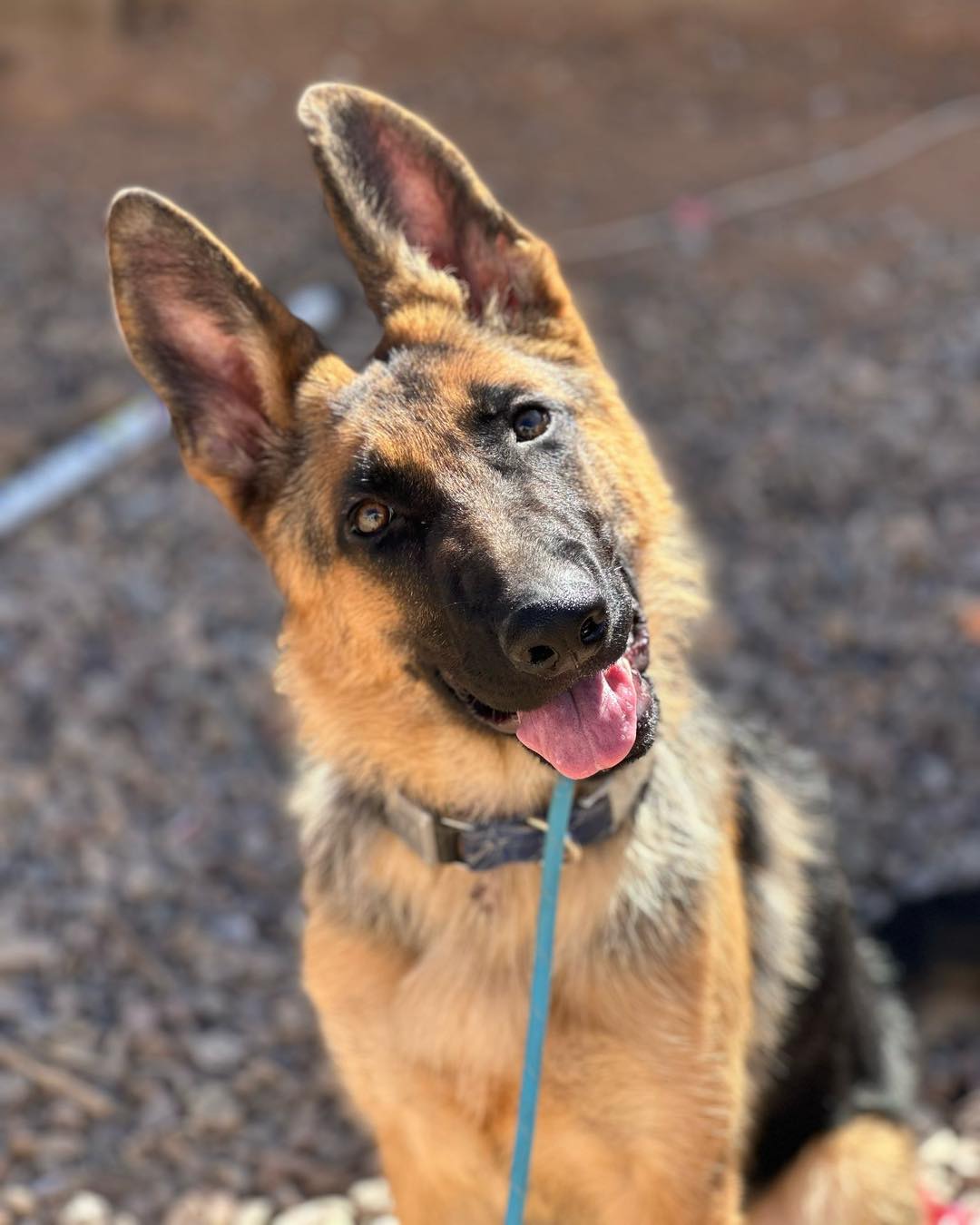
Dog hand signals give you a silent way to communicate with your dog when they are looking at you and can clearly see the gesture. This step-by-step guide explains what hand signals are, common gestures for everyday obedience, and how to teach them, starting in a quiet living room before gradually practicing around distractions.
This guide is for Phoenix dog owners teaching puppies, adult dogs, or senior dogs to respond to visual cues. Hand signals can also be useful for dogs with hearing loss, provided their vision allows them to see the gestures. We cover common signals, the teaching process, everyday applications, troubleshooting, and when professional guidance may help. Hand signals must be learned, and they do not replace an individualized plan for anxiety or reactivity. Formal competition obedience rules fall outside the scope of this article.
Here’s the quick answer: dog hand signals are intentional, repeatable gestures taught as cues for specific behaviors. For a hearing dog who already knows “sit,” show your chosen gesture first, then give the familiar verbal cue if needed. Reward the sit, and gradually give your dog a chance to respond to the gesture alone. Dogs can also learn a behavior through a visual cue from the beginning.
What you’ll learn in this guide:
- Common hand signals for everyday obedience, including sit, down, stay, come, heel, and place
- How to teach visual cues step by step
- How to reduce verbal prompting as your dog learns each gesture
- How to practice at home and in suitable public settings
- When professional guidance may help with training or behavior concerns
Understanding Dog Hand Signals
Dog hand signals are deliberate, repeatable visual cues for behaviors such as sit, stay, heel, come, lie down, or place. They differ from incidental movements such as shifting your weight or turning your head because you intentionally teach a specific meaning. There is no single universal gesture set for everyday pet training. Choose signals that are clear, distinct, and consistent.
Dogs pay attention to human movement. A study of 70 companion dogs found that they could follow pointing gestures in different tasks, including a new navigation context. That does not mean dogs automatically understand obedience signals or respond at a fixed success rate. Each gesture still needs training and practice.
For hearing dogs, teaching both verbal and visual cues gives you more than one way to request a familiar behavior. If you are considering professional training, ask Off Leash K9 Training Phoenix how hand signals could fit your dog’s needs and goals.
How Dogs Read Body Language
Dogs spend their entire lives reading body language. Every time you walk toward the door, reach for a leash, or shift your weight before standing up, your dog notices. They watch your shoulders, your head position, the angle of your arms, and especially your hands. Dogs naturally pay attention to human movement, which provides a useful foundation for teaching hand signals. However, each gesture must be taught and reinforced before a dog can reliably associate it with a specific behavior.
Dogs may respond to movements you did not intend as cues. For example, reaching toward a treat pouch or turning your body can become part of a learned routine. Keep your posture consistent during practice, and teach a separate release cue rather than assuming your dog understands that turning away ends a stay. For anxious dogs, use comfortable distances and avoid looming over them or reaching into their space.
Clear, consistent hand signals can become another way to communicate familiar requests. Watch how your dog responds, and keep gestures distinct from unrelated movements.
Hand Signals vs. Verbal Commands
Verbal commands are spoken cues, such as “sit,” “down,” or “heel,” delivered in a specific tone of voice. Hand signals are visual cues, such as raising a palm, pointing at the ground, or sweeping your arm toward your chest. Both work, but they excel in different situations.
Hand signals can be useful in noisy settings and for dogs with hearing loss. A study of highly trained working dogs found that gestural responses depended less on handler familiarity than verbal responses. It did not establish performance under every kind of pressure. Verbal cues remain useful when your hands are occupied, or your dog is not looking at you.
For a hearing dog, you can teach verbal and visual cues so either can request the same behavior. Practice each separately to check that your dog understands it. Now let’s look at practical hand signals you can begin teaching.
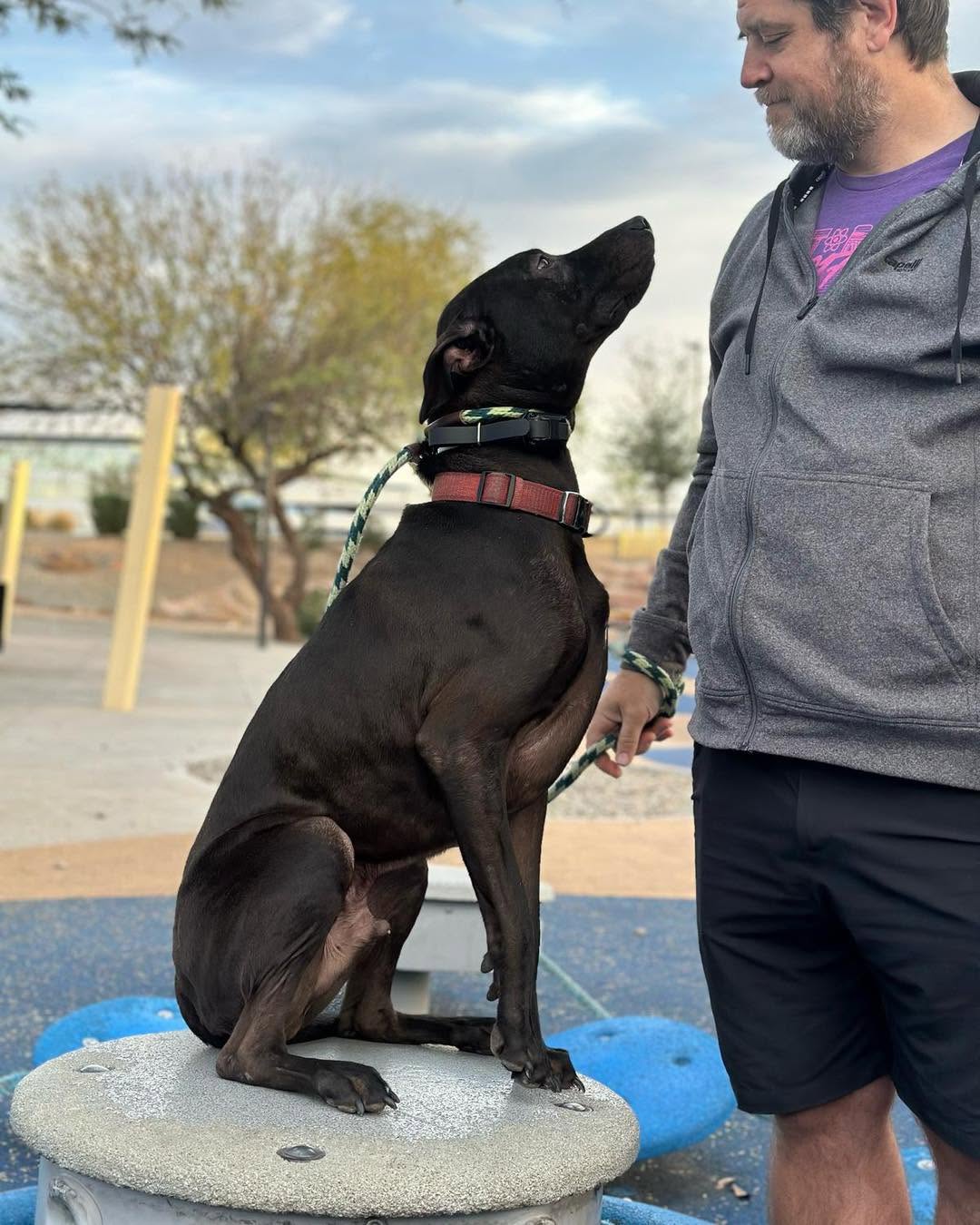
Core Dog Hand Signals Every Owner Should Know
This section covers the most useful, everyday hand signals that Phoenix dog owners can start practicing tonight: inside, in the backyard, or on a quiet stretch of sidewalk. These are the signals that form the backbone of basic commands: sit, down, stay, come, heel, leave it, drop it, and place. For each one, you’ll find what the gesture looks like, when to use it, and how it benefits your dog’s behavior and safety.
Start with basic commands like sit and stay, and use distinct hand signals for each command so your dog never has to guess which behavior you’re asking for.
Hand Signal for Sit
Hold your palm out, facing upward, near your waist. Then raise your hand smoothly from waist to chest level in one fluid motion. The upward movement naturally draws the dog’s head up and back, encouraging the sit position. Hand signals can mimic luring movements used during training, which is why this gesture feels intuitive to most dogs.
Once learned, this signal can be useful before setting down a food bowl or during calm greetings. On walks, keep your dog leashed and practice away from traffic before using the cue near a crossing. If you are starting with a puppy, explore puppy training in Phoenix and ask which foundations fit your puppy’s age and needs.
Hand Signal for Down (Lie Down)
Point at the ground with your palm open, moving your hand slowly from the dog’s nose level downward toward the floor. The downward motion guides the dog’s head and shoulders into a lie-down position. Some trainers start by luring with a treat in the signal hand, then fading the treat so only the gesture remains.
A trained down can be useful when resting on a mat at home or in a comfortable public setting. Lying down does not necessarily mean a dog feels relaxed. Watch for tension, and do not ask a fearful dog to remain close to something that worries them.
Hand Signal for Stay
Hold your palm toward your dog in a steady “stop” gesture. Teach the gesture to mean remaining in the requested position until a separate release cue. The signal’s meaning comes from training, not from the stillness of your hand alone.
A stay can support door manners and controlled pauses during walks, but it does not replace a leash or physical barrier. Begin with a brief hold while you remain nearby. Increase duration, distance, and distractions separately, returning to an easier version if your dog struggles. For more detail, see how to teach a dog to stay.
Hand Signal for Come
Choose one recall gesture, such as extending an arm to the side and sweeping it toward your chest. A larger gesture may be easier to see, but visibility depends on distance, lighting, obstacles, and your dog’s vision. Begin nearby while your dog is looking at you.
Practice recall in a secure area or with suitable leash management before adding distance. Keep your dog leashed on City of Phoenix trails, where a leash six feet or shorter is required. If you want professional support, review Phoenix board and train options and ask whether visual recall training is appropriate for your dog.
Hand Signal for Heel (Walk Beside You)
Choose a gesture such as tapping your left hip, then teach your dog to move into position beside you. A formal heel asks for a specific position; loose-leash walking allows more freedom as long as the leash stays slack. Decide which behavior you want before attaching a signal.
Practice first indoors, then in quiet outdoor settings. If your dog is pulling or reacting to a person or animal, create more distance rather than repeatedly asking for heel. A hand signal alone does not address the reason for reactivity.
Hand Signals for Leave It and Drop It
Use distinct gestures for these different behaviors. Possible choices include:
- Leave it: A small sideways sweep, taught to mean disengaging from an item before picking it up.
- Drop it: Opening a closed hand into a flat palm, taught to mean releasing an item already in the mouth.
Teach these signals with safe objects and rewards before relying on them during everyday activities. They can support safer choices, but they do not guarantee protection from trash, cacti, or other hazards. Keep your hands away from a dog’s mouth if they are guarding an item, and seek professional guidance for stiffening, growling, or snapping.
Hand Signal for Place (Go to Bed/Mat)
Point or sweep your arm toward the designated bed, cot, or mat. The directional gesture tells the dog exactly where to go and what to do: move to that spot and settle.
“Place” can help your dog stay on a designated mat during meals or quiet household activities. Teach going to the spot and remaining there as separate steps, and keep the location comfortable and away from stressful activity. For more detail, read this guide on mastering the place command.
Teaching Dog Hand Signals Step by Step
Puppies and adult dogs can learn hand signals when they can see the gestures and comfortably perform the requested behavior. For a hearing dog who knows a verbal cue, show the new signal first, then give the familiar cue if needed and reward the response. For a deaf dog or a new behavior, use reward-based teaching without relying on a spoken prompt.
Keep practice short and consistent. In Phoenix heat, choose a cool indoor space rather than treating extreme temperatures as a distraction to train through.
Step-by-Step Process for Teaching a New Hand Signal
For a hearing dog who already knows a spoken cue, follow these steps:
- Choose one familiar behavior, such as “sit.”
- Choose a distinct gesture that you can repeat comfortably.
- Start in a quiet room and make sure your dog is looking at you.
- Show the hand signal first, then briefly pause before giving the familiar verbal cue if needed.
- Mark and reward the correct response. Keep the reward out of view when possible so it does not become part of the signal.
- Repeat a few easy trials. As your dog learns, give them a chance to respond before adding the verbal prompt.
- Omit the spoken cue when your dog responds to the gesture alone. If they struggle, return to the previous step.
- Practice in different rooms before adding outdoor distractions. Use sessions of about 3-5 minutes, ending sooner if your dog loses interest.
For a deaf dog or a behavior that is new, begin by rewarding small steps toward the behavior. A food lure can help initially; gradually remove the food from the signaling hand while continuing to reward successful responses.
Step-by-step guidance can aid in transitioning from verbal commands to hand signals, so follow this progression patiently and don’t rush the fading process.
Using Rewards and Markers Effectively
A reward marker identifies the response you are rewarding. For a hearing dog, it can be a clicker or a consistent word such as “yes.” For a deaf dog, choose a distinct visual marker, such as a thumbs-up, that differs from your behavior cues. First pair the marker with a reward so your dog learns what it predicts. Then mark the correct response and promptly deliver a small treat or another suitable reward.
A study of 28 detection dogs found benefits from clicker markers during odor training, including fewer training trials and greater persistence when rewards were withheld. It did not test pet-dog hand-signal training. For a practical introduction to markers, explore marker training for dogs.
If you work with a trainer, ask which markers your dog is learning and how to use them consistently at home.
Fading Verbal Cues and Building Distance
Fading means reducing the verbal prompt as your dog learns to respond to the gesture. Progress depends on the dog, the behavior, and the setting, so use successful responses rather than a fixed timeline to decide when to move ahead.
Here’s a simple progression:
- Step 1: Show the gesture, then give the familiar spoken cue if needed.
- Step 2: Briefly wait after the gesture to see whether your dog responds without the spoken prompt.
- Step 3: Use the gesture alone when your dog understands it, and continue rewarding correct responses. Return to an easier step if needed.
Once your dog responds to the signal alone, add distance in small increments while keeping the setting easy. Stay within a range where your dog can clearly see you, and reward successful responses. Use a secure area or appropriate leash management outdoors. Equipment range does not establish how far away a dog can see or understand a gesture.
Choosing and Standardizing Your Gesture Set
Choose hand signals that are:
- Comfortable and natural for your body, since you’ll repeat each gesture hundreds of times
- Visually clear to the dog, with enough motion and size to be visible at a distance
- Distinct from one another; for example, “sit” moves upward, “down” moves toward the ground, and “stay” is a static hold
Everyone in the household must use the same gestures. If one person raises a finger for “sit” and another uses a flat palm, the dog gets mixed signals and confusion follows. A professional trainer can help you customize a gesture set suited to your dog’s size, energy level, and any specific behavior issues. Short training sessions of 3 to 5 minutes keep dogs engaged and prevent both frustration and fatigue, especially during initial standardization.
Dog Hand Signals in Real-World Situations
Dog hand signals can be useful beyond formal practice, including at home and in noisy public settings. Their usefulness depends on your dog noticing and understanding the gesture. Build experience in easy situations before adding distractions.
Using Hand Signals at Home
Inside the house, practice “sit,” “down,” “stay,” and “place” during calm routines before trying them around visitors or deliveries. A familiar gesture can let you request a behavior quietly, but it may be difficult for an excited dog to notice or follow it.
For example, gradually teach your dog to go to a mat when the doorbell rings, beginning with an easy version of the sound. Use gates or other barriers when needed during cooking or deliveries. In a multi-dog home, practice with one dog at a time before asking several dogs to respond around one another. Requirements for therapy-dog work vary by organization; silent obedience is not a universal requirement.
Using Hand Signals in Public and Off-Leash
Visual cues can be useful at dog-friendly restaurants, parks, and during neighborhood walks. Start in quiet areas where your dog can comfortably pay attention. Keep your dog leashed near roads and avoid using a busy dog park as an early training setting.
Practice off-leash only where it is permitted and appropriate for your dog, using a secure enclosure when possible. Completing a training program does not guarantee recall or impulse control in every situation. On City of Phoenix trails, follow the city’s hiking and trail rules, including the requirement for a leash six feet or shorter.
One obedience training study recorded an average of 5.2 hand signals per session, about 19% of the signals used. These figures describe that study’s sessions; they do not establish how frequently hand signals are used in everyday off-leash situations.
Special Uses: Deaf, Senior, and Anxious Dogs
Hand signals can be especially helpful for dogs with hearing loss, but vision is not their only communication channel; they can also perceive touch, scent, and some vibrations. Teach attention and check-ins so your dog has opportunities to see your cues. For senior dogs, adapt gestures to their vision and mobility, and ask your veterinarian about new hearing, vision, or movement changes.
Some anxious or reactive dogs may find quiet, predictable handling easier to follow, but a silent cue does not necessarily reduce fear or arousal. Increase distance from triggers and avoid forcing a response. For aggression, intense reactivity, or persistent fear, consult your veterinarian and a qualified behavior professional. You can also review Phoenix aggression training options and ask whether the team can appropriately address your dog’s situation.
Common Challenges with Dog Hand Signals and How to Fix Them
Confusion, slow responses, and inconsistency are completely normal when you’re first teaching dog hand signals. Your dog isn’t being stubborn; they’re learning a new language. This section gives quick, actionable fixes for the problems owners run into most often. Remember, consistency is key for effective hand signal training.
The Dog Ignores the Hand Signal
If your dog doesn’t respond, the signal likely isn’t clear enough yet, the environment is too distracting, or the reward isn’t motivating enough. Troubleshoot by reducing distractions, moving closer to your dog, and switching to a higher-value treat. Briefly re-pair the signal with the verbal cue to remind the dog what the gesture means.
Avoid repeating the gesture rapidly. Give it once, pause, and make the next attempt easier if your dog does not respond. Check that your dog is looking, can see the signal, and is comfortable performing the behavior. A familiar verbal prompt or temporary lure may help during practice. If responsiveness changes suddenly, ask your veterinarian about possible health or sensory changes.
The Dog Mixes Up Different Signals
When a dog confuses “sit” with “down” or “stay” with “wait,” the gestures are probably too similar. Focus on one or two signals at a time until the dog is solid, then add the next. Make the gestures more visually distinct; for example, ensure that “sit” involves upward motion and “down” involves pointing at the ground so the directional difference is obvious.
Practice one signal at a time and reward correct responses. Introduce additional gestures gradually as your dog becomes more consistent.
The Dog Only Responds Indoors, Not Outside
Your dog may not yet understand the signal in the new setting, or the environment may be too distracting or uncomfortable. Outdoor sights, sounds, smells, distance, and visibility can all affect the response.
Use a gradual plan: start in a quiet, comfortable outdoor spot, stay close, and reward easy responses. Add distractions only when your dog is succeeding. If you need support, explore dog obedience training in Phoenix and ask about practicing visual cues in suitable settings.
Owner Inconsistency and Mixed Signals
Changing your gestures, using different hand positions, or having household members give conflicting signals is one of the fastest ways to confuse a dog. If you tap your hip for “heel” on Monday but point at your side on Wednesday, the dog has no idea what you want.
A practical tip: film a short clip of yourself practicing each signal. Watch it back and check whether your hand, arm, and body position look the same every time. Adjust for clarity and consistency. A trainer coaching body language and timing during private lessons or board-and-train handoff sessions can make a significant difference, especially for owners who are new to visual-cue training.
Conclusion and Next Steps
Dog hand signals provide another way to communicate when your dog can see and understand your gestures. Choose distinct signals, reward correct responses, and build difficulty gradually. Adapt the approach to your dog’s vision, mobility, hearing, and comfort, and continue using leashes and other management where needed.
Here’s how to get started this week:
- Choose one signal, such as sit, and teach it using the sequence above.
- Practice for about 3-5 minutes at a time, once or twice a day, adjusting to your dog’s interest.
- Add new locations and mild distractions gradually after consistent success in the quiet setting.
- For help choosing a suitable program, explore dog obedience training at Off Leash K9 Training Phoenix or call [(623) 294-1788 (line 6232941788)](tel:6232941788) for a free consultation. Ask how visual cues could fit your dog’s needs.
Related topics worth exploring next include leash manners, puppy training and socialization, and appropriate support for aggression or reactivity. Visual cues may complement these skills, but progress depends on the individual dog and training plan.
Frequently Asked Questions About
What are the most common dog hand signals?
Common dog hand signals include raising your hand for Sit, pointing downward for Down, holding an open palm for Stay, and sweeping your arm toward your body for Come. Other useful signals include Heel, Place, Leave It, and Drop It. There is no universal set of gestures, so choose clear, distinct signals and use them consistently.
Can dogs understand hand signals without verbal commands?
Yes. Dogs can learn to respond to hand signals without spoken commands when the gestures are taught and reinforced consistently. Visual cues can be particularly useful in noisy environments or for dogs with hearing loss. However, your dog must be able to see and recognize the signal before responding.
How do you teach a dog hand signals?
Start with a familiar command, such as Sit, in a quiet environment. Show your chosen hand signal, then use the verbal cue if needed. Reward your dog for responding correctly. As your dog becomes more consistent, gradually remove the verbal prompt and practice the gesture in different locations. Keep sessions short and increase distractions gradually.
Can older dogs learn hand signals?
Yes. Older dogs can learn new hand signals through consistent, reward-based training. Start with familiar behaviors and introduce one gesture at a time. Adjust your training approach to accommodate any vision, hearing, mobility, or health limitations. If your senior dog suddenly struggles to respond, consult your veterinarian to rule out possible medical concerns.
Are hand signals helpful for deaf dogs?
Yes. Hand signals provide a practical way to communicate with dogs that have partial or complete hearing loss. Teach a consistent visual marker to identify correct behaviors, then pair it with rewards. Make sure your dog is looking at you before giving a signal. Avoid startling your dog, and use secure areas or appropriate leash management during outdoor training.
Are hand signals better than verbal commands for dog training?
Neither method is universally better. Hand signals can be useful when verbal communication is difficult, while spoken cues work when your dog cannot see you. Teaching both gives your dog two ways to recognize familiar commands. The most effective approach depends on your dog’s abilities, training history, and environment.
Additional Resources
For readers who want to go deeper, these resources can help:
- Hand signals cheat sheet: Create or download a one-page reference with illustrations of each gesture described above. Post it on the refrigerator so every household member uses the same signals.
- Training videos: Browse Off Leash K9 Training Phoenix’s videos for examples of training in action. Ask the team for demonstrations of any specific hand signals you want to learn.
- Free consultation: Contact the Phoenix team to discuss your goals and ask about suitable board and train, obedience, or aggression-focused options. Confirm whether visual-cue training is included in the recommended program.
- Further reading: Explore resources on canine body language, off-leash obedience methodology, and training deaf or senior dogs using visual cues to expand your understanding of how dogs process and respond to human communication.
