
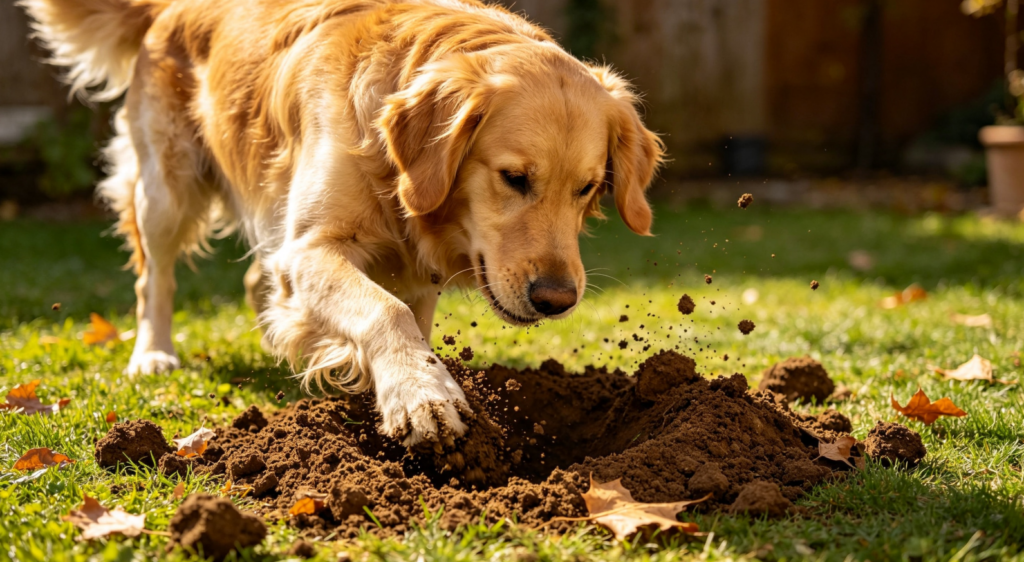
Finding a fresh hole beside the fence, under a shrub, or in the middle of the lawn can make it seem as though your dog is trying to redesign the yard. Digging is frustrating when it damages landscaping or creates an escape route, but it is also a natural canine behavior.
So, why do dogs dig holes? Dogs may dig to follow an underground scent, release unused energy, cool down, bury something valuable, escape the yard, seek attention, or cope with stress. The location and timing of the digging often provide useful clues.
Once you understand the likely reason, you can change the environment and redirect the behavior instead of relying on punishment.
For Phoenix dog owners, temperature deserves particular attention. A dog that digs a shallow hole in a shaded area and then lies in it may be searching for cooler soil. That behavior calls for shade, fresh water, shorter outdoor periods, and access to a climate-controlled indoor space.
Key Takeaways
- Digging is a normal dog behavior, but it can become destructive or unsafe.
- The hole’s location may reveal the motivation behind it.
- Boredom, excess energy, prey, anxiety, heat, attention, and escape attempts are common causes.
- Some dogs benefit from a designated area where digging is allowed.
- Punishing a dog after discovering a hole does not teach an alternative behavior.
- Recall, Off, Place, and leash skills can make redirection easier.
- Professional training may help when digging continues alongside poor recall, escape attempts, reactivity, or broader impulse-control concerns.
Why Do Dogs Dig Holes?
Dogs rarely dig without a reason. The behavior may be instinctive, physically rewarding, or connected to something happening in the dog’s environment.
Digging Is a Natural Instinct
Digging is part of normal canine behavior. Some dogs are more motivated to dig because of the work their breeds were developed to perform.
Terriers and Dachshunds, for example, have breed histories connected to locating animals underground. Northern breeds may be more inclined to dig resting spots.
Breed history does not determine every dog’s behavior. It can, however, help explain why one dog is much more interested in digging than another.
Your Dog Smells or Hears Something Underground
Dogs have highly developed senses of hearing and smell. A dog that becomes intensely focused on one patch of soil, follows a path through the yard, or digs around roots may be responding to insects, rodents, or other animals below the surface.
VCA Animal Hospitals includes underground sounds and scents among the common causes of destructive digging.
Digging driven by prey can be difficult to change through exercise alone because the underground scent remains rewarding. Consult a qualified pest-control professional about dog-safe methods. Keep the dog away from traps, poisons, chemicals, and treated soil.
Your Dog Is Bored or Has Unused Energy
A dog left alone in the yard without interaction, training, or appropriate activities may discover that digging is entertaining.
Puppies, adolescent dogs, and active breeds may be especially likely to turn unused energy into yard excavation. Digging provides movement, scent exploration, and an immediate reward as the soil changes.
More physical exercise may help, but activity alone is not always enough. Dogs also need opportunities to think, sniff, play, and interact with their owners.
Useful options include:
- Sniffing walks
- Retrieval games
- Short obedience sessions
- Food-dispensing toys
- Hide-and-find games
- Structured tug
- Supervised yard exploration
- Calm Place practice
Leaving a dog outside for a longer period does not necessarily provide meaningful exercise. Some dogs simply spend more time practicing the unwanted behavior.
Your Dog Is Trying to Cool Down
Dogs may remove warm surface soil to reach cooler dirt underneath. This pattern is particularly important in Phoenix.
Cooling-related holes are often shallow and located beside a foundation, under a shrub, or in another shaded area. The dog may lie in the hole after digging.
Bring the dog indoors when outdoor temperatures are uncomfortable or unsafe. Provide constant access to fresh water, reliable shade, and shorter supervised outdoor periods.
A patch of cool soil should not be treated as an adequate heat-management plan. Digging to cool down is information about the dog’s comfort, not simply disobedience.
Your Dog Is Trying to Escape
Digging beside a fence or gate may indicate that the dog is trying to leave the yard or reach something outside it.
Possible triggers include:
- Another dog or animal
- Nearby people
- Interesting scents
- Traffic or movement
- Fearful events
- Separation distress
- Curiosity about the other side
Escape digging is a safety concern. Do not leave the dog outside unsupervised while relying only on the fence. Block the vulnerable area temporarily, inspect the complete boundary, and work on the reason the dog is trying to leave.
A dog that cannot escape through one location may move to another part of the fence.
Your Dog Is Burying Valued Items
Some dogs dig to hide bones, food, treats, or toys. This behavior is connected to storing resources for later.
You may notice the dog carrying an item around the yard before selecting a location and covering it with soil.
Limit access to items the dog repeatedly buries outdoors. A designated digging zone may also give the dog a safer and more appropriate place to practice the behavior.
Digging Produces Attention
A dog may repeat digging if it reliably causes an owner to run outside, shout, chase, or begin an exciting interaction.
Negative attention can still reinforce a behavior when the dog has limited opportunities for engagement. This is especially likely when digging occurs mainly while the owner is present.
Calmly redirect the dog and provide attention for appropriate behaviors, such as responding to recall, choosing a toy, or settling on a mat.
Your Dog Is Anxious or Distressed
Digging near doors, fences, gates, or the side of a structure may be connected to anxiety. This is especially concerning when it happens during storms, fireworks, periods of separation, or other stressful events.
Anxiety-related digging may appear frantic. Dogs can damage their nails, paws, teeth, or surrounding property while attempting to escape.
Blocking the hole does not address the fear driving the behavior. Consult a veterinarian when digging appears connected to significant separation distress, fear, or panic. A veterinary behaviorist may be appropriate when the behavior is severe, repetitive, or difficult to interrupt.
What the Hole’s Location May Tell You
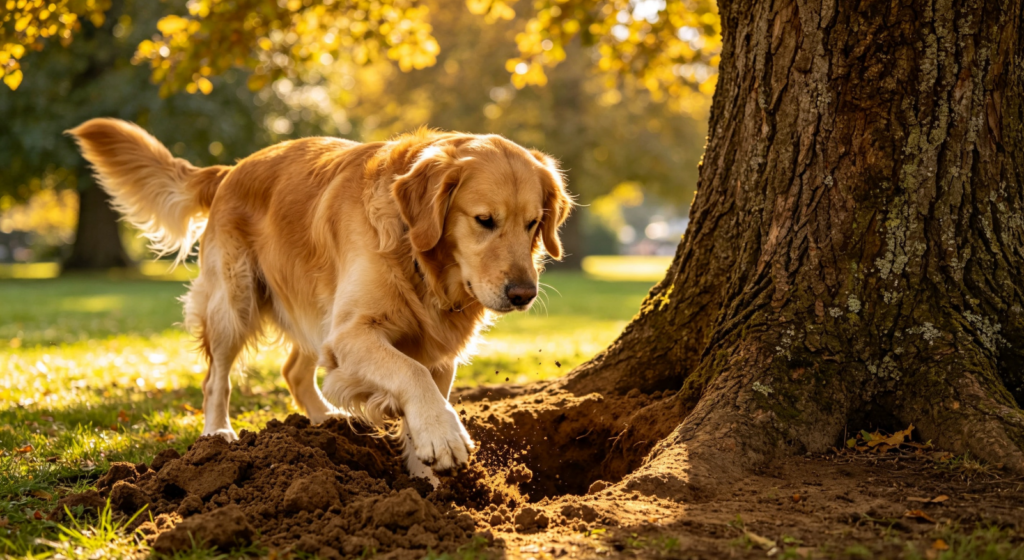
Look at where the digging occurs before deciding how to respond.
Along a fence or gate: The dog may be attempting to escape or reach something outside the yard.
Under shade or beside a foundation: The dog may be searching for a cooler resting place.
Near roots or along a visible path: Underground animals or strong scents may be attracting the dog.
Random holes across the lawn: Digging may be play, exploration, boredom, or an enjoyable habit.
Holes containing toys or treats: The dog may be storing valued items.
Digging beside a door while alone: Separation-related distress may be involved.
Keep a short record of the time, location, weather, people present, and what occurred immediately before the digging. A clear pattern makes it easier to choose the right response.
Is It Okay to Let Your Dog Dig?
Digging does not always need to be eliminated. Some dogs enjoy it as a form of exploration and enrichment.
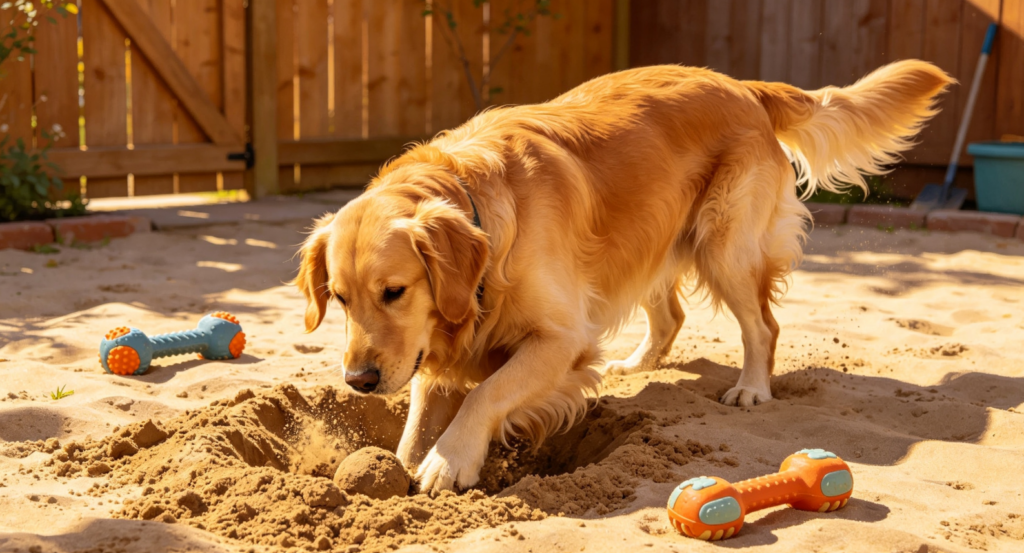
Supervised digging may be acceptable when it happens in a safe, designated area. Veterinary guidance from UC Davis recommends creating a sandbox or clearly defined digging location for dogs that enjoy the behavior.
Digging should be redirected or prevented when it:
- Creates an escape route
- Exposes irrigation, wiring, or sharp materials
- Damages potentially toxic plants
- Creates holes where people or pets could fall
- Occurs during dangerous heat
- Causes broken nails or injured paws
- Appears frantic or fear-driven
- Extends into neighboring property
The goal does not always have to be eliminating a natural instinct. Giving the dog an appropriate outlet may be more practical and sustainable.
How to Stop a Dog From Digging in the Yard
The most effective strategy matches the solution to the reason behind the digging.
1. Supervise Yard Time
Do not send the dog outside alone and wait for another hole to appear.
Go outside and watch for early signs, such as:
- Intense ground sniffing
- Repeatedly returning to one spot
- Pawing at loose soil
- Circling
- Focusing on a fence line
- Carrying a toy or bone toward the garden
Redirecting at the beginning is easier than interrupting a dog that is already deeply engaged in digging.
2. Meet Your Dog’s Physical and Mental Needs
Provide regular activity suited to your dog’s health, age, and energy level.
Combine physical exercise with mental activities. A walk that allows sniffing, a brief training session, and an interactive game may be more useful than simply increasing unsupervised yard time.
Consistency matters more than exhausting the dog once and expecting the habit to disappear.
3. Create a Designated Digging Area
For dogs that genuinely enjoy digging, provide a sandbox or clearly defined patch of loose soil.
Teach the area by:
- Burying a toy or a few treats close to the surface.
- Bringing the dog to the area on leash.
- Encouraging the dog to investigate.
- Rewarding digging in the approved location.
- Calmly interrupting digging elsewhere.
- Guiding the dog back to the designated area.
Use a border, different type of soil, or another visible marker to separate the digging zone from garden beds.
4. Block High-Risk Areas
Use secure barriers around flowerbeds, irrigation equipment, vulnerable fence lines, and recently repaired holes.
Avoid improvised deterrents that could cut paws, trap the dog, or expose the dog to harmful chemicals.
Check the yard regularly because a determined dog may move to a different section after one location is blocked.
5. Improve Heat Relief
When a dog digs and lies in the hole during warm weather, bring the dog indoors and reassess the outdoor environment.
Provide fresh water, reliable shade, shorter supervised outdoor periods, and indoor rest during the hottest parts of the day.
Do not rely on digging, a small shade patch, or a water bowl as the only protection from Phoenix heat.
6. Teach Commands That Support Redirection
Obedience commands give owners practical ways to interrupt digging and guide the dog toward another behavior.
Come: Calls the dog away from the digging location.
Off: Gives the owner a clear cue to stop an unwanted behavior.
Place: Gives the dog a defined area to settle while the owner works in the yard.
Heel: Supports controlled movement through distracting outdoor spaces.
Practice each command in a low-distraction environment before expecting a reliable response around underground scents or active digging.
Phoenix owners who need help building a broader obedience foundation and improving their handling around distractions can review dog obedience training in Phoenix.
7. Reward the Behavior You Want
Reward the dog for responding to recall, choosing a toy, settling on Place, walking away from a flowerbed, or using the approved digging zone.
The reward should follow the correct decision promptly. This helps the dog understand which behavior is worthwhile.
8. Avoid Punishment After the Fact
Bringing a dog to an old hole and scolding does not explain what the dog should do next time.
Punishment may also increase fear-related or attention-seeking digging. Repair the area, improve supervision, and adjust the conditions that allowed the behavior to happen.
Digging in Puppies
Puppies explore their surroundings with their noses, mouths, and paws. Digging may begin as curiosity and quickly become a repeated game when the puppy has regular access to loose soil.
Use short, supervised outdoor periods. Redirect the puppy early, reward recall, provide appropriate play, and avoid allowing the behavior to become established along fences or in garden beds.
Owners can learn more about early routines and foundational skills through puppy training in Phoenix.
When to Call a Veterinarian
Contact a veterinarian when digging begins suddenly and appears with other physical or behavioral changes.
Veterinary guidance may also be appropriate when a dog:
- Injures its paws or nails
- Eats large amounts of soil
- Appears unable to settle
- Begins unusual or frantic nesting behavior
- Displays severe fear or panic
- Develops repetitive behavior that is difficult to interrupt
Seek emergency veterinary care if your dog shows signs of heatstroke, such as excessive panting, heavy drooling, vomiting, loss of coordination, collapse, or unconsciousness. Heatstroke is a medical emergency.
When Professional Dog Training May Help
Consider working with a professional trainer when:
- Your dog ignores Come or Off in the yard
- Digging continues despite consistent supervision
- The dog repeatedly tries to escape under a fence
- Family members apply different rules
- Digging occurs with door rushing, jumping, or poor impulse control
- You need help creating a designated digging routine
- The behavior occurs alongside fence-line reactivity
If digging is part of a broader pattern that includes growling, lunging, or reactivity around other dogs, review dog aggression and reactivity training in Phoenix.
Training may improve handling, communication, and practical control. It should not be described as a guarantee that aggression or digging will be completely eliminated.
Some owners may benefit from private obedience lessons, while others may prefer a more immersive training format. Off Leash K9 Training of Phoenix also offers Board and Train programs focused on obedience, manners, distraction work, and owner instruction.
Final Thoughts
Why do dogs dig holes? The answer may involve instinct, underground prey, boredom, heat, stress, escape behavior, resource burying, or simple enjoyment.
The location of the hole and the circumstances surrounding it often provide the strongest clues. Start by protecting your dog from heat, escape, injuries, and unsafe yard materials. Improve supervision, provide meaningful physical and mental activity, block vulnerable areas, and teach clear redirection commands.
For dogs that enjoy digging, an approved digging zone may be more practical than attempting to remove the instinct entirely.
Phoenix dog owners who need support with outdoor manners, recall, impulse control, or broader obedience concerns can reach out today to schedule a free phone consultation with Off Leash K9 Training of Phoenix. Call (623) 294-1788 or visit the contact page to discuss the available training options.
Frequently Asked Questions
Why did my dog suddenly start digging holes?
A sudden change may follow warmer weather, more time alone, a new animal scent, underground pests, stress, or a change in routine. Look at where and when the digging occurs. Contact a veterinarian if it appears with other unusual physical or behavioral signs.
Why does my dog dig next to the fence?
Fence-line digging often means the dog is trying to escape or reach something outside the yard. Supervise outdoor time, block access to the vulnerable area, inspect the complete fence line, and address triggers outside the yard.
Do dogs dig because they are bored?
Boredom and unused energy can contribute, particularly when a dog is left outside without interaction or appropriate activities. Add structured exercise, sniffing, training, play, and enrichment while continuing to supervise the yard.
How do I teach my dog to use a digging box?
Choose a defined box or soil area, bury toys or treats near the surface, guide the dog to the location, and reward digging there. Calmly interrupt digging elsewhere and redirect the dog to the approved zone.
Should I punish my dog for digging?
No. Punishment after the hole has been dug does not teach an alternative behavior and may worsen digging related to anxiety or attention-seeking. Focus on prevention, supervision, redirection, and rewarding the behavior you want.
Can obedience training stop digging?
Obedience can make digging easier to manage by improving recall, Off, Place, and leash control. Training works best alongside exercise, enrichment, yard management, and attention to the underlying cause.
