
Key Takeaways
- Dog aggression toward other dogs should be handled slowly, safely, and with clear structure.
- Training starts at a safe distance, in quiet Phoenix areas, with calm focus, leash manners, and positive reinforcement.
- Obedience training skills like heel, sit, down, recall, and place command help dog owners maintain control around distractions.
- Avoid forced greetings, crowded dog parks, and punishment-based handling, especially with a reactive dog.
- If your dog barks, lunges, growls, snaps, or cannot refocus around other dogs, professional aggression training in Phoenix is recommended.
Introduction: How to Train an Aggressive Dog Towards Other Dogs
Learning how to train an aggressive dog towards other dogs starts with safety, distance, and a clear plan. In Phoenix, this often comes up during walks through busy neighborhoods, apartment complexes, local parks, and trailheads where other dogs are hard to avoid.
Dog aggression training toward other dogs can include barking, growling, lunging, snapping, stiff posture, hard staring, or difficulty refocusing. Reactive dog behavior may look similar, especially on leash, and it often comes from fear, anxiety, stress, past trauma, territorial instincts, frustration, or past negative experiences.
The goal is not to force dog park friendliness. The goal is safer walks, calmer behavior, and a better relationship between both you and your dog.
Why Dog Aggression Around Other Dogs Needs Careful Training
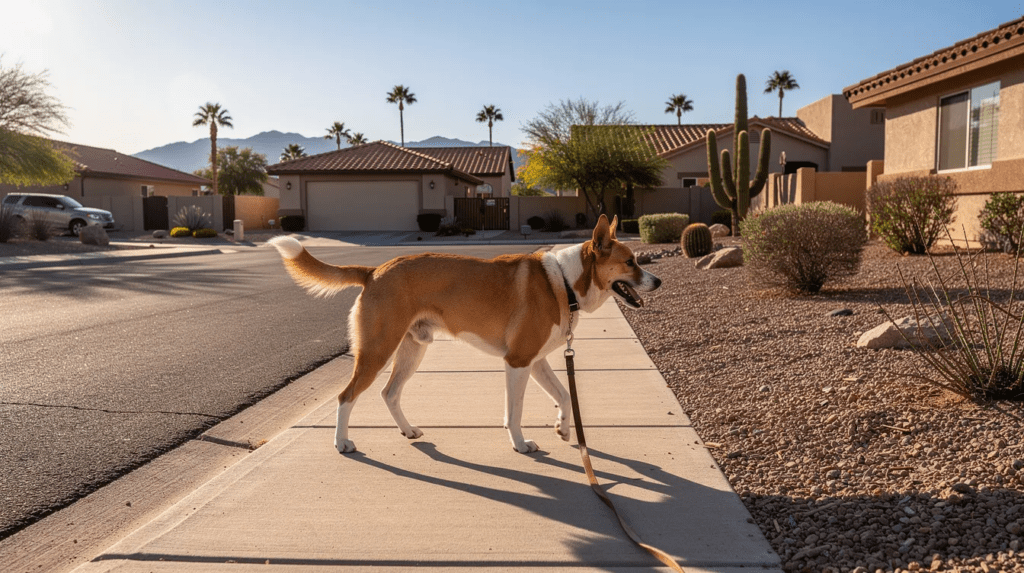
Dog aggression and reactivity on Phoenix sidewalks, trails, and apartment paths can create real risk. A sudden lunge can injure a person, pull an owner off balance, start a fight between two dogs, or lead to vet and legal problems.
Aggression can be a distance-increasing behavior rooted in fear, insecurity, stress, frustration, pain, or a feeling of being trapped. Many dog owners assume dominance is the root cause, but it is better to look at the dog’s triggers, body language, history, and environment before deciding why the behavior is happening.
Watch for these common signs of aggressive behaviors:
- Hard staring or fixating when the dog sees other dogs
- Stiff body language, raised hackles, or a slow tail wag
- Low growling, sudden barking, or whining
- Lunging, snapping, or pulling hard on the leash
- Resource guarding around food, toys, space, or family members
Common signs of dog-to-dog aggression or reactivity include barking, growling, lunging, stiff posture, hard staring, and difficulty refocusing. These signs may be connected to fear, frustration, poor socialization, pain, past experiences, or other underlying medical or behavioral concerns.
Before attempting behavior modification, prioritize safety so your dog has fewer chances to rehearse barking, lunging, snapping, or pulling toward other dogs. The more often a dog practices those reactions, the harder the pattern can become to change.
This is why forcing close contact is risky. Tight leash greetings, narrow sidewalks, crowded patios, strangers with loose dogs, and busy off-leash areas can quickly push a reactive dog over threshold. Avoid dog parks and uncontrolled greetings until your dog has better control and a trainer has helped you decide what level of exposure is safe.
Phoenix dog parks also require owners to remove dogs that show aggressive behavior, and city rules require leash control outside approved off-leash areas. You can review local park expectations through the City of Phoenix dog park rules.
Early attention to dog behavior makes a huge difference. It is easier to create new skills before an actual bite or fight becomes part of your dog’s history.
How to Train an Aggressive Dog Towards Other Dogs Safely
How to train an aggressive dog towards other dogs safely begins with the right setup. Start at a safe distance where your dog can see other dogs but is not barking, lunging, growling, stiffening, or losing focus.
For one dog, that distance may be 30 feet. For another aggressive dog, it may be across a parking lot. The exact distance will vary depending on the dog, the trigger, the environment, and the history of behavior.
Choose quiet places for training in Phoenix. Good options include wide neighborhood streets in the early morning, less crowded parts of local parks, empty parking lots during cooler hours, or open areas where you can keep plenty of distance from other dogs. Heat can increase stress, so avoid hot pavement and intense midday sessions.
Changing how your dog responds to other dogs often involves desensitization and counterconditioning. These techniques use controlled distance, gradual exposure, and high-value rewards to help the dog build a calmer response to triggers over time.
Desensitization involves exposing your dog to the trigger at a very low intensity, meaning far enough away that they do not growl, stiffen, or lunge. Counter-conditioning pairs the sight of another dog with a high-value reward to alter the dog’s emotional response.
Here is a simple pattern:
- Your dog sees another dog at a safe distance.
- Mark the moment with a word like “yes.”
- Give high-value treats, such as boiled chicken or hot dogs.
- Reward again if your dog calmly looks back at you.
- Move in the opposite direction if your dog starts to fixate.
This helps create positive associations. Over time, the sight of other dogs can begin to predict rewards and calm focus instead of panic or conflict.
Positive reinforcement encourages desirable behaviors by rewarding better choices and helping build trust between the dog and owner. For aggressive or reactive dogs, rewards work best when paired with distance control, clear structure, careful timing, and a plan that keeps the dog under threshold.
Leash training matters too. Walk in heel position when passing distractions. Keep the leash short enough for control but relaxed enough that your dog does not feel trapped. Avoid retractable leashes for reactive dog training because they reduce control and can make distance harder to manage.
Attention and focus commands taught in low-stress environments are essential for managing distractions during walks. Practice eye contact, name response, and hand targeting before, during, and after your dog sees another dog.
Avoiding triggers and managing thresholds are critical in the training of aggressive dogs to ensure safety and effective behavior modification. Gradually introduce harder setups only when your dog stays calm. Do not rush closer just because one session went well.
Behavior modification focuses on changing a dog’s emotional and behavioral response to specific triggers. For many aggressive or reactive dogs, this may include counterconditioning, desensitization, obedience, management, distance control, and owner coaching.
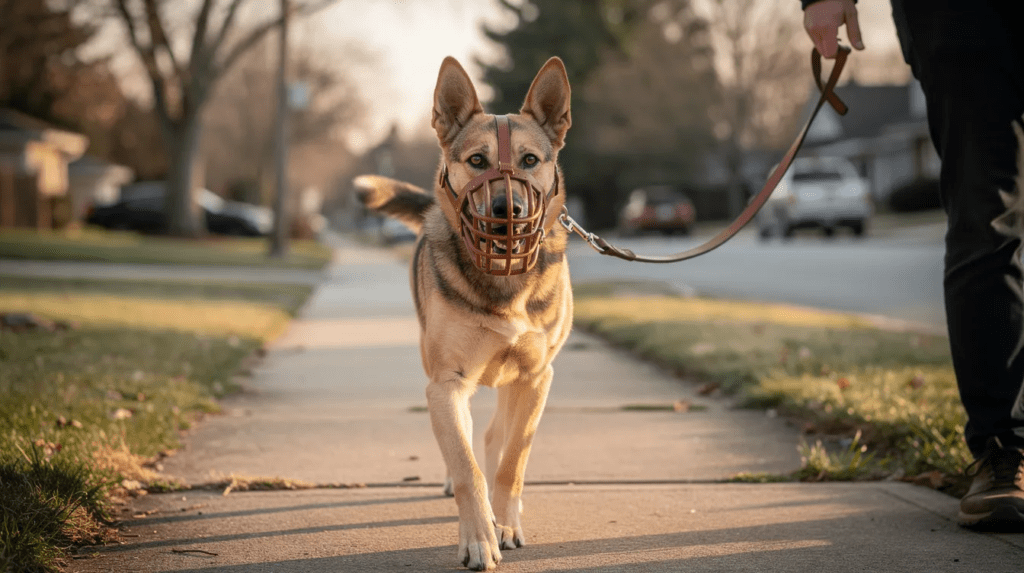
For some dogs, a properly fitted basket muzzle may be part of the plan. Muzzle training can add a layer of safety during controlled training when introduced slowly with food, praise, and short practice sessions. A basket muzzle should allow the dog to pant, drink water, and take treats, but it does not replace leash control, distance, supervision, or professional guidance.
Obedience Skills That Help With Safer Control
Solid obedience training makes it easier to manage dog aggression near distractions in busy Phoenix environments. These skills should be taught first in the house, then in the yard, then in low-distraction outdoor areas before being practiced near other dogs.
Key components include:
- Heel: Teach your dog to walk calmly at your side. A reliable heel helps during sidewalk passes, trail approaches, and apartment walkways.
- Sit and Down: Use sit or down when another dog passes at a safe distance. Reward calm behavior with treats and praise.
- Recall: A strong recall gives you a way to call your dog away from a trigger before the behavior escalates. Practice comes indoors first, then outside, then around mild distractions.
- Place command: The place command teaches your dog to stay on a bed, mat, or raised cot. This can help during controlled setups when another calm dog is visible across a yard or room.
- Calm focus: Teach your dog to look at you, respond to their name, or touch your hand. These skills give your dog something clear to do when the world feels stressful.
Good obedience does not erase fear on its own. But it gives owners better timing, better communication, and safer control. Over time, effective training can help a reactive dog become a more relaxed and loyal companion.
Mistakes to Avoid Around Other Dogs
When dealing with an aggressive or reactive dog, the wrong setup can undo progress fast. Avoid these common mistakes:
- Do not force face-to-face greetings. Tight leash greetings can make a dog feel threatened, especially in narrow spaces.
- Do not use busy dog parks for socialization. Most dogs do not learn calm behavior by being flooded with triggers. Busy Phoenix parks, crowded hiking trails, and outdoor events should wait until control is reliable.
- Do not rely on yelling, intimidation, harsh leash corrections, or poorly timed tool use. Heavy-handed handling can increase stress and may only suppress the visible reaction without teaching the dog what to do instead. Any training tool should be used carefully, with proper timing, clear instructions, and a plan focused on safer behavior.
- Do not let your dog rehearse the outburst. Repeated lunging, barking, and snapping can strengthen aggressive behaviors. Increase distance early.
- Do not ignore early signs. Staring, freezing, stiff posture, or a slow tail wag means your dog may be close to reacting.
- Do not skip health checks. Pain, hormonal changes, neurological concerns, or other underlying medical issues can affect aggression and should be ruled out by a veterinarian.
Dog training is not only about control. It is about understanding the root cause and helping the dog learn safer choices.
When to Seek Professional Aggression Training Help in Phoenix
Professional help is strongly recommended when aggression creates safety concerns, worsens over time, or becomes difficult to manage on daily walks. A qualified trainer can help identify triggers, set realistic goals, build a safer training plan, and coach owners on how to handle the dog around other dogs.
Seek help from an experienced dog trainer or qualified behavior professional if you notice:
- Repeated lunging or snapping at other dogs
- Bites, near-bites, or fights between animals
- Inability to refocus even at long distances
- Aggression that is worsening over the weeks
- Conflict between dogs in the same family
- Fear-based aggression around strangers, dogs, or specific places
A qualified dog trainer in Phoenix can identify triggers, build a step-by-step plan, and coach owners in handling skills. For dogs with aggression or reactivity, the right training setup should match the dog’s behavior, safety needs, environment, and ability to stay focused around other dogs.
Board-and-train may be an option for some aggression cases when it includes owner coaching, follow-up lessons, and a plan the family can use at home. For example, some aggression-focused programs combine immersive training with additional lessons so owners learn how to maintain control and continue the work in daily life.
A phone or in-person consultation is a good first step if you feel nervous, overwhelmed, or unsure where to start with aggressive dog training in Phoenix.
Final Thoughts
Learning how to train an aggressive dog towards other dogs safely takes time, patience, and calm practice. The first step is not getting closer. It is keeping enough distance for your dog to think, learn, and stay under control.
Distance, structure, leash manners, recall, heel, and place commands help reactive dogs feel more secure around other dogs. These skills also help owners create a better relationship built on trust instead of conflict.
If you love dogs but feel stressed every time you walk yours, do not ignore the warning signs. Reach out to a qualified local professional if your dog barks, lunges, growls, snaps, or cannot settle around other dogs.
FAQ
How long does it usually take to see progress with an aggressive dog?
Progress depends on the dog’s history, triggers, environment, safety needs, and consistency at home. Some dogs improve quickly, while serious dog aggression may require a longer, structured plan. Consistency, safe setups, and clear obedience training matter more than any quick fix.
Is it safe to let my aggressive dog play with family or friend dogs?
Unsupervised or unplanned play is risky if your dog has a history of aggression toward other dogs. Use slow, controlled introductions at a distance under professional guidance before considering off-leash interaction.
What equipment should I use to walk an aggressive or reactive dog?
Use a secure collar or harness, a strong standard leash, and updated ID tags or microchip information. Avoid retractable leashes. In some cases, a basket muzzle introduced with positive reinforcement may add an extra layer of safety.
Can I work on dog aggression if I live in an apartment in Phoenix?
Yes. Apartment dog owners can practice calm focus, leash training, and obedience in low-distraction areas where the dog has enough space to stay under control. Avoid narrow hallways or busy entry points if your dog reacts strongly to people or other dogs. Early mornings and later evenings are often cooler and calmer in Phoenix.
Should I get a second dog to help fix my current dog’s aggression?
No. Adding another puppy or adult dog as a solution can increase stress and create more conflict. Improve the current aggression first with a clear plan, then decide whether another dog is appropriate for your home. If your dog struggles around other dogs, contact a professional dog trainer in Phoenix to build a safer training plan before adding another pet.
