
Key Takeaways
- Dog licking is a natural behavior rooted in biology and bonding, but you can reduce unwanted licking with clear rules, obedience skills, and consistent responses from everyone in the household.
- Figuring out how to stop a dog from licking people starts with understanding why your individual dog licks: affection, attention seeking, stress, habit, or excitement.
- Yelling, pushing your dog away, or laughing can accidentally reward licking and make it stronger, because dogs may interpret those reactions as attention.
- Calm greetings, the place command, and basic dog obedience skills like sit, down, off, and recall are key tools to redirect licking behavior.
- Most dogs can learn polite manners around guests with structure, practice, and sometimes professional support.
Introduction
Dogs lick. It is one of the most natural parts of how they interact with the world. But when your pup is constantly licking every person who walks through the door, or when they lick your face the moment you sit on the couch, the behavior can become frustrating for you and uncomfortable for guests.
If you have been wondering how to stop a dog from licking people, the goal is not to eliminate all affection. It is to reduce excessive licking without confusing or scaring your dog. Dogs lick for many reasons, including showing affection, seeking attention, relieving stress, and a simple habit, so the solution goes deeper than just saying “no.”
Many owners feel guilty about stopping those “kisses.” You are not removing love from the relationship. You are teaching polite alternatives.

Why Dogs Lick People
Dog licking is rooted in canine biology. Mothers groom puppies with their tongues from the moment they are born, and puppies lick their littermates as a form of bonding and communication. This instinctive behavior carries into adulthood.
Here are the most common reasons your dog is licking people:
- Affection and bonding. Dogs may lick to show affection, seek closeness, or repeat a behavior that has been comforting since puppyhood. For many dogs, licking can feel calming and familiar.
- Excitement during greetings. Many dogs lick when people come home or guests arrive. The arousal of a greeting triggers licking as a way of saying hello.
- Attention seeking. Dogs quickly learn that licking your hands or legs gets a response. You talk to them, laugh, or pet them, and that rewards the behavior. Dogs may lick to get attention or initiate play.
- Stress and self-soothing. Some dogs lick to self-soothe when they feel stressed or anxious. Licking can naturally soothe a dog or stem from boredom when they have nothing else to do.
- Exploration. Licking helps dogs explore their environment through taste and scent. Your skin carries sweat, interesting smells, lotion residue, or traces of food. Dogs may lick you simply because you taste good, like salty skin after a walk or exercise session.
- Medical concerns. If your dog starts licking excessively or the pattern changes suddenly, it can sometimes signal medical conditions. Occasional licking is normal, but a vet check is wise if the behavior seems unusual or is paired with other symptoms.
Most dogs lick to some degree, and occasional licking is usually normal. The question is when the behavior becomes excessive, unwanted, stressful, or difficult to redirect.
How to Stop a Dog From Licking People Without Confusing Your Pup
You do not need to stop your dog from licking entirely. The goal is to stop your dog from licking people at times and places where it is not welcome. Give the dog a clear rule, such as “no licking faces” or “no licking guests,” and make sure every person in the household follows it the same way.
Here is a simple approach for calm greetings:
- Before guests arrive or when you walk through the door, ask your dog to sit or stand calmly. Reward with a treat or quiet praise when they keep their mouth to themselves. Using calm greeting techniques can prevent dogs from licking during interactions.
- If licking starts, quietly remove the reward. Stand up, turn your body away, or calmly walk the dog out of the space for a moment. Do not talk, scold, or push. For attention-seeking licking, removing attention can help reduce the habit when you also reward calm behavior. The dog can repeat.
- Teach an “off” or “enough” cue. Practice first in a quiet room with no distractions. When the dog stops licking on cue, reward immediately.
- Redirect. Once licking stops, ask for an incompatible behavior: go to a place, hold a sit, or chew an approved toy. Redirect licking by engaging your dog with toys or puzzles. Reward calm behavior to reinforce positive actions over licking.
- Be consistent with boundaries to avoid confusing your dog. Reward quickly when your dog chooses the desired behavior so the association is clear.
You can also change your body scent to deter your dog from licking you. Washing hands after handling food or switching to unscented lotion can reduce the taste reward.
Obedience Skills That Help Redirect Licking
Strong dog obedience foundations make managing licking behavior far easier in real life. Teaching alternative commands can reduce licking behavior in dogs because these skills give the dog something clear to do instead.
- Sit and Down. Position-based commands help create still, calm greetings that reduce the urge to leap up and lick your face or hands. Practice in multiple environments so reliability builds.
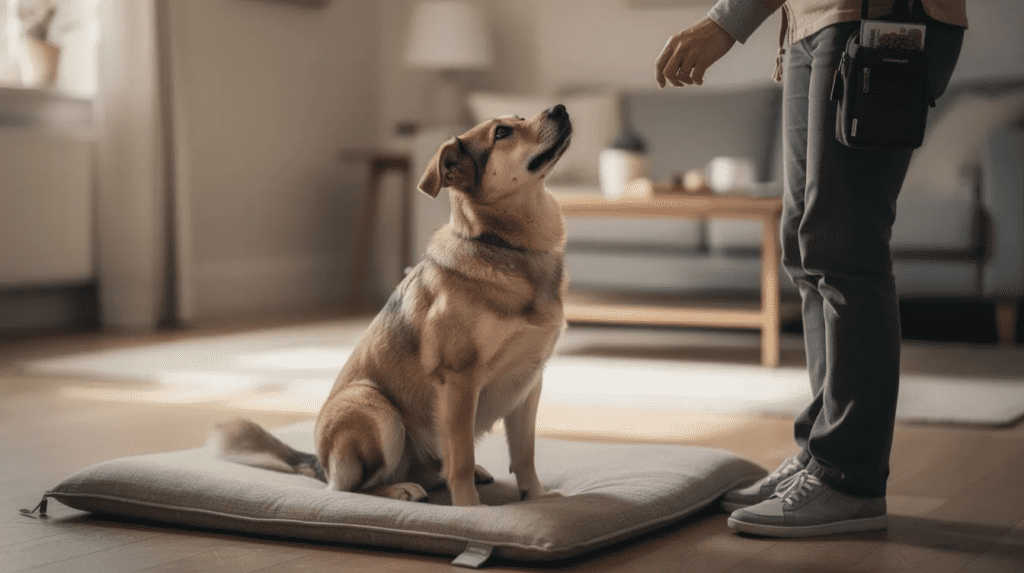
- Place command. Teach your dog to go to a designated mat or bed and stay relaxed when people enter. Teaching dogs a specific job can encourage desired interactions with people. This gives structure and reduces direct contact that leads to licking.
- Off cue. A clear signal for the dog to remove their mouth and paws from a person or surface. Pair with praise when they comply.
- Recall. Call the dog away from the person they are licking. Reward them when they come so they learn that returning to you pays better than persistent licking.
- Impulse control drills. Short, frequent sessions where the dog holds sit or down around mild distractions teach them to pause instead of rushing in with tongues out.
Offering toys can divert a dog’s attention from licking, and lick mats can provide a soothing outlet for dogs’ licking instinct when you need a quick redirect. Redirecting a dog’s energy through exercise, training, and enrichment helps reduce the drive behind the behavior.
Build these skills first in quiet rooms, then in the yard, then when friends visit, so your pup can succeed at each level before increasing difficulty.
Common Mistakes That Can Make Licking Worse
Most owners accidentally reward or increase licking without realizing it. Here are the patterns to avoid:
- Yelling, scolding, or pushing the dog away. This can increase arousal or feel like a game for some pets. Harsh or highly aversive responses can also add stress and may make training harder, especially for sensitive or anxious dogs.
- Any attention counts. Laughing, squealing, talking to the dog, or making eye contact during licking strengthens the habit. Dogs interpret any reaction as attention, even negative ones.
- Mixed rules. Letting your dog lick your face sometimes and correcting it other times creates confusion and slows learning. Consistency from all family members is crucial during dog training.
- Unfocused treatment delivery. Handing out food whenever the dog is near people, rather than for specific calm behaviors, creates excitement instead of calm.
- Punishing stress signals. Watch your dog’s body language. Lip licking, turning away, or yawning can be signs of stress, not disobedience. Punishing these makes anxiety worse.
Replace these mistakes with clear, calm patterns: ignore or gently interrupt licking, then reward quiet, four-feet-on-the-floor behavior. Consistent positive reinforcement techniques are effective for dog training and produce better long-term results.
Signs Your Dog Needs More Training First
Sometimes licking is just one piece of a bigger picture. If your dog cannot sit still for even a few seconds, jumps on people at the door, grabs clothing, or circles and whines when visitors arrive, impulse control needs work before greeting manners will stick.
Watch for these signs:
- Your dog will not respond to basic cues like sit, down, off, or recall when mildly distracted.
- Licking increases when the dog is anxious, in crowded rooms, or when new people reach over their head.
- Excessive licking combined with pacing, panting, restlessness, repeated paw licking, or sudden changes in behavior may point to anxiety, discomfort, allergies, skin irritation, nausea, dental pain, or another medical concern. Persistent licking can also irritate the skin and worsen the cycle. If the pattern is new, intense, or difficult to interrupt, schedule a veterinary check before treating it as only a training issue.
- Persistent licking may lead to skin damage or infections, including skin irritation that worsens the cycle.
If the pattern looks compulsive, repetitive, or difficult to interrupt, or if you suspect pain, veterinary care should come before behavioral training. A vet can rule out medical conditions and refer you to a qualified behavior professional when needed.
In these cases, focus first on building solid obedience skills and calm routines. Structured training support from a professional can help improve progress for young dogs and older dogs alike, especially those who are very excitable or anxious.
Final Thoughts
Learning how to stop a dog from licking people is about giving your dog a clear, kind structure rather than simply shutting down affection. You are not punishing love. You are showing your pup what polite interaction looks like.
Most dogs can learn to greet calmly and keep their tongues to themselves when asked, especially when owners use positive reinforcement and consistent rules. Providing mental and physical stimulation through daily walks, training sessions, and enrichment can reduce problematic licking behavior over time. Remember to watch your dog’s body language, keep interactions calm, and avoid accidentally rewarding the very licking behavior you want to reduce.
If you feel stuck or overwhelmed, or if your dog’s licking is tied to impulse control issues, anxiety, or greeting manners that are not improving, professional training support can make a real difference. A structured program focused on obedience, calmer manners around distractions, and clear communication gives you and your dog a path forward.
FAQ
These questions cover practical topics about dog licking that go beyond the main article.
Is it OK to let my dog lick my face sometimes?
This is a personal choice. Dog saliva can carry bacteria, so extra caution is important for young children, older adults, and anyone with a weakened immune system. A clearer training rule is to allow brief licking of hands but not let the dog lick faces. Wash skin after close contact, and do not allow licking near open cuts, irritated skin, or wounds.
How can I stop my dog from licking guests without being rude?
Prepare before guests arrive. Put the dog on a leash, ask for a sit or place, and reward calm behavior before the door opens. Coach guests to ignore the dog at first, avoid leaning over, and only greet when the dog is calm. For very excitable pets, a brief time in a crate or separate room can help them settle before they rejoin visitors. Distract your pup with a chew toy or puzzle to keep their mouth busy.
Why does my dog lick me more at night or when I sit down?
Quieter times often invite attention seeking. Your dog learns that when you sit on the couch, licking gets petting, talking, or eye contact. Some dogs use licking to calm stress or self soothe at night if they feel anxious or restless. Create a predictable evening routine with a walk, short training session, and a chew toy to reduce boredom and anxiety-driven licking. If the dog seems hungry, make sure their feeding schedule supports a settled evening.
Should I be worried if my dog suddenly starts licking my hands all the time?
Sudden changes in licking behavior deserve attention. If your dog also licks their own body, pants more, or seems restless, something may be off. New medications, pain, skin irritation, or nausea can increase licking. A vet visit is the safest way to rule out medical causes. Track when the licking happens and share that information with your vet or trainer. Be concerned if the behavior appears alongside other symptoms like lethargy or loss of appetite.
Can a trainer really help with a dog that will not stop licking people?
A qualified trainer can assess whether licking is mainly about excitement, attention seeking, stress, or incomplete obedience training. Structured programs often focus on impulse control, calm greetings, and reliable obedience cues like sit, down, off, place, and recall. If the licking is persistent, embarrassing with guests, or tied to other behavior issues, professional support can give you a clearer plan and help you make steady progress.
