
Does your dog chew through furniture legs, shoes, remote controls, and anything else within reach? You are not alone. Destructive chewing is one of the most common concerns dog owners bring to professional trainers, and it happens in homes across Phoenix every day.
The good news is that learning how to stop a dog from chewing everything does not require extreme measures or complicated tools. What it does require is a clear understanding of why your dog chews, paired with consistent management and training. This guide will walk you through both.
Key Takeaways
- Chewing is a natural dog behavior, but it becomes destructive when it targets household items.
- Common causes include puppy teething, boredom, excess energy, separation anxiety, and lack of supervision.
- Punishment does not teach dogs what they should chew and can make anxiety-related chewing worse.
- The most effective approach combines redirection to appropriate chew toys, environmental management, exercise, enrichment, and basic obedience training.
- If chewing continues despite consistent effort, professional dog training support is available in Phoenix.
Why Dogs Chew Things at Home
Chewing is not a bad habit in the way that humans think of bad habits. It is a deeply ingrained canine behavior with a real biological purpose. Understanding why your dog chews is the first step toward addressing it effectively.
Normal Chewing vs. Destructive Chewing
Normal chewing means a dog gnaws on appropriate items like designated chew toys or safe edible chews. It helps keep jaws active, can support dental health when the item is appropriate, and gives dogs a healthy outlet for natural instincts. The key is choosing chew items that fit your dog’s size, chewing style, and safety needs.
Destructive chewing means a dog targets household items such as furniture, shoes, electrical cords, baseboards, or walls. This is the behavior that needs to be redirected, not eliminated entirely.
Common Reasons Dogs Chew Household Items
Puppy teething is one of the most straightforward causes. Puppies often begin losing baby teeth and growing adult teeth around 3 to 4 months of age, with most adult teeth in place by about 6 months, though some puppies may vary. During this time, chewing relieves discomfort in their gums. Without guidance toward appropriate items, puppies can develop lasting habits of chewing whatever is available.
Boredom is another leading cause, especially in adult dogs. A dog left alone without enough physical activity or mental engagement will find something to do on its own. That often means dog chewing furniture, shoes, or anything with an interesting scent or texture.
Excess energy plays a similar role. Dogs that do not get enough daily exercise carry that pent-up energy into the house, and chewing becomes a way to burn it off.
Separation anxiety produces a different type of chewing pattern. Dogs experiencing anxiety when left alone often chew intensely and specifically, targeting door frames, owner-scented items, or areas near exits. This is a stress response, not defiance.
Lack of supervision or structure allows chewing habits to form and solidify. Dogs that have not been taught what is appropriate to chew on will simply chew whatever is accessible.
Stress from environmental changes such as a new home, new household members, or schedule disruptions can also trigger increased chewing in both puppies and adult dogs.
How to Stop a Dog From Chewing Everything Safely
There is no single quick fix, but the following strategies, applied consistently, produce real results over time.
Step 1: Dog-Proof Your Home
The most immediate step is removing temptation. Keep shoes, clothing, remote controls, phone chargers, and other commonly chewed items out of reach. Use baby gates or close doors to limit your dog’s access to rooms with furniture or items they tend to target. This is especially important during the early stages of training.
If your dog has shown a preference for specific furniture legs or baseboards, a dog chewing deterrent spray can be applied to those surfaces. These bitter-tasting sprays are a useful management tool when used consistently, though they work best as part of a broader plan rather than as a standalone solution.
Step 2: Provide the Right Chew Toys
Dogs need to chew. Your goal is not to stop the behavior entirely but to redirect chewing to appropriate outlets. Offer three to five chew toys that vary in texture, material, and shape. Rotate them regularly so your dog does not lose interest.
Durable rubber toys, stuffable puzzle toys filled with frozen kibble or safe soft fillings, and safe, size-appropriate edible chews can be strong options for dogs that chew heavily. Choose items that fit your dog’s size and chewing style, avoid chews that are too hard for your dog’s teeth, and supervise edible chews when needed. When your dog picks up an appropriate chew toy, give calm praise so the connection between the toy and a positive outcome is reinforced over time.
Avoid giving your dog old shoes or worn clothing as chew toys. Dogs cannot distinguish between an old item you do not mind and a new one you value. Keeping their chew items clearly different from household goods prevents confusion.
Step 3: Increase Exercise and Mental Enrichment
A tired dog is far less likely to chew destructively. Daily physical activity tailored to your dog’s age, breed, health, and energy level is one of the most effective tools available. Many adult dogs benefit from 30 to 60 minutes of meaningful activity each day, while high-energy breeds may need more. In Phoenix, outdoor exercise should also be planned around heat safety, with walks and play scheduled during cooler parts of the day whenever possible.
Beyond physical exercise, dog enrichment addresses the mental side of boredom. Snuffle mats, food puzzle toys, scatter feeding, scent games, and interactive feeders give dogs a constructive way to use their brains. Many dogs that chew out of boredom show significant improvement once a structured enrichment routine is introduced.
Step 4: Use Crate Training and Supervision Strategically
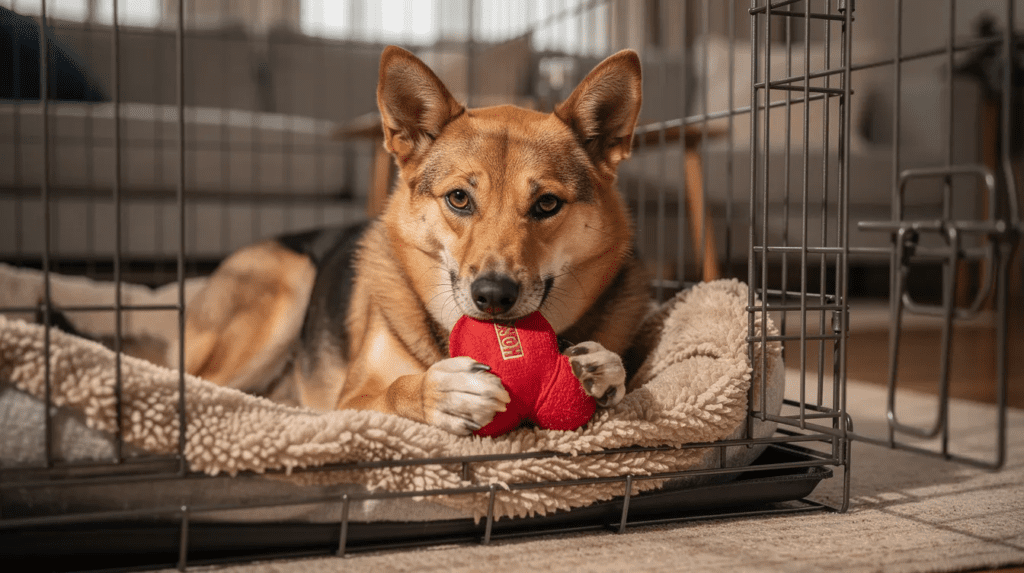
Crate training is one of the most practical tools for preventing destructive chewing, particularly when you cannot directly supervise your dog. A properly introduced crate gives your dog a calm, safe space and removes access to household items during unsupervised time.
The crate should never be used as punishment. It should be introduced gradually, associated with positive experiences, and paired with a safe, size-appropriate chew toy or interactive item so your dog has something constructive to do inside. Avoid leaving your dog with anything that could splinter, break teeth, or become a choking risk.
When you are home but cannot give your dog your full attention, baby gates, exercise pens, and training tethers can keep your dog in a dog-proofed space nearby. The goal is to prevent rehearsal of the chewing behavior while giving your dog consistent, supervised opportunities to make good choices.
Step 5: Redirect, Do Not Punish
When you catch your dog chewing something inappropriate, the most effective response is a calm interruption followed by redirection. A simple neutral marker sound or cue word, then offering an approved chew toy, teaches the dog what to do instead.
Scolding, yelling, or physical corrections do not help the situation. Dogs do not connect after-the-fact reactions to something they chewed earlier, and punishment can increase anxiety and stress, which are contributing causes of destructive chewing. Consistent, calm redirection is more effective and builds a better working relationship between you and your dog.
Training Skills That Help Reduce Destructive Chewing
Management tools like crates and gates prevent opportunities, but training gives dogs the internal skills they need to make better choices on their own.
Obedience and Impulse Control
Basic obedience training builds a dog’s ability to respond to cues and pause before reacting. Commands like “leave it,” “drop it,” and “stay” give owners immediate tools to interrupt chewing and redirect behavior in real time.
Impulse control exercises, where dogs practice waiting before getting food, walking through doors calmly, or settling on a mat, build the kind of self-regulation that reduces destructive behavior over time. A dog that has learned to pause and choose a different behavior is far less likely to grab whatever catches its attention.
Regular short training sessions using positive reinforcement also provide mental stimulation that reduces boredom, which addresses one of the most common root causes of destructive chewing.
Teaching the “Leave It” Cue
“Leave it” is one of the most practical skills for dogs that chew household items. When taught clearly and practiced consistently, it gives owners a reliable way to redirect attention before chewing becomes a problem in the moment.
Start with the cue in low-distraction settings using a treat under your foot or hand. Reward the dog for looking away from the item and toward you. Build duration and then generalize the behavior to real-world settings, including furniture and household objects.
Managing Chewing When Your Dog Is Home Alone
Chewing that happens when a dog is home alone often occurs because the dog is bored, under-stimulated, or distressed by the owner’s departure. In anxiety-related cases, signs may begin shortly after the owner leaves, while boredom-related chewing may happen whenever the dog runs out of structure or engagement. Having a structured departure routine can make a significant difference.
Before you leave, ensure your dog has had physical exercise. Give them a stuffed chew toy, a frozen puzzle feeder, or another safe enrichment item that matches their chewing style. Edible long-lasting chews should be used with care and supervision when needed. If your dog is crate trained, a crate with a safe chew toy inside provides a more controlled environment during your absence.
If your dog only chews when left alone and shows other signs of distress such as pacing, vocalizing, or destructive behavior near exits, separation anxiety may be a contributing factor. This requires a different, more structured approach than boredom-related chewing, and it is worth addressing with professional guidance.
Common Mistakes That Make Chewing Worse
Even well-intentioned dog owners can accidentally reinforce or extend chewing problems. Here are a few patterns to be aware of.
Waiting too long to address the issue. Every time a dog successfully chews a household item without redirection, that behavior gets a little more established. Early intervention produces faster results.
Providing too many toys with no rotation. When toys are always available and never changed out, they lose their novelty. Dogs return to household items for the texture and sensory variety. Rotating toys maintains their value.
Inconsistent rules. If some family members redirect chewing while others allow it, the dog cannot learn a clear pattern. Everyone in the home needs to respond the same way.
Skipping enrichment. Many owners focus on physical exercise but overlook mental stimulation. A dog that is physically tired but mentally understimulated will still often chew out of boredom or frustration.
Confining without enrichment. A crate or gated space without a chew toy or activity item does not give the dog an appropriate outlet. Management should always include a positive alternative.
When to Get Professional Help
Most cases of destructive chewing improve meaningfully with consistent home management and training. However, there are situations where professional dog training or veterinary support is the right next step.
Consider reaching out for professional guidance if:
- Chewing is severe and ongoing despite consistent management for several weeks.
- Your dog shows other signs of anxiety such as pacing, excessive vocalization, loss of appetite, or attempts to escape.
- Chewing started suddenly in an adult dog with no recent environmental changes.
- Your dog is chewing on items that pose a real safety risk, such as electrical cords, walls, or dangerous objects.
- You are not sure whether the chewing is rooted in boredom, anxiety, or another cause.
A sudden change in chewing behavior, especially in an adult dog, can sometimes indicate an underlying medical issue. If chewing seems obsessive, unusual, or out of character, a visit to a veterinarian is a reasonable first step before pursuing behavioral strategies.
For dog owners in Phoenix, structured obedience training and behavior support can help address the root causes of destructive chewing and give both dogs and owners the tools they need for lasting improvement. If home management has not resolved the issue, working with an experienced trainer in a structured environment can make a meaningful difference.
Final Thoughts
Learning how to stop a dog from chewing everything takes patience, consistency, and a clear plan. Dogs chew for real reasons, whether that is teething discomfort, boredom, anxiety, or simply a lack of guidance about what is and is not appropriate. Addressing those underlying causes while managing the environment and building practical training skills gives you the strongest foundation for long-term success.
Start with what you can control today: remove temptation, provide appropriate chew toys, increase daily exercise and enrichment, and redirect calmly when you catch your dog chewing something off-limits. Build on that with basic obedience and impulse control over time.
If you have been working consistently and the chewing continues, that is a signal to bring in additional support. Professional dog training in Phoenix can help you identify what is driving the behavior and build a targeted plan to address it. You do not have to figure it out alone.
Frequently Asked Questions
How do I stop my puppy from chewing everything in the house?
Puppy teething is a major driver of chewing during the teething stage, especially around 3 to 6 months of age, but young dogs may also chew because they are exploring, bored, energetic, or still learning household rules. The most effective approach is to dog-proof your home, provide a variety of appropriate chew toys, and supervise your puppy closely so you can redirect calmly when they grab something inappropriate. Consistent redirection to approved items, combined with a structured routine, helps puppies learn what is and is not acceptable to chew.
Will my adult dog eventually stop chewing on furniture?
Adult dogs do not typically outgrow destructive chewing on their own. The habit needs to be redirected through consistent management, appropriate chew toy access, sufficient exercise, and training. Once the underlying cause, whether it is boredom, anxiety, or excess energy, is addressed and the dog has learned what is appropriate to chew, most adult dogs improve significantly with consistent effort.
Can crate training really help with destructive chewing?
Yes, crate training is one of the most practical tools available. A properly introduced crate prevents your dog from accessing household items during unsupervised time and gives them a calm, structured space. Always pair crate time with an appropriate chew toy inside so your dog has a positive outlet. The crate should feel like a safe space, not a form of punishment.
My dog only chews when I leave the house. Is that separation anxiety?
Chewing that occurs primarily when a dog is left alone can be a sign of separation anxiety, especially when combined with other behaviors like whining, pacing, barking, or destructive behavior near doors and windows. However, it can also be a sign of boredom or a learned habit. Setting up a camera during your absence can help you identify the pattern. If anxiety signs are present, working with a professional trainer or veterinarian is a helpful next step.
When should I ask a professional dog trainer for help with chewing?
If you have been consistently implementing management strategies and training for several weeks without meaningful improvement, it is a good time to reach out for professional support. It is also worth seeking help sooner if the chewing is causing safety risks, if your dog shows signs of significant anxiety, or if you are unsure what is driving the behavior. A professional dog trainer can assess the situation, identify contributing factors, and build a plan tailored to your dog’s specific needs.
