
Introduction
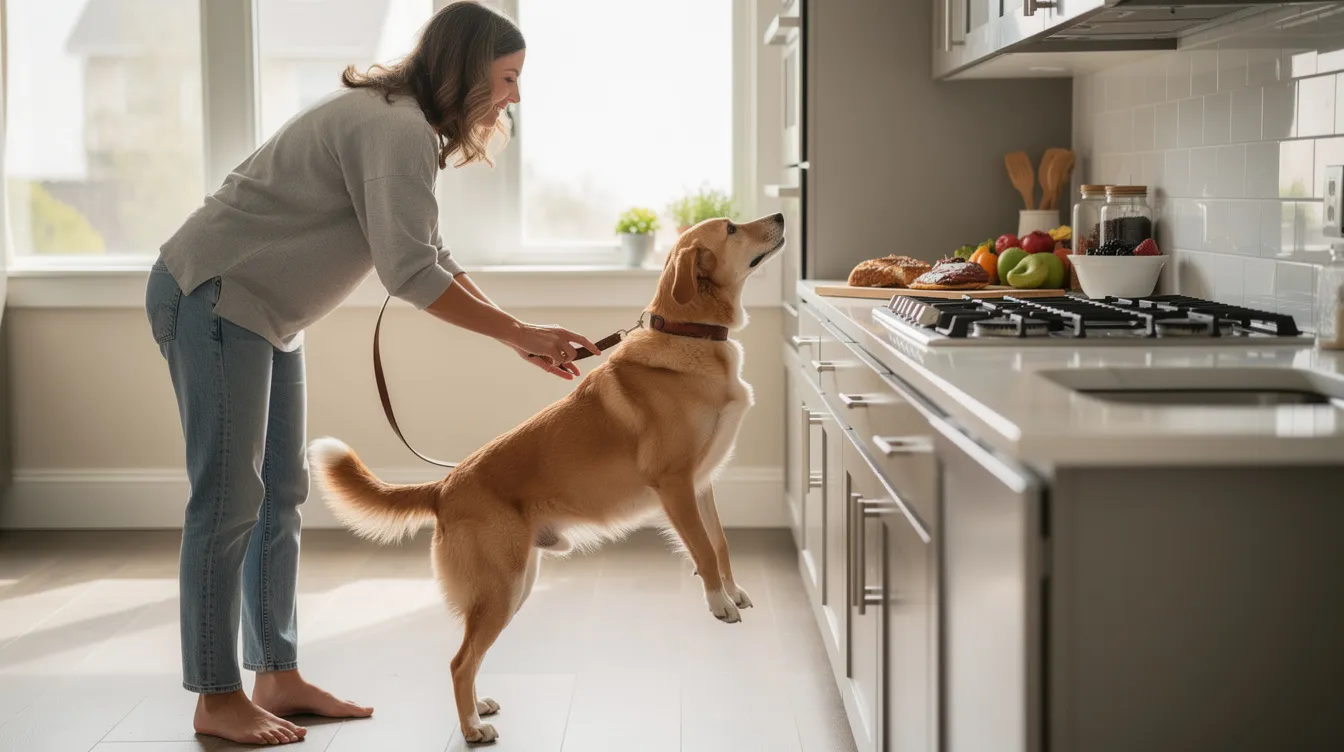
Counter surfing is one of the most common-and most frustrating-behavior problems dog owners face. The term refers to dogs jumping up, placing their paws on, or stretching onto kitchen counters, tables, and other elevated surfaces to steal food or other items. The good news: you can absolutely stop counter surfing with the right combination of environmental management and positive training methods.
This guide covers everything you need to know about why dogs counter surf, how to prevent the behavior through smart management, and how to train lasting alternatives using positive reinforcement. Whether your pup is a first-time offender who snagged a chicken breast off the kitchen counter or a seasoned counter surfer who raids every surface the moment you leave the room, these strategies apply to dogs of all ages, breeds, and sizes. Phoenix-area dog owners will find specific guidance relevant to open-floor-plan homes and local training resources.
The most effective approach is to prevent stealing while teaching alternative behaviors. Management prevents dogs from being rewarded by finding food, which stops the habit from strengthening, while training builds the impulse control and obedience that make the behavior unnecessary.
Here’s what you’ll gain from this guide:
- Eliminate safety risks from toxic human food, hot surfaces, sharp utensils, and choking hazards
- Establish clear kitchen boundaries your dog respects even when unsupervised
- Build reliable impulse control around food temptations
- Create lasting obedience habits through distraction-proof commands
- Develop a calmer, more trusting relationship between you and your dog
Understanding Counter Surfing Behavior
Counter surfing-sometimes called counter surfing by trainers to distinguish it from other jumping behaviors-is specifically when a dog targets elevated surfaces to access food, dishes, wrappers, or other items. This isn’t the same as jumping on people or climbing on furniture for comfort. Dogs counter surf to find easy food sources, and their motivation is simple: counters and tables often have exactly what they want.
The safety risks are serious. Dogs that successfully grab human food may ingest toxic substances like chocolate, onions, grapes, or xylitol. They can burn themselves on hot pans, cut themselves on knives, or choke on bones and wrappers. For large dogs, the act itself can knock heavy objects off countertops, creating hazards for both the dog and people nearby.
Natural Scavenging Instincts
Dogs are natural scavengers and seek food wherever available. This isn’t a character flaw-it’s hardwired biology. Wild canids survive by opportunistically foraging, and domestication hasn’t eliminated that drive. Your dog’s powerful sense of smell can detect food residue on surfaces that look perfectly clean to you. Research published in Applied Animal Behaviour Science has shown that dogs weigh olfactory cues heavily when making decisions about where to search for food, sometimes prioritizing scent over visual or human-provided cues.
Counter surfing is essentially elevated foraging. From your dog’s perspective, the kitchen counter is no different from a fallen log in the forest that might hide something edible. Dogs have a strong sense of smell that motivates counter surfing, and even crumbs or grease residue can signal that a surface is worth investigating. Most dogs will naturally explore any surface within reach if given the opportunity.
Self-Rewarding Nature of Counter Surfing
Here’s what makes counter surfing so difficult to stop: it’s self-rewarding for dogs. Every time a dog successfully grabs food from a counter, the behavior is reinforced directly by the food itself-no human involvement required. Dogs learn to counter surf if they find food even once, and counter surfing becomes a habit when dogs succeed even half the time.
This works through intermittent reinforcement, the same psychological principle that makes gambling addictive in humans. A dog that finds food on the counter one out of every five attempts will actually persist longer than a dog that finds food every time. Research on reinforcement schedules in dogs has confirmed that fixed-interval schedules of reinforcement produce strong behavioral persistence and elevated emotional responses, including signs of frustration that actually increase effort. This is why simply yelling “no” when you catch your dog rarely works-the occasional jackpot of stealing food far outweighs the mild correction.
Why are traditional corrections ineffective? Timing is nearly impossible to get right. By the time you notice your dog on the counter and react, the reward (food) has already been consumed. The dog connects your reaction with being caught, not with the act of surfing. Dogs learn that owner presence means possible correction while absence means free access-which is why many dogs only counter surf when alone.
Contributing Factors
Several factors influence how likely a dog is to become a persistent counter surfer:
- Height and breed athleticism: Larger breeds like Great Danes, Labradors, and German Shepherds can easily reach standard counters. But don’t underestimate smaller dogs-a determined terrier can reach a coffee table or low island without difficulty.
- Age and energy level: Puppies and adolescent dogs are more curious and impulsive, giving them more opportunities to discover the rewards waiting on elevated surfaces. Boredom or lack of supervision increases counter surfing incidents significantly.
- Prior reinforcement history: A dog that has been accidentally rewarded-even once-has learned the behavior pays off. This is why prevention from day one matters so much.
- Curiosity and food drive: Some dogs are simply more food-motivated than others. High-drive breeds may require more intensive management and training.
Understanding these root causes is essential, but understanding alone won’t solve the problem. The next step is making sure your dog never gets the chance to practice-and be rewarded for-counter surfing again.
Prevention and Environmental Management
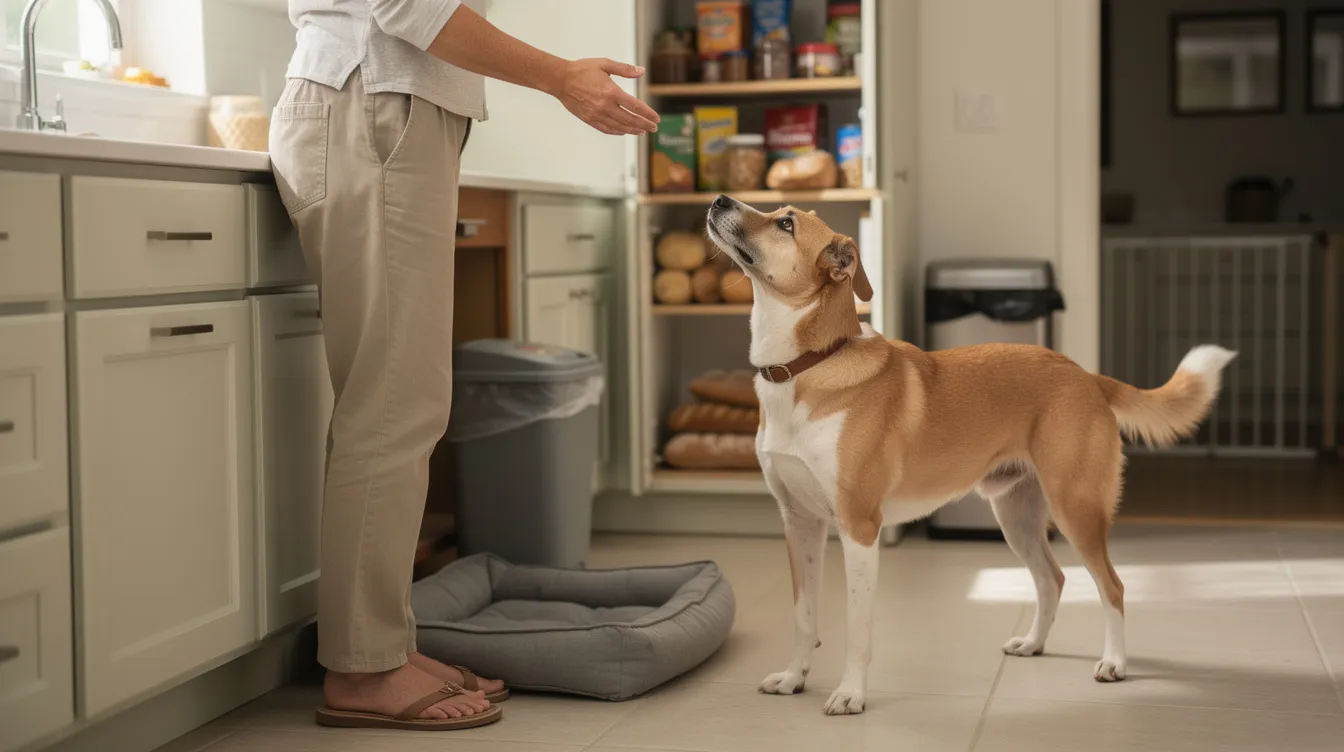
Before you start training a single command, environmental management must come first. Every time your dog successfully steals food from a counter, you’re taking a step backward. Management prevents dogs from being rewarded by finding food, which stops the habit from gaining strength. Think of management as the foundation that makes training possible.
Kitchen Access Control
The simplest way to prevent counter surfing is to control where your dog can go:
- Baby gates are your most valuable tool. Use baby gates to block kitchen access when you cannot supervise your dog. In Phoenix homes, where open floor plans are common, portable pressure-mounted gates work well to section off cooking areas without permanent installation.
- Crate training provides a safe, reliable containment option during high-temptation periods. When you start cooking and can’t actively supervise, placing your dog in a crate with a chew toy removes all opportunity for counter surfing.
- Room management: Close doors, use exercise pens, or designate dog-free zones in the house during meal preparation and eating times.
The goal isn’t permanent confinement-it’s preventing rehearsal of the unwanted behavior while you build training skills. Blocking access to food reduces the chance of counter surfing entirely.
Counter and Surface Management
To stop counter surfing, completely clear countertops of all food and wrappers. This means:
- Remove food from counters to prevent counter surfing-every single time, with no exceptions. Store all snacks, bread, fruit, and leftovers in upper cabinets or sealed containers.
- Keep counters clear of tempting non-food items too: used dishes, food-scented wrappers, grocery bags, and other items that carry food odors.
- Clean surfaces thoroughly after cooking. Removing food from counters prevents counter surfing behavior, but lingering grease and crumbs still attract dogs. Wipe down with a cleaning solution that eliminates food scent, not just visible debris.
- Push all items toward the back of deep counters. Even a water glass near the edge can become a target for an exploratory pup.
Deterrent Methods
While management and training do the heavy lifting, safe physical deterrents can provide an extra layer of prevention:
- Double-sided tape placed along counter edges creates an unpleasant sticky sensation when paws make contact
- Aluminum foil laid flat on surfaces produces a startling sound and texture that many dogs dislike
- Motion-activated devices that emit a harmless tone or puff of air when triggered by movement near the counter
- Upside-down carpet runners with nubby textures along the base of counters to discourage standing close
Avoid physical punishment as it can reinforce bad behaviors and create anxiety. Shock mats, spray bottles aimed at the dog’s face, and other aversive tools may suppress behavior temporarily but don’t address the underlying motivation and can damage your dog’s trust. Force-free approaches consistently produce better long-term outcomes.
Deterrents work best as temporary supports during the early stages of training. The real solution is teaching your dog what to do instead of surfing the counter-which is where positive training methods come in.
Training Methods and Implementation
Prevention keeps your dog from practicing counter surfing, but training builds the skills that replace it permanently. The most powerful strategy is teaching incompatible behaviors-actions your dog physically cannot perform while also surfing a counter. You want to reward calm behavior and discourage counter surfing simultaneously.
Teaching Incompatible Behaviors
Corrections tell a dog what not to do, but they don’t answer the more important question: what should the dog do instead? Incompatible behaviors solve this problem. A dog lying on a mat across the room cannot simultaneously have its paws on the counter. This is why place training is the single most effective tool against counter surfing.
Teach a reliable “place” command to redirect your dog during food preparation. Here’s the step-by-step process:
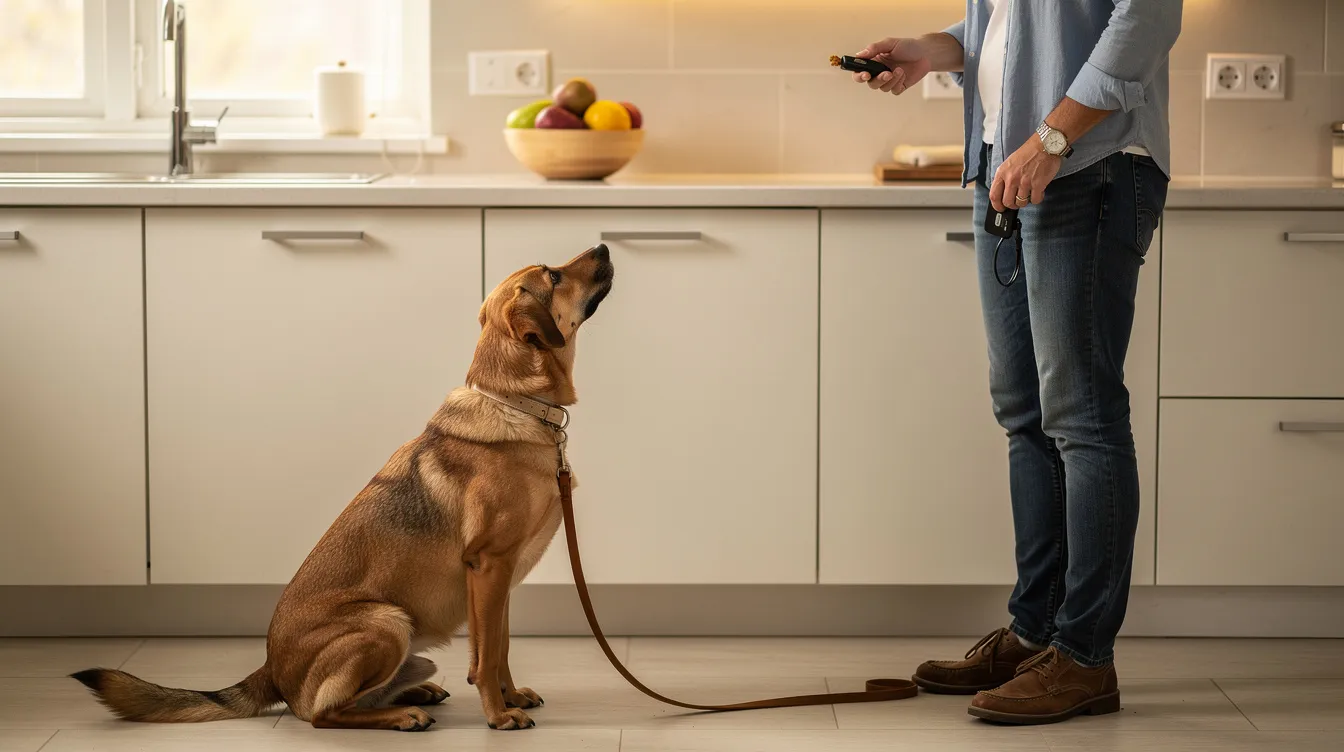
- Introduce the mat or dog bed: Place it in a low-distraction area. Reward your dog with a treat for any interaction-sniffing it, stepping near it, looking at it. Use clicker training to mark the exact moment of correct behavior for precision.
- Shape four paws on the mat: Gradually require more commitment before the reward. First one paw, then two, then all four paws on the surface. Click and treat each progression.
- Add the down position: Once your dog reliably steps onto the mat, lure or wait for a down. This becomes the default position on “place.”
- Build duration: Start with just a few seconds on the mat before rewarding. Gradually extend to longer periods-10 seconds, 30 seconds, one minute, five minutes. Reinforcement rates should be dense in early stages (every 3–5 seconds) and then thinned gradually.
- Add distance: Step back one foot, return, reward. Gradually increase until you can move around the room, leave briefly, and return.
- Proof against distractions: This is the critical stage. Practice place training while you’re in the kitchen. Set up controlled temptation-food on the counter while your dog holds place. Reward heavily for staying. Train your dog to go to their bed while cooking, and eventually the dog understands that cooking time means mat time.
- Establish a release cue: Use a consistent word like “free” or “okay” to signal that the dog can leave the mat. Never let the dog self-release.
Many dogs master the basic place command in 2–3 weeks with consistent daily practice. The AKC recommends place training as invaluable for helping dogs settle during mealtimes, and Whole Dog Journal emphasizes the importance of not rushing duration or distractions. Off Leash K9 Training Phoenix includes “Place” and “Extended Place” as core commands in their 2-week board and train program, teaching dogs to hold the command reliably even under heavy distraction.
Essential Commands for Counter Surfing Control
| Command | Application | Training Method |
|---|---|---|
| “Leave It” | Redirect attention before the dog touches the counter | Teach your dog the cue ‘leave it’ using positive reinforcement-present a low value treat in closed fist, reward with high-value dog treat from other hand when dog turns away |
| “Place” | Send dog to designated mat or dog bed during cooking | Mat training with progressive duration building and distraction proofing |
| “Off” | Remove paws from surfaces if dog does make contact | Consistent verbal cue at moment of contact, immediate reward when all four paws return to the ground |
“Leave it” is your proactive early-warning command. Use it the moment your dog shows interest in the counter-ears forward, nose pointed up, body oriented toward the surface. Reward calm behavior when your dog is near food by treating heavily for choosing to look at you instead of the counter. Start training with low-temptation scenarios (boring object on the floor) and build to high-value temptation (steak on the counter edge).
“Off” serves as your reactive cue for those moments when paws do contact a surface. Timing matters: say “off” the instant paws touch, then reward the moment feet hit the floor. The dog learns that removing paws from surfaces produces treats-a much more effective association than punishment.
Use clicker training to reinforce desired behaviors effectively across all three commands. The clicker’s precision helps dogs learn exactly which moment earned the reward, dramatically speeding up the training process.
The right command depends on your situation. “Place” is proactive and keeps dogs away from temptation entirely. “Leave it” catches interest before it becomes action. “Off” addresses the behavior in progress. Most successful dog owners use all three in combination.
Building Impulse Control
Counter surfing is ultimately an impulse control problem. Dogs that can resist temptation in one context-like waiting for a treat- can transfer that skill to other situations, including staying away from counters.
Progressive exercises that develop self-control include:
- Wait before meals: Ask your dog to sit and wait while you place the food bowl on the floor. Release only when the dog is calm. This teaches that patience-not grabbing-produces food.
- Delayed reward delivery: Hold a treat visibly in your hand. Wait for your dog to stop trying to grab it. The moment the dog makes a better choice-sitting, looking at you, backing away-reward immediately.
- Supervised kitchen training: Place a tempting item on the counter during a structured session. Stand nearby with high-value treats. Reward your dog for every moment spent ignoring the counter. Over several days, gradually increase the temptation level and decrease your proximity.
- Provide foraging alternatives: Give your dog puzzle toys, snuffle mats, and food-dispensing toys. These satisfy the natural scavenging drive properly and mentally stimulate your pup so the kitchen counter becomes less interesting.
Consistency in management and training improves behavior over time. Aim for short daily sessions (5–10 minutes) rather than occasional long ones. Eventually, your dog will default to calm behavior around food because it has been so heavily reinforced.
Common Challenges and Solutions
Even with solid management and training, most dog owners encounter specific obstacles. Here are the most common challenges and how to address them.
Dog Counter Surfs Only When Alone
This is the number one complaint: “My dog is perfect when I’m watching, but steals food the second I leave the room.” The dog has learned that your presence signals consequences while your absence means free access.
The solution is twofold. First, environmental management must be airtight when you’re gone-use baby gates, crate your dog, or ensure counters are completely clear. Second, gradually build independence through hidden supervision. Leave the room for 5 seconds, return and reward if the dog stayed off counters. Extend the duration over several days. A camera setup lets you monitor in real time and return to reward or redirect as needed. Training dogs to stay off counters requires consistent management even when you’re not present.
Multiple Dogs Creating Pack Behavior
When one dog is a counter surfer, other dogs often learn by observation. Pack dynamics can accelerate the problem-competition for food makes the stakes higher and the behavior more urgent.
Address this by training each dog individually on place, leave it, and off commands. Set up separate mat stations so each dog has its own designated spot during cooking times. Feed dogs in separate areas to reduce food competition. Manage access so that only one dog can potentially reach kitchen areas at a time during the training process.
Persistent Counter Surfing Despite Training
If your dog continues stealing food despite weeks of training, assess these factors:
- Consistency gaps: Is every family member enforcing the same rules? One person leaving food on the counter undoes everyone else’s work.
- Reward timing: Are you rewarding at the exact moment of correct behavior? Even a 2-second delay reduces effectiveness. Use clicker training for precision.
- Reward value: Early in training, use high-value treats-real meat, cheese, or whatever your dog finds irresistible. Low-value treats won’t compete with a roast chicken on the counter.
- Emotional factors: Some pets counter surf due to anxiety, excessive arousal, or food insecurity. If the behavior seems driven by stress rather than simple opportunism, professional behavior modification may be necessary.
For persistent cases, structured programs like basic and advanced obedience training can address the underlying obedience gaps that allow counter surfing to continue.
Large or Athletic Dogs Reaching High Surfaces
Tall breeds present unique challenges. A Great Dane can reach surfaces that would be safe from a Beagle, and an athletic dog can jump high enough to grab items from seemingly secure spots.
For these dogs:
- Move all tempting items to upper cabinets or behind closed doors-standard counter height isn’t safe
- Train an advanced version of “off” and “leave it” with height-specific distractions
- Use elevated dog beds or raised platforms as place training stations so the dog feels included in kitchen activity without being at counter level
- Consider a board and train program that specifically addresses distraction-proof obedience for high-drive, athletic dogs
For Phoenix dog owners with open-concept homes and large kitchen islands, physical management combined with rock-solid place training is ultimately the most reliable combination.
Conclusion and Next Steps
Counter surfing stops when you remove the reward and replace the behavior. That means keeping counters clear, controlling access, and teaching your dog that staying on their mat during cooking earns better rewards than anything they could steal. Counter surfing is instinctual behavior for scavenging dogs-you’re not fighting a character flaw, you’re redirecting a natural drive into more appropriate outlets.
Take these steps starting today:
- Immediately: Clear all food, wrappers, and dishes from counter tops and tables. Set up baby gates or a crate for unsupervised periods.
- This week: Begin place training in a quiet room with high-value treats. Keep sessions short-5 minutes, three times daily.
- Over the next 2–3 weeks: Move place training into the kitchen. Practice “leave it” with increasing temptation. Reward your dog every time they make a good choice near the counter.
- Ongoing: Thin rewards to intermittent schedules, maintain management, and continue reinforcing calm behavior around food preparation areas.
If your dog’s counter surfing persists despite consistent training, or if the behavior is accompanied by anxiety, food guarding, or other behavioral concerns, professional help can accelerate the process significantly. Mastering obedience on neutral ground can help dogs generalize their training to real-world environments where distractions are strongest.
Additional Resources
- Free consultation: Off Leash K9 Training Phoenix offers consultations to assess your dog’s specific counter surfing challenges and recommend the right training approach
- Recommended equipment: A durable mat or dog bed for place training, baby gates for kitchen access control, treat pouch for reward timing, clicker for precise marking, and puzzle toys for mental enrichment
- Related training programs: Basic obedience training builds the foundational commands that prevent counter surfing, while 2-week board and train programs deliver distraction-proof results for dogs that need intensive, structured intervention
