
Key Takeaways
- Dog walking training in Phoenix, AZ, is best understood as leash manners and obedience work around real-world distractions.
- Other dogs, people, traffic, bikes, parks, and busy sidewalks are normal challenges. Structured dog obedience makes them easier to manage.
- Heel, loose leash walking, sit, down, recall, and the place command create better public behavior.
- Training should start in quiet areas before moving to busier Phoenix parks, trails, and downtown sidewalks.
- Pet parents can practice at home, but professional training may help when walks feel stressful, unsafe, or unpredictable.
Introduction
Dog walking training phoenix az is about more than getting through a daily walk. It teaches your dog how to stay calm, listen to guidance, and make better choices around distractions, which can also support future off-leash obedience goals when practiced safely and legally.
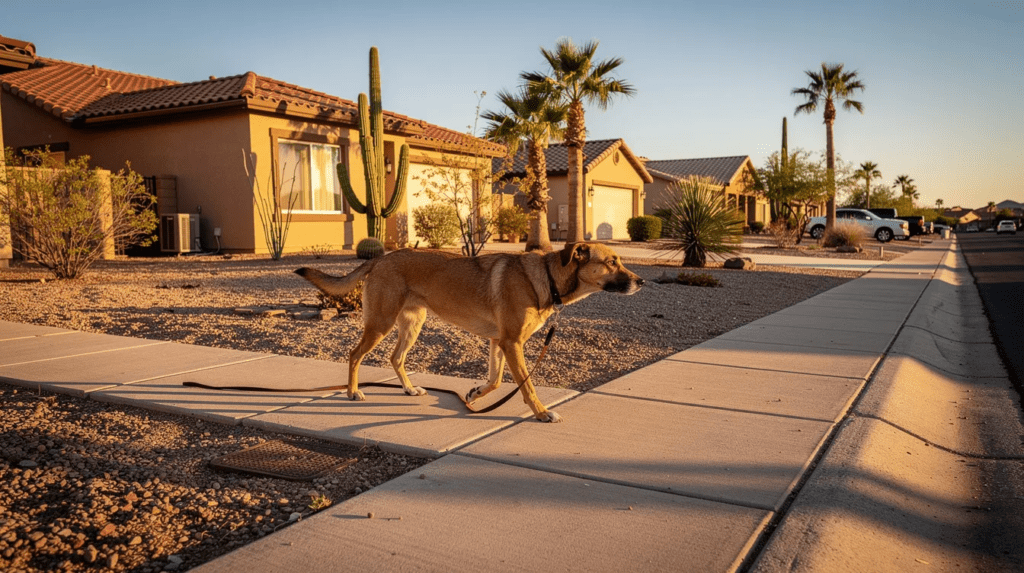
Phoenix has sunny neighborhood streets, active sidewalks, local parks, dog-friendly patios, desert trails, and plenty of movement. For many dog owners, those environments can make a simple dog walk feel difficult.
This guide explains why distractions are hard, which walking problems are most common, which obedience skills help, and how to practice step by step. Most dogs can improve with consistent training, clear communication, and the right guidance, but progress depends on the dog’s behavior, health, temperament, and follow-through at home.
Key Takeaways from This Guide
- Distractions are normal, but they should not control the walk.
- Dog obedience skills like heel, sit, down, recall, and place command help dogs respond instead of react.
- Start in low-distraction areas before practicing in busier Phoenix, AZ locations.
- Short practice sessions are often better than long, chaotic outings.
- Professional dog trainers can help if pulling, barking, aggression, or fear make walks unsafe.
Why Dog Walking Training in Phoenix, AZ Matters Around Distractions
Phoenix is an active outdoor city. Dogs may see joggers, strollers, bikes, skateboards, kids, dog walkers, wildlife, cacti, traffic, and other dogs on the same route. Warm weather also means many pet owners walk early or late, when neighborhoods can be busy.
Dogs react to movement, smells, sounds, and unfamiliar humans because those things are interesting or concerning. A pup may pull toward a smell, bark at a person, freeze near a loud bus, or lunge at another dog. Without structured dog training, the dog practices the same habits again and again.
Dog walking training in Phoenix, AZ, teaches the skills needed for calm public behavior. The goal is not to stop your dog from noticing the world. The goal is to teach your dog to look back to you, follow the leash, and respond to basic commands even when something exciting happens.
Better leash manners also improve safety. A dog that pulls hard can drag owners into traffic, knock over children, or create tension with other pets. Phoenix law also requires dogs off the owner’s property to be restrained by a leash no more than six feet long, according to the city’s dog leash law information.
Common Dog Walking Problems Around Distractions
Many pet parents in Phoenix deal with the same walking problems, especially in busy neighborhoods, parks, and apartment communities.
Common issues include:
- Pulling toward other dogs, food, smells, grass, or people
- Lunging and barking at dogs, bikes, scooters, or strangers
- Freezing or refusing to move
- Zig-zagging from side to side
- Constantly sniffing instead of walking forward
- Ignoring the owner once the dog sees a distraction
- Whining, spinning, jumping, or biting the leash
Sudden noises can also trigger fear. Garbage trucks, buses, construction, motorcycles, and closing car doors may cause a dog to stop, back up, or try to flee.
These behaviors can turn exercise into stress. Some owners shorten walks, avoid parks, or stop walking altogether. That may reduce conflict in the moment, but it does not teach the pet’s behavior to improve.
Dogs can struggle with leash reactivity and extreme pulling, necessitating specialized training. Behavior modification techniques often involve identifying the root cause of a dog’s behavioral issues, such as fear, anxiety, or aggression, and addressing those underlying problems through training.
Some dogs may need more structured training when leash pulling, barking, lunging, fear, or reactivity make walks difficult to manage. For dogs with aggression or reactivity concerns, Off Leash K9 Training of Phoenix offers programs focused on obedience, control, desensitization, and owner handling skills.
These concerns may improve with consistent training, owner involvement, management, and, when needed, professional or veterinary support.
Skills That Help Improve Leash Manners
Solid dog obedience training gives your dog a clear job during the walk. Instead of guessing what to do, trained dogs learn to follow familiar cues.
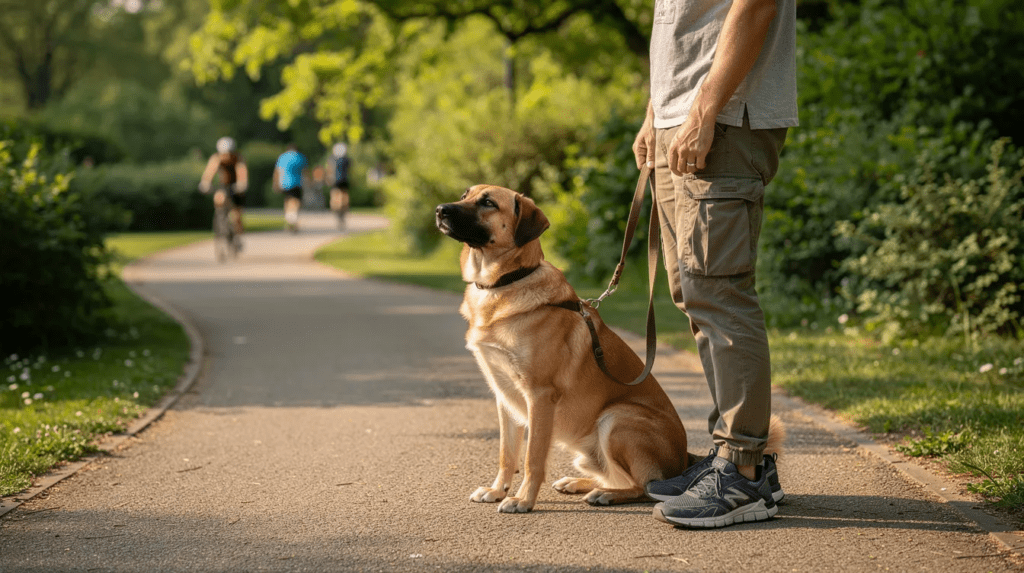
Heel and loose leash walking are the main walking skills. In heel, the dog stays near the owner’s side. In loose leash walking, the leash stays relaxed instead of tight. Both skills help small dogs, large dogs, and high-energy breeds move with better control.
Sitting down is a useful reset cue. When a distraction appears, asking for sit or down gives the dog a moment to pause. That pause helps prevent barking, lunging, jumping, or rushing forward.
Recall is a safety skill. If a leash is dropped, a collar slips, or a gate opens near a street or parking lot, recall can help bring the dog back quickly. Recall should be practiced in easy places before it is expected around major distractions.
The place command teaches a dog to go to a mat, bed, platform, or specific spot and remain there until released. This helps later at patios, parks, training facility settings, or crowded areas where the dog stays near the owner instead of wandering.
Teach “leave it” as another walking skill. Dog owners should teach the “leave it” command to help dogs avoid hazards like cacti or wildlife during walks.
Obedience training is not only about teaching commands. It also improves communication, consistency, and trust between the dog and owner. Clear guidance, fair expectations, and regular practice help dogs understand what to do during walks and around distractions.
Calm public behavior can also support higher-level training goals. A dog that can walk politely, focus around distractions, and remain calm near people is better prepared for advanced obedience, therapy dog preparation, and other structured training goals.
Leash manners, calm public behavior, and obedience around everyday distractions are the main skills that help make walks safer and more manageable.
How to Practice Calm Focus on Walks
Successful distraction training starts easily and becomes harder as the dog gains confidence. Begin in a quiet place, such as your living room, yard, driveway, calm Phoenix cul-de-sac, or quiet side street. Then work toward mild neighborhood distractions before trying Steele Indian School Park, Papago Park, downtown sidewalks, or busy greenbelts.
Start with the Doorway Drill. The Doorway Drill involves having the dog sit and wait calmly before exiting the house to prevent rushing. This teaches your dog that calm behavior starts before the walk begins.
Practice heel and loose leash walking for short distances. Add brief sits and downs when mild distractions appear, such as a person walking by, a parked car door closing, or a bike passing at a distance.
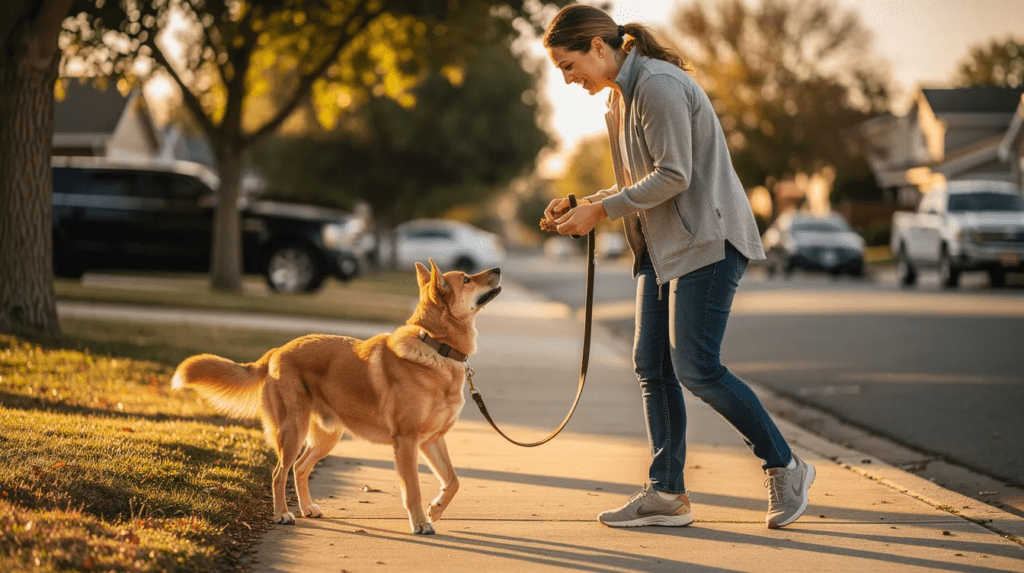
Training sessions should focus on ensuring the dog makes eye contact with the handler to enhance focus and reduce distractions. Reward eye contact with food, praise, or a toy. Positive reinforcement training is widely recognized as an effective method for teaching dogs obedience, as it encourages desired behaviors without the use of force or fear.
Reward-based training can help build focus, engagement, and early obedience skills. Some Phoenix training programs also use properly introduced tools, including an e-collar and leash work, to support clear communication and reliable obedience. The right approach depends on the dog’s age, behavior, goals, and training plan.
Use this simple progression:
- Practice basic obedience indoors.
- Move to the yard or driveway.
- Walk in a quiet neighborhood.
- Add mild distractions at a distance.
- Visit a calm park during off-hours.
- Practice around busier areas only when your dog can stay responsive.
If a distraction is too intense, turn away and create distance. This is not failure. It is good handling. You are helping your dog stay under control so learning can continue.
Phoenix heat matters. Outdoor dog training should be planned during cooler parts of the day whenever possible, with shorter sessions, shade, water, and frequent breaks. Training a dog to walk politely on a leash requires both good handling skills and heat-aware planning in Phoenix.
The City of Phoenix prohibits dogs on all city hiking trails when the temperature is 100°F or warmer. Hot pavement can also burn paw pads, so check the ground before walking and choose shaded, cooler surfaces whenever possible.
Use the Pavement Test before walking. The Pavement Test involves pressing the back of your hand against hot pavement for 5 seconds to test surface safety for dogs’ paws. Booties can protect dogs’ paws from hot ground surfaces, but should be introduced gradually in controlled settings.
Short, frequent training walks of 10 to 15 minutes often work better than long walks. Mix training with potty breaks so the dog can learn while still enjoying the walk.
Signs Your Dog Needs More Training Before Crowded Walks
Some dogs are not ready for crowded Phoenix sidewalks, festivals, patios, parks, or high-traffic walking areas. Moving too fast can make fear and reactivity worse, especially when the dog is already pulling, barking, lunging, or trying to escape.
Watch for these signs:
- Constant pulling, even in quiet areas
- Intense staring at other dogs
- Barking, whining, or lunging as soon as a distraction appears
- Ignoring known commands outdoors
- Trying to flee, hide, or back out of the collar
- Heavy panting unrelated to heat
- Tucked tail, pinned ears, pacing, lip licking, or shaking
If you see these signs, step back to easier locations. Practice at home, in the yard, or on a quiet street. Your goal is to rebuild confidence and communication before adding more pressure.
Also consider health. Medical conditions, pain, vision issues, or age-related changes can affect walking behavior. If a sudden behavior change appears, ask a veterinarian before assuming it is only a training issue.
When Professional Training May Help
Some dogs need more guidance than owners can provide alone, especially with strong pulling, lunging, snapping, fear, poor outdoor focus, or reactivity around people and other dogs. Professional dog training in Phoenix can help build loose-leash walking, basic obedience, manners, and better control around distractions.
Training options may include private lessons, obedience programs, board and train, puppy training, behavior support, or therapy dog preparation. The right program depends on your dog’s age, temperament, behavior history, current skills, and your goals.
A good trainer should give you a clear plan, improve your handling skills, and help you maintain progress at home. If you also hire a dog walker, make sure they understand your dog’s leash rules, cues, and safety routines.
Final Thoughts on Dog Walking Training Phoenix AZ
Dog walking training phoenix az helps turn chaotic walks into calmer, more predictable routines. With the right training, your dog can learn to notice distractions without pulling, barking, freezing, or losing focus.
Better leash manners, heel, recall, leave it, and the place command support safer public behavior in Phoenix neighborhoods, parks, patios, and city streets. These skills also help dogs enjoy more structured exercise, clearer guidance, and less stress during walks.
Start in quiet spaces. Build slowly. Reward calm focus. If walks feel unsafe or overwhelming, contact a qualified dog trainer for obedience training, leash manners, and behavior guidance before taking your dog into busy public areas.
Frequently Asked Questions
Phoenix dog owners often have practical questions about leash training, equipment, and walking routines. These answers can help you make better choices during everyday walks.
How often should I practice leash training with my dog in Phoenix?
Daily practice works best. Use 10 to 15-minute sessions once or twice a day instead of occasional long walks.
In the summer months, walk early in the morning or late in the evening. Mix short training walks with normal potty breaks so your dog can learn and still explore.
What type of leash and collar are best for distraction training?
A standard 4 to 6-foot leash is best for most training walks. Retractable leashes often encourage pulling and make control harder around distractions.
Use a well-fitted flat collar or a properly fitted harness. If you are unsure, ask a trainer to check fit and comfort.
Can I work on distractions if I live in a very busy Phoenix neighborhood?
Yes, but start with the quietest area you can find. This may be a side street, parking lot during off-hours, apartment courtyard, or calm corner of a park.
Practice basic obedience indoors first. Then slowly add traffic, people, and other dogs only when your dog can stay focused.
Should I let my dog greet every person or dog we see on walks?
No. Frequent greetings can make every person or dog feel like an event, which increases pulling and excitement.
Choose a few calm, controlled greetings as rewards for good leash manners. It is always acceptable to say no and keep walking if your dog is anxious, reactive, or still learning.
Is group class or private training better for leash and distraction issues?
Private lessons often help more when a dog has strong pulling, fear, aggression, or reactivity. Private instruction gives the trainer time to focus on your dog’s specific behavior. Once basic control is stronger, structured practice around controlled distractions can help improve obedience, leash manners, and public behavior.
Contact Us
Contact us today to speak with a professional dog trainer in Phoenix and choose the safest training option for your dog’s leash and distraction issues.
