
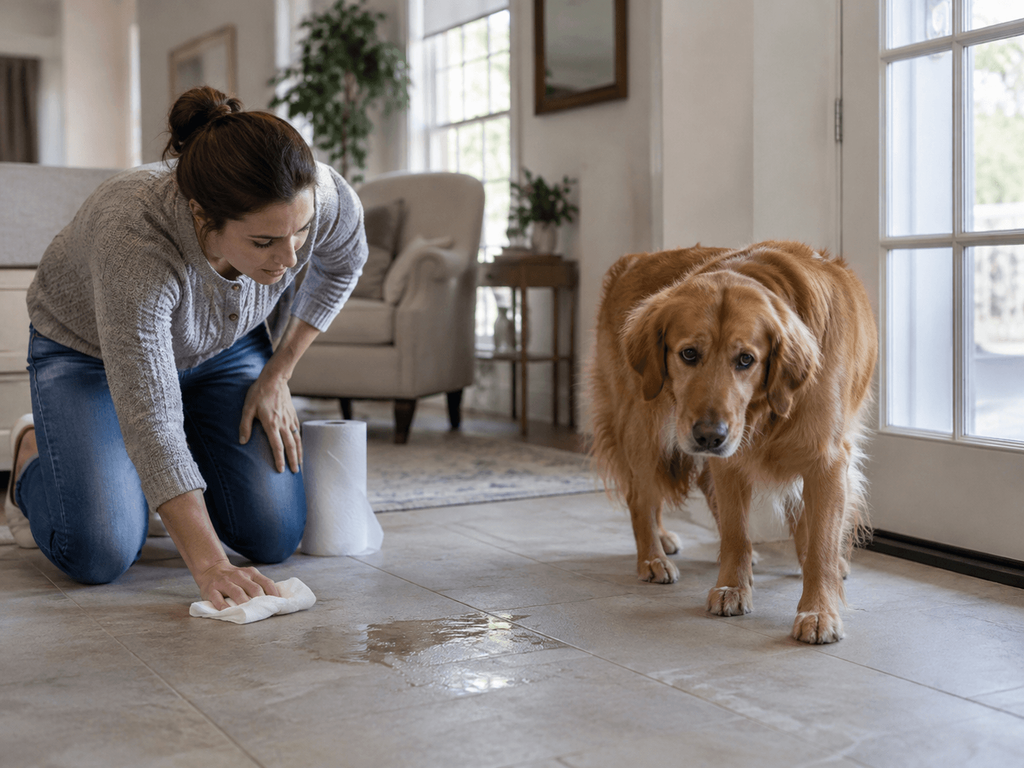
Dog potty training regression happens when a previously house-trained dog starts having indoor accidents again—and it can be frustrating for dog owners. A setback may be related to an incomplete house-training habit, changes in routine or environment, marking, stress, or a medical condition. The right response depends on identifying what changed.
This guide covers puppies through senior dogs, including behavioral and medical causes of regression, practical retraining steps, and signs that professional or veterinary help may be needed. Whether you’re raising a puppy in the Phoenix heat or managing an adult dog who’s suddenly having accidents after months of reliability, this resource can help you determine the appropriate next steps.
Direct answer: Dog potty training regression can have behavioral, environmental, developmental, or medical causes. If a previously reliable dog suddenly begins having accidents—especially with straining, blood in the urine, increased thirst, frequent small urinations, or leaking during sleep—contact your veterinarian. When medical causes are ruled out, structured house-training routines can help rebuild the desired habit.
Here’s what you’ll gain from this guide:
- A clearer understanding of why a dog may begin having accidents again
- Practical steps for rebuilding reliable house-training habits
- Knowledge of medical warning signs that warrant veterinary attention
- Guidance for monitoring progress without relying on unrealistic timelines
- Information about when professional training or behavior support may be useful
Understanding Dog Potty Training Regression
In practical terms, potty training regression describes the return of indoor accidents after a dog had previously been reliably eliminating in the appropriate place. It is useful to distinguish a genuine setback from incomplete house training, because a dog that was never fully reliable may simply need the original training process continued.
Many owners assume their dog “knows better” when accidents start again. House-training habits depend on consistent opportunities to eliminate in the appropriate place, supervision, reinforcement, and the dog’s physical ability to wait. Illness, stress, schedule changes, or incomplete training can interfere with that pattern, so the cause should be investigated rather than treating accidents as deliberate misbehavior.
Normal vs. Concerning Regression Patterns
Temporary setbacks can occur as puppies mature or when a dog’s routine or environment changes. However, there is no reliable rule that every puppy will regress or that a setback should resolve within a specific number of days. Monitor the pattern, restore structure, and consider whether health, stress, marking, or incomplete house training may be contributing.
Certain patterns warrant veterinary attention. Straining to urinate, blood in the urine, increased thirst, frequent small urinations, urine leakage during rest or sleep, or a sudden change in a previously reliable adult dog may indicate a medical problem. Straining with little or no urine can be an emergency and should not be treated as a training issue.
House-training setbacks can occur at the same time as other training challenges, particularly during adolescence or after routine changes, but indoor elimination should not automatically be interpreted as a dog “testing boundaries.” If your dog also needs help with general responsiveness or manners, obedience training can address those separate skills while house training is managed directly.
Age-Related Regression Phases
Canine development research provides useful age categories, but it does not establish fixed potty-training regression windows. A 2021 lifespan developmental review categorizes dogs as puppies from 0–6 months, juveniles from 6–12 months, and young adults from 12–24 months, while noting that behavioral maturation varies.
Around 4–6 months, many puppies are still developing reliable house-training habits and may not yet have adult-level bladder control or consistency in every environment. Changes in routine, increasing independence, or too much unsupervised freedom can expose gaps in training. Rather than assuming a puppy has forgotten the behavior, return to close supervision, predictable potty opportunities, and reinforcement outdoors.
During adolescence, behavioral responsiveness can change. One study found that dogs tested at eight months were less responsive to commands from their primary caregiver than they had been at five months, while responsiveness to another person did not decline in the same way. However, this research examined trainability, not house-training regression. Puberty can also increase urine-marking behavior, particularly in intact dogs.
Developmental context can help you set realistic expectations, but age alone should not be used to explain a sudden change in house-training reliability.
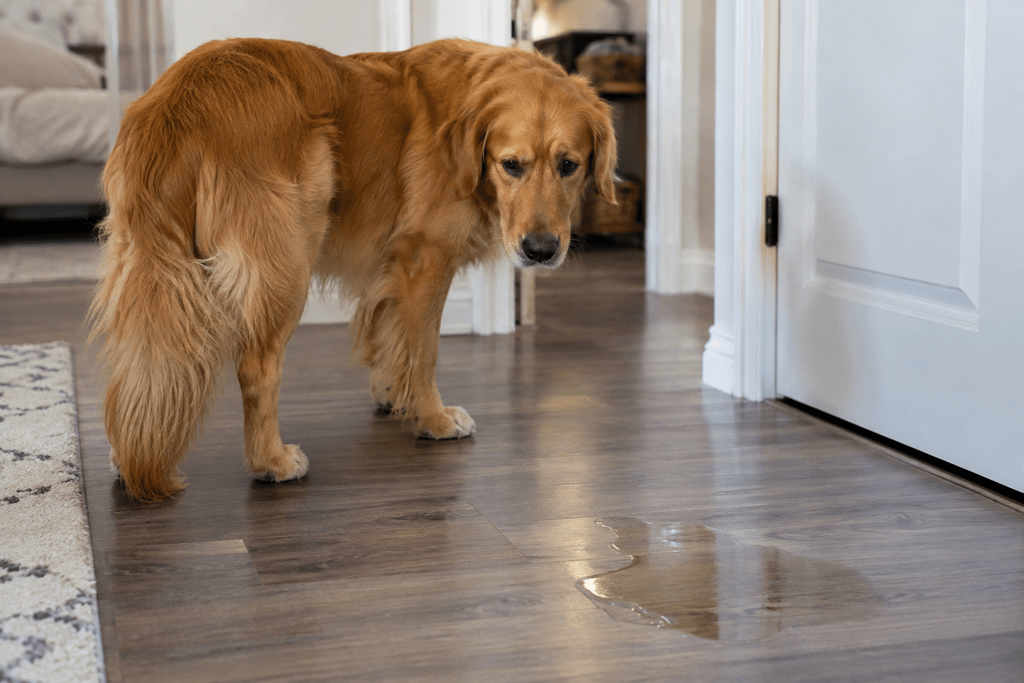
Root Causes Behind Potty Training Setbacks
Effectively addressing regression starts with identifying the likely trigger or combination of triggers. A systematic approach helps prevent a medical problem from being mistaken for a training issue and helps owners focus on the management changes that are most relevant to their dog.
Developmental and Hormonal Factors
Adolescence involves ongoing neurological and behavioral development, and the timing varies among dogs. During this period, previously learned behavior can become less consistent in some situations. However, developmental stage alone should not be assumed to explain a sudden return of indoor accidents.
Hormonal changes can also affect urine marking. Research on scent-marking behavior in dogs and veterinary behavior guidance show that urine marking is particularly common in intact males and may become more noticeable around sexual maturity. Marking should be distinguished from emptying a full bladder because the motivation and management approach can differ.
Intact females may urinate more frequently or mark during a heat cycle. Separately, spayed female dogs can develop urinary incontinence associated with urethral sphincter mechanism incompetence (USMI). Incontinence is a medical problem rather than a training lapse, and onset may occur years after spaying, with risk varying among dogs.
Environmental Stress and Changes
Does this sound familiar? Your dog was reliably house-trained until you moved, brought home a new pet, or changed your work schedule—and suddenly accidents started appearing again.
Environmental changes can contribute to stress-related house soiling. Specific triggers may include:
- Moving to a new home where the dog has not established a familiar potty routine
- A new family member such as a baby, partner, or roommate
- Schedule shifts in the owner’s work or daily routine
- Loud noises from construction, fireworks, or storms, including Arizona monsoon weather
- Introduction of another dog or pet to the household
- Separation-related distress when the dog is left alone
A change in the environment does not automatically prove that stress is the cause, but comparing the timing of the accidents with recent changes can help identify useful patterns.
Training Consistency Issues
Inconsistent routines can make house training harder to maintain. If potty opportunities, supervision, or expectations vary significantly from day to day, a dog may have more opportunities to make mistakes.
Feeding and activity schedules also influence when dogs are likely to need to eliminate. Keeping meals and potty opportunities reasonably predictable can make it easier to anticipate when your dog needs to go outside.
Another frequent problem is giving a dog too much freedom too soon. A puppy or newly trained dog may be reliable in familiar areas but not yet understand that the same house-training expectations apply throughout the entire home. What appears to be regression may sometimes be incomplete generalization of the original training.
Reinforcement is especially useful while establishing or rebuilding the habit. Once a dog is consistently successful, food rewards do not necessarily need to be given after every trip; reinforcement can gradually become less frequent while praise, routine, and access to appropriate potty areas remain consistent.
Medical and Health-Related Causes
Medical problems are an important consideration whenever a previously house-trained dog suddenly begins having accidents. Urinary tract infections, bladder stones, kidney disease, diabetes, Cushing’s disease, neurologic problems, incontinence, gastrointestinal disease, pain, and cognitive decline can all contribute to house soiling.
Urinary tract infections can contribute to frequent or inappropriate urination. A 2025 systematic review and meta-analysis found that bacterial UTI prevalence varied substantially among dogs and cats with lower urinary tract diseases or other illnesses. Those findings should not be interpreted as the percentage of dogs with potty-training regression that have a UTI.
Other health conditions that can contribute to accidents include:
- Diabetes and Cushing’s disease, which can increase thirst and urine production
- Kidney disease, which can increase drinking and urination
- Bladder stones, which may cause discomfort, urgency, or abnormal urination
- Urinary incontinence, which can cause involuntary leakage
- Cognitive dysfunction in senior dogs, which can affect previously learned house-training habits
- Pain or mobility problems, which may make reaching an appropriate elimination area more difficult
Senior dogs may begin house soiling for several reasons, including increased urine production from diseases such as kidney disease or diabetes, urinary incontinence, pain or mobility limitations, and canine cognitive dysfunction. A previously house-trained senior dog that begins having accidents should therefore receive a veterinary evaluation rather than having the change attributed to aging alone.
The bottom line: do not assume a sudden house-training change is behavioral. Your veterinarian can determine whether an examination, urinalysis, bloodwork, imaging, or other testing is appropriate based on your dog’s signs and history.
Professional Training Solutions and Implementation
Once urgent medical concerns have been addressed, returning to clear house-training fundamentals can help rebuild consistency. The goal is to prevent additional mistakes while making successful elimination in the appropriate place easy and rewarding.
Back-to-Basics Retraining Protocol
Once urgent medical concerns have been addressed, these house-training principles can help rebuild consistency. Adjust the schedule and management plan for your dog’s age, health, and individual needs:
- Rule out medical causes when appropriate. A sudden change in a previously house-trained dog, increased thirst, urinary urgency, straining, blood in the urine, leakage during sleep, or other health changes warrants veterinary evaluation. Follow your veterinarian’s recommendations for testing and treatment.
- Thoroughly clean accident areas. A high-quality enzymatic pet cleaner can help remove residual urine odor that may encourage repeat elimination in the same location. Follow the product instructions and make sure the cleaner is appropriate for the surface.
- Return to a structured potty schedule. Provide regular opportunities to eliminate and adjust frequency to your dog’s age and health. Puppies may need to go out after waking, eating, drinking, playing, and other changes in activity, while adult dogs may be able to wait longer. Using a consistent potty area can make the routine clearer.
- Increase supervision and manage freedom. Keep your dog nearby when possible so you can notice signs such as sniffing, circling, restlessness, or moving toward an exit. When direct supervision is not possible, a pen, gated area, or crate may help if your dog is already comfortable with that form of confinement. Dogs that become distressed when confined need a different plan.
- Reinforce successful elimination in the correct place. Praise your dog and, during retraining, consider offering a small reward immediately after they finish eliminating while you are still near the designated potty area. This makes the connection between the location, behavior, and reward clearer.
Increased supervision also gives you an opportunity to notice pre-elimination signals and guide your dog outside before an accident occurs.
Advanced Techniques for Persistent Cases
If accidents continue despite consistent management and medical causes have been addressed, review the pattern and consider whether the routine needs to be adjusted or professional guidance would help.
Crate training refresh: If your dog already has a positive association with the crate, it can be used as part of a structured house-training plan when you cannot supervise directly. Make sure your dog has an appropriate potty opportunity before confinement and is not left longer than they can comfortably wait. Dogs that become distressed in a crate need a different management strategy.
For dogs struggling with refusing to potty outside, a structured transition between supervised indoor time and a designated outdoor potty area can make the expectation clearer.
Leash-guided potty outings: Take your dog to the designated potty area on leash so you can monitor whether elimination actually occurs. Give them a quiet opportunity to go. If they do not eliminate after several minutes, return inside, supervise closely, and provide another opportunity soon rather than allowing unsupervised freedom.
Multi-dog management: In a multi-dog household, it can help to take dogs out individually so you can confirm which dog eliminated and reward the correct behavior. Thoroughly clean indoor accidents and monitor whether another dog begins investigating or marking the same area.
Puppy pads as a management tool: For young puppies or households where outdoor access is limited, an appropriate indoor potty area may be useful. If your long-term goal is outdoor elimination only, keep the eventual transition in mind and maintain a consistent designated location.
For puppies, Off Leash K9 Training Phoenix currently lists a Puppy Training Consultation that includes house-training guidance and a 2 Week Puppy Board & Train that establishes crate and potty-training routines through positive reinforcement. Adult owners with persistent house-soiling should first identify whether the issue is medical, behavioral, marking-related, or incomplete training before choosing a training program.
Success Metrics and Progress Expectations
Tracking accidents can help identify patterns. Keep a simple log noting the time, location, amount, and circumstances of each accident, along with meals, water intake, potty trips, departures, sleep, and unusual events when relevant.
| Scenario | What to Monitor | When to Reassess |
| Training lapse or routine change | Frequency, location, and circumstances of accidents | If accidents are not trending downward despite consistent management |
| Suspected or confirmed medical cause | Urgency, frequency, thirst, discomfort, leakage, and response to treatment | Follow the veterinarian’s recommended recheck schedule or contact them sooner if signs worsen |
| Stress-related house soiling | Accidents in relation to departures, visitors, moves, noises, or routine changes | If distress persists or additional anxiety behaviors develop |
| Senior dog | Changes in thirst, mobility, sleep, cognition, signaling, and continence | With any new or progressive change in house-training reliability |
| Urine marking | Small-volume marks, target locations, triggers, and frequency | If marking persists despite management or appears related to anxiety |
Recovery time varies considerably because a training lapse, urine marking, anxiety-related house soiling, urinary disease, and age-related incontinence are different problems. Focus on whether accidents are becoming less frequent and whether the suspected cause is improving rather than expecting recovery within a fixed number of days.
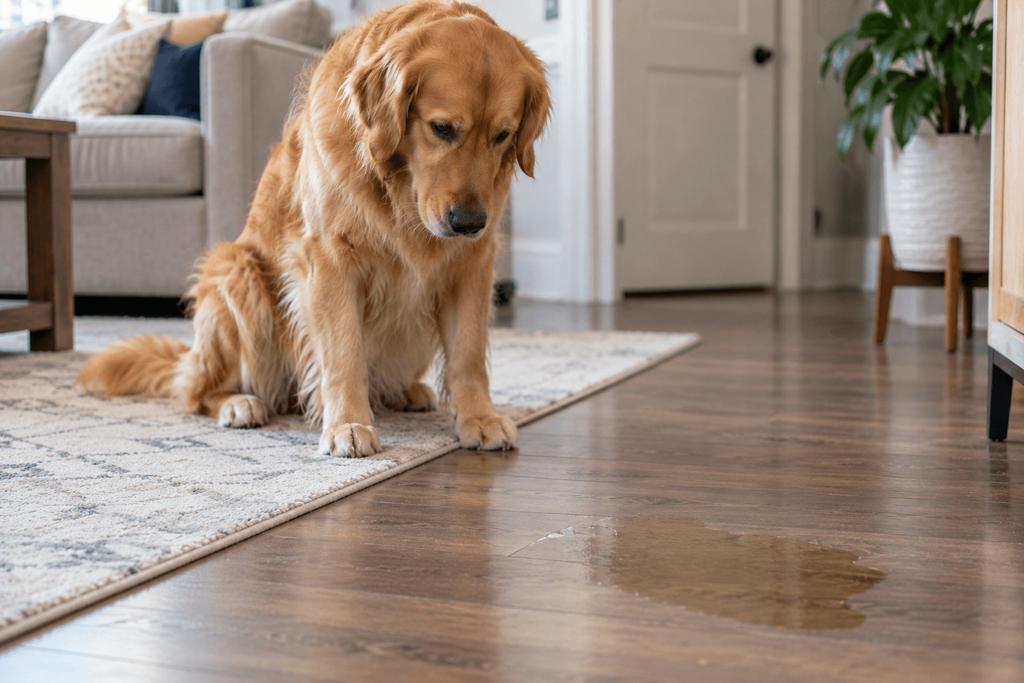
Common Challenges and Professional Solutions
Even with a clear plan, specific circumstances can make house-training setbacks more difficult to manage. Identifying the pattern helps determine which strategy is appropriate.
Marking Behavior in Male Dogs
Indoor urine marking can be different from a house-training lapse. Marks are often small amounts of urine placed on particular objects or locations, and marking is especially common in intact males, although neutered males and females can also mark. Medical causes should still be ruled out when a previously house-trained dog suddenly begins urinating indoors.
If you notice your dog investigating a frequent marking target, calmly redirect them before they urinate rather than scolding or startling them. Restricting unsupervised access to high-risk areas can also help. Belly bands may be used temporarily for management, but they must be changed promptly when soiled. Long-term improvement depends on identifying and addressing the trigger for the marking.
Accidents During Owner Absence
If accidents happen primarily when you’re away, separation-related distress may be one possibility, especially if the accidents occur with barking, destruction, escape attempts, pacing, or other signs of anxiety. A crate is not appropriate for every anxious dog because some dogs become more distressed when confined. Video of your dog’s behavior while alone can help identify the pattern.
Stay calm when you discover accidents after the fact. Punishing a dog for an accident you did not witness does not show them what they should have done instead and can create fear or confusion. Clean the area, record the incident in your log, and adjust your management plan.
If house soiling appears connected to anxiety when your dog is alone, discuss the pattern with your veterinarian or a qualified behavior professional. The underlying distress needs to be addressed rather than treating the accident itself as simple disobedience.
Stress-Related Regression During Life Changes
A new baby, move, new pet, visitor, or schedule change can alter a dog’s routine and contribute to stress-related house soiling. Keep feeding, exercise, rest, and potty opportunities as predictable as practical while your dog adjusts.
Maintain familiar resting areas and use supervision or temporary access limits when needed to prevent accidents. Expand freedom gradually based on the dog’s actual reliability rather than following a fixed number of weeks. If the dog shows persistent anxiety, seek professional guidance.
Multi-Dog Household Complications
In multi-dog households, one dog’s urine may attract additional investigation or marking from another dog, but this does not occur in every household. Clean accident areas thoroughly and identify which dog is responsible for each incident whenever possible.
Taking dogs outside individually for a period can make monitoring easier. It allows you to confirm elimination, reward each dog appropriately, and determine whether one or multiple dogs are contributing to the problem.
Conclusion and Next Steps
Dog potty training regression is often manageable once the underlying cause is identified. A young dog with an incomplete habit, an adolescent that has gained too much freedom, a dog that is marking, and a senior dog with urinary or cognitive changes may all need different solutions. Start by determining what changed and whether medical evaluation is needed.
Your immediate action steps:
- Arrange veterinary evaluation for sudden regression or signs such as straining, blood in the urine, increased thirst, urinary urgency, leakage, or other health changes.
- Clean accident areas thoroughly with an appropriate enzymatic pet cleaner.
- Restore predictable potty opportunities based on your dog’s age, routine, and health.
- Increase supervision and temporarily reduce unsupervised freedom when necessary.
- Reinforce successful elimination in the correct location.
There is no universal recovery timeline. If accidents persist, become more frequent, or the cause remains unclear, seek professional guidance rather than waiting for an arbitrary number of weeks. For puppy-specific support, Off Leash K9 Training Phoenix currently lists a Puppy Training Consultation that includes house-training guidance and a 2 Week Puppy Board & Train that establishes crate and potty-training routines. Current options can be reviewed on the Plans & Pricing page.
A setback does not necessarily mean previous training has been lost. Once medical causes and other triggers have been addressed, returning to consistent supervision, appropriate potty opportunities, and reinforcement can help rebuild reliable house-training habits.
Frequently Asked Questions
What is puppy potty training regression?
Puppy potty training regression occurs when a puppy that had been reliably eliminating in the appropriate place begins having accidents again. Possible contributors include incomplete training, too much freedom, routine changes, adolescence, marking, stress, or a medical issue. Development alone should not automatically be assumed to be the cause.
How long does puppy potty training regression usually last?
There is no standard duration. A minor training lapse may improve as consistency returns, while medical, anxiety-related, marking, or developmental issues may require a different timeline. If accidents persist, worsen, or occur with health changes, investigate the cause rather than waiting for a fixed number of weeks.
Why does my potty-trained dog suddenly start having accidents?
Sudden accidents can be associated with urinary or other medical problems, environmental changes, stress, marking, changes in routine, or a lapse in house-training habits. A sudden unexplained change in a previously reliable dog is a good reason to contact your veterinarian.
How can I maintain good habits during potty training?
Use a predictable routine, provide potty opportunities appropriate for your dog’s age and needs, supervise closely during training, limit unsupervised freedom when necessary, and reinforce successful elimination in the correct location.
Are enzymatic cleaners necessary for cleaning accidents?
Enzymatic pet cleaners are strongly recommended for urine accidents because they are designed to remove organic residue and lingering odor. Ordinary cleaning may not fully remove scent from some surfaces, so follow the enzymatic product’s instructions and check that it is safe for the material being cleaned.
When should I seek professional help for potty training regression?
Seek veterinary help promptly if accidents are sudden or accompanied by straining, blood in the urine, increased thirst, frequent urination, leakage, pain, or other health changes. If medical causes are ruled out but accidents continue despite consistent management, a qualified trainer or behavior professional can help review the house-training plan.
