
Key Takeaways
- Common puppy behavior problems like biting, jumping, chewing, barking, potty accidents, pulling, and ignoring commands are normal, but they need early, consistent training before they become harder habits to change.
- Every day a puppy repeats an unwanted behavior, that behavior gets stronger. What seems harmless in a 10-pound puppy can become a serious issue in a 60-pound adult dog.
- Basic obedience skills like sit, down, place, heel, recall, and off give puppies clear alternatives to bad habits. Paired with crate training, daily routines, and active supervision, these tools can help reduce many common dog behavior issues before they take root.
- Calm corrections, consistent rules, and positive reinforcement across all family members work far better than yelling, rough play, or mixed messages that accidentally reward the behavior you want to stop.
- Some puppies show early warning signs that they need more structured training. Professional help with puppy training and behavior modification can reduce the risk of serious dog behavior problems developing later.
Introduction
Puppy behavior problems are among the most common concerns new dog owners face in the first few months of bringing a puppy home. Biting, chewing, barking, house soiling, and jumping are all part of life with a young dog, but they are not things your puppy will simply outgrow on their own.
What a puppy practices every day becomes their default habit. A new puppy that jumps on guests at 12 weeks is rehearsing the same behavior they will carry into adulthood unless someone teaches them something different. The longer a pattern continues, the harder it becomes to change.
The good news is that structure, consistency, obedience, and clear expectations can help turn chaotic puppy behavior into calmer, more reliable dog behavior. This article covers what to fix early, why timing matters, and how to recognize when your puppy may need more help than basic home routines can provide.
Common Puppy Behavior Problems
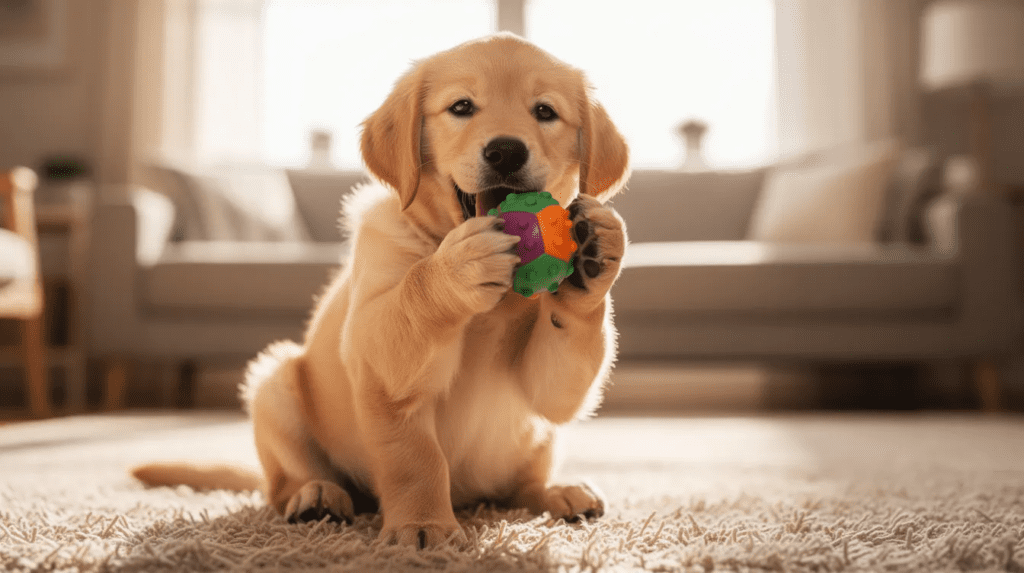
Most behavior problems start as normal puppy behavior. Puppies use their mouths to explore and play, they jump because they are excited, and they chew because their gums hurt. These are not signs of a bad dog. They become problematic behaviors when they are unmanaged, repeated daily, or accidentally rewarded by the people around them.
Most puppies display several undesirable behaviors at the same time, and that is perfectly expected. Many dog owners deal with at least one behavior they want to improve, especially during puppyhood and adolescence. The key is recognizing which normal dog behaviors need guidance and which ones need immediate redirection.
Here is a closer look at the most common issues.
Biting and Nipping
Play biting is one of the earliest puppy behavior concerns. Puppies chew to soothe teething pain or relieve boredom, and mouthing is how they interact with the world. During play, a puppy bites hands, sleeves, and ankles because that is how they learned to engage with their littermates.
Attention-seeking biting is different. In this case, the puppy bites because they know it gets a reaction. Any reaction, whether you pull your hand away, squeal, or push them off, counts as attention, and attention reinforces the habit.
Over-aroused biting happens during high-energy moments like zoomies, excited greetings, or play that goes on too long. The puppy’s body is loose and excited, not stiff or threatening, but the bites get harder as the energy spikes. Harmful mouthing can lead to painful habits if not corrected, and what feels like a small nip from a puppy bites down with enough pressure to bruise or break skin in an older, larger dog. When adult dog bites happen, they are far more dangerous and more difficult to undo.
An important note: puppies begin learning bite inhibition from their mother, littermates, and early social experiences. That early feedback helps teach them how hard they can press before play stops. This is one reason puppies benefit from staying with their litter for an appropriate age and receiving safe, structured socialization during the early developmental period.
Jumping on People
Puppies often jump to greet people excitedly. It is natural, it is social, and when they are small, it can seem cute. But jumping can become an annoying habit as puppies grow, especially when a 50 or 70-pound dog launches at visitors, children, or elderly family members.
The problem is that any response you give, whether you push the puppy away, make eye contact, say “down,” or pet them, counts as attention. That attention reinforces jumping. Immediate redirection is key to stopping jumping behavior. Jumping can be managed by teaching puppies to sit first, and using a leash can help control jumping behavior in puppies during greetings. Puppies should be rewarded for calm behavior instead of jumping, so four paws on the floor becomes the habit that gets attention, not launching upward.
Destructive Chewing
Destructive chewing is normal exploratory behavior in puppies. Many puppies begin losing baby teeth around 12 to 16 weeks, and chewing often increases during the teething period. Chewing usually improves as puppies mature, but it can continue if the puppy is bored, anxious, unsupervised, or not given proper alternatives.
Boredom and anxiety can trigger destructive chewing in dogs. A puppy left alone with access to shoes, furniture legs, and baseboards will chew whatever is available. Destructive chewing often stems from boredom or anxiety, especially when the puppy has no appropriate outlets. Providing chew toys can help redirect destructive chewing behavior, and supervision is crucial to prevent puppies from chewing inappropriate items. Without management, chewing can lead to ingestion of dangerous objects, a real safety risk.
Barking and Whining
Excessive barking often results from boredom and insufficient exercise. Puppies also bark out of excitement, demand attention, or respond to noises outside. The trouble starts when dog owners respond by talking to the puppy, walking toward them, or otherwise reacting. From the puppy’s perspective, barking made something happen, so it works.
Chronic barking is often tied to a lack of structure, inadequate physical activity, or too much unstructured time without direction. Addressing the root cause, whether it is boredom, excitement, or anxiety, matters more than trying to stop barking after it starts.
House Soiling and Potty Accidents
House soiling is one of the most frustrating early challenges. House training requires frequent opportunities to relieve themselves, and very young puppies simply do not have the bladder control to hold it for long stretches. Consistent routines for feeding and potty breaks minimize house accidents, but even with routines, some puppies need more repetition than others.
House soiling can result from inadequate training. It can also occur if dogs are not given enough potty breaks. Dogs may soil their crate if it is too large or dirty, giving them space to eliminate in one corner and sleep in another. Dogs may soil indoors due to fear or anxiety, and pain can contribute to house soiling in dogs as well. If your puppy is having persistent accidents despite solid routines, it is worth discussing with your vet to rule out a urinary tract infection or other medical cause.
Leash Pulling
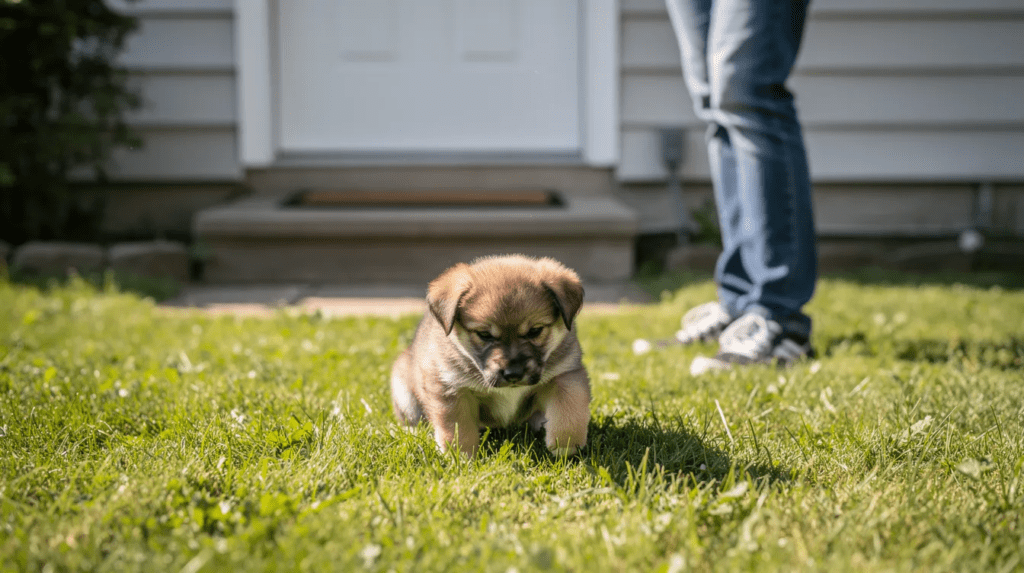
Puppies naturally want to move faster than we walk. They want to sniff, explore, and get to the next interesting thing as quickly as possible. When you let a puppy drag you forward on the leash, you are teaching them that pulling works. The behavior gets practiced every single walk and becomes deeply ingrained by the time the dog is strong enough to make walks genuinely difficult.
Ignoring Basic Commands
Repeating “sit,” “come,” or “off” when a puppy is distracted, overstimulated, or undertrained turns those cues into background noise. The puppy hears the word, but nothing meaningful has ever followed it consistently, so it means nothing. Ignoring commands is not defiance. It is a training gap, and it gets wider every day it is not addressed.
Why Early Training Matters for Puppy Behavior Problems
Every time a puppy repeats a behavior, whether good or bad, the neural pathway for that behavior gets stronger. Repetition is the engine that builds habits. A puppy that jumps 20 times a day is getting 20 daily rehearsals of a behavior you do not want. A puppy that bites to start play is learning that biting is a convenient way to get what they want.
Daily rehearsals of jumping, mouthing, barking, or pulling create strong patterns. These patterns often require more time, effort, and behavior modification to change once they are established. Research on pre-adolescent puppy training has found an association between training before 6 months of age and reduced odds of some adult behavior problems, including aggression, excessive barking, destructive behavior, and compulsive behavior. This does not guarantee a perfect adult dog, but it does support the value of starting early.
Think about the difference between a 10-week-old puppy learning not to jump and a 60-pound adolescent dog who is already convinced that jumping is how you greet people. The 10-week-old needs a few repetitions with clear feedback. The older dog needs weeks or months of consistent work to replace a behavior that has been reinforced thousands of times.
The first 4 to 6 months represent a window of rapid learning. Puppies can develop fears and phobias from 3 to 12 weeks old, and puppies should be socialized between 3 to 12 weeks old to take advantage of this critical period. Early socialization can help reduce the risk of fear and aggression in adult dogs. Socialization helps puppies adapt to new environments and experiences, including meeting other dogs, encountering other animals, and navigating everyday situations. Puppies learn bite inhibition from littermates during socialization, which is why that early period matters so much.
Fear, anxiety, lack of socialization, frustration, pain, and poor early experiences can all contribute to aggressive behavior in dogs. Fearful puppies may be more likely to react defensively if they are not guided carefully through new people, dogs, sounds, and environments. Negative or frightening experiences during early development can leave lasting impressions, which is why calm handling, safe exposure, and early intervention matter.
Puppies often misbehave due to a lack of proper training and socialization. Early puppy training also builds impulse control, prevents some types of aggression and resource guarding, and supports better social skills with people and other dogs.
It is never too early to start with a simple structure. Small changes now, like consistent responses to jumping, short practice with basic commands, and calm handling of excitement, prevent larger behavior problems later. The longer you wait, the more you are asking an older dog to unlearn rather than simply learn.
Obedience Skills That Help Puppies Build Better Habits
Basic dog obedience is not about tricks or showing off. It is about giving your puppy clear, simple behaviors to perform instead of the bad habits they default to. When a puppy learns to sit, they have something to do other than jump. When they know “place,” they have a job instead of chaos.
Here are the key skills and how they directly reduce puppy behavior problems.
Sit. This is the foundation of polite greetings. If your puppy must sit before being greeted, they cannot jump at the same time. It also works before meals, before going outside, and before being released from the crate. Every sit replaces a moment of uncontrolled excitement with a moment of calm focus.
Down. Down helps a puppy settle. It reduces excitation and builds impulse control. A puppy in a down position is physically calm, and over time, the physical position helps create a calmer emotional state. It is also a useful tool for relaxation training, teaching puppies to hold still even when they would rather be moving.
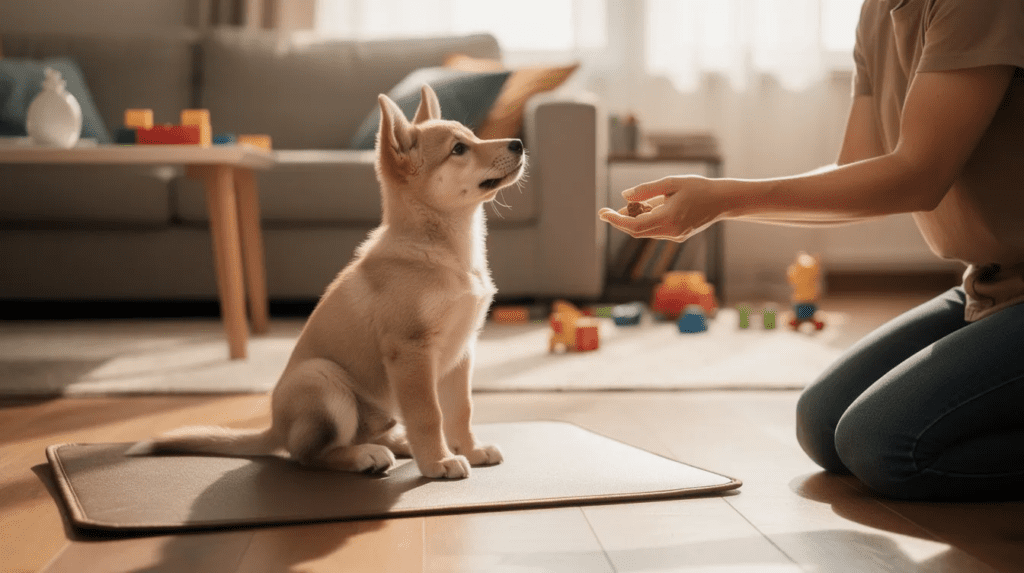
Place. Teaching your puppy to go to a specific bed or mat and stay there gives them a clear job during meals, when guests arrive, or when you need a few minutes of calm. Place can help reduce begging, counter-surfing, and door-dashing when it is practiced consistently. When a puppy learns that “place” means “lie here calmly until released,” many daily situations become easier to manage.
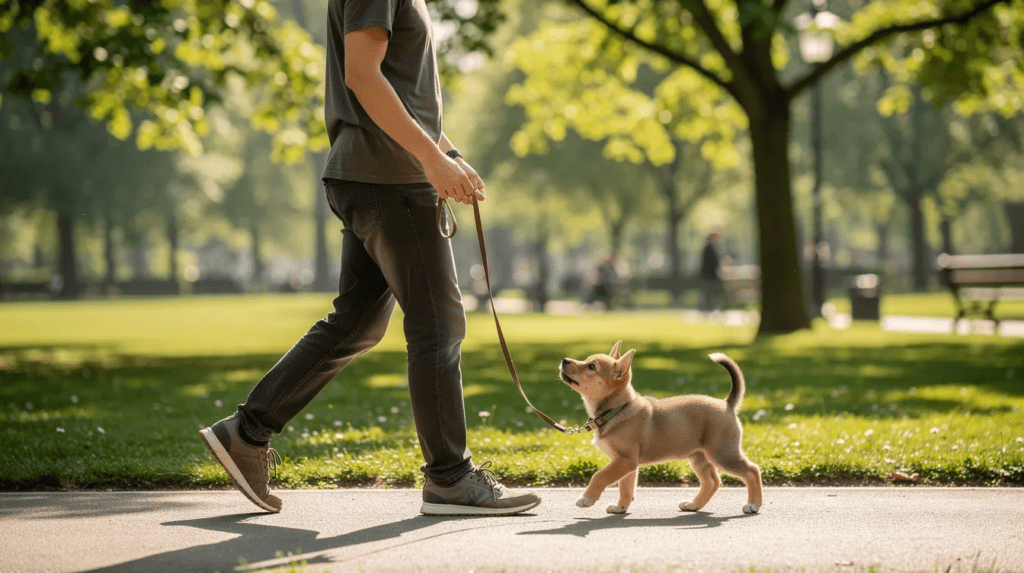
Heel and Loose-Leash Walking. This directly counters leash pulling. A puppy trained to walk at your side, paying attention to your pace and direction, does not drag you down the street. This skill takes consistent practice but pays off on every walk for the rest of the dog’s life.
Recall (Come). A reliable recall interrupts chasing, mouthiness, running away, and a dozen other behaviors. When your dog learns that “come” always means something good, you gain the ability to redirect them from trouble before it escalates. This is critical for safety, especially around other pets, children, or traffic.
Off and Leave It. These cues stop jumping, mouthing, and grabbing objects. “Off” means remove yourself from whatever you are on or touching. “Leave it” means do not pick that up, do not go there, do not engage. These are direct tools for behavior management in everyday life.
Positive reinforcement is essential for teaching desired behaviors in puppies. Use high value treats, praise, and toys to reward correct responses. Keep each training session short, around 3 to 5 minutes, and do several throughout the day. Short sessions fit easily into real life. Practice during meals, potty breaks, and walks. A few treats and clear timing are more effective than long, repetitive drills.
Redirecting unwanted actions is key in managing puppy behavior. When a puppy starts jumping, redirect to sit. When a puppy bites your hand, retraining involves stopping play when biting occurs and redirecting to toys. Over time, the puppy learns which behavior earns the reward and which one ends the fun.
Impulse control exercises, like waiting at doors, pausing before meals, and holding short stays, help puppies think before they act. A dog learns that patience, not impulsiveness, is what makes good things happen.
How to Prevent Bad Habits From Growing
Prevention is always easier than fixing a long-standing behavior problem. The tools that prevent bad habits are not complicated, but they do require consistency. Management, routine, and supervision are the foundation.
Crate Training
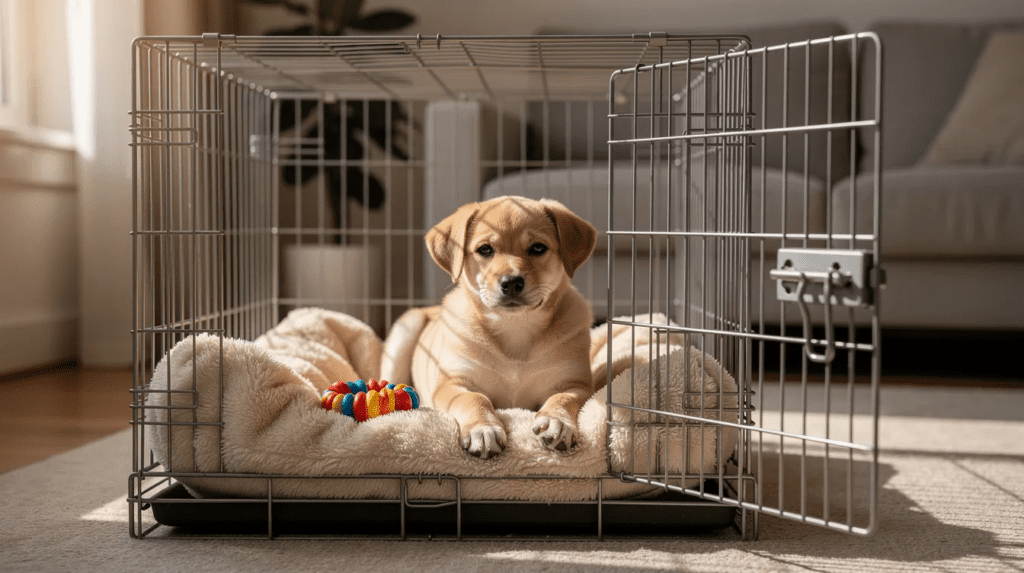
Crate training is one of the most effective tools for preventing destructive chewing, house soiling, and unsafe exploring when your puppy is unsupervised. An appropriately sized crate, introduced with treats and calm routines, gives your puppy a safe space to rest without access to things they should not have.
The crate is not a punishment. It is a management tool and a place where the puppy can feel secure. Introduce it gradually, feed meals inside it, and keep early crate sessions short and positive.
Puppies are social animals and may panic when left alone, especially if the crate is introduced too abruptly. Confinement anxiety can develop if the crate is associated with isolation or distress. Start slowly, and make the crate a place your puppy chooses to rest.
Daily Routines
Consistent wake times, potty breaks, meals, training sessions, play, and rest periods help regulate your puppy’s energy and reduce random mischief. When a puppy knows what comes next, they are less likely to fill empty time with destructive digging, barking, or chewing. Structure creates predictability, and predictability reduces a dog’s anxiety.
Active Supervision
Puppies need supervision to prevent destructive behaviors. Use baby gates, a leash indoors, or a playpen to keep your puppy where you can see them. A puppy roaming unsupervised through the house will find things to chew, corners to soil, and furniture to climb. If you cannot watch them, they should be in their crate or a puppy-safe area.
Providing Appropriate Outlets
Interactivity and mental stimulation can reduce destructive behavior. Give your puppy chew toys for teething, food puzzles for mental work, and short training games to meet their need for attention and learning. A puppy with appropriate outlets for their energy and curiosity is far less likely to redirect that energy into your couch cushions.
Calm, Timely Corrections
When your puppy does something wrong, interrupt with a short marker like “uh-uh” or “off.” Then guide them to the correct behavior and reward when they comply. Timing matters. The correction needs to happen at the moment of the behavior, not minutes later when the puppy has already moved on.
By following tips like these consistently, you build a clear communication system. The puppy learns what is expected and what is not, without confusion.
What to Avoid
Yelling, hitting, alpha rolls, or rough handling can increase fear and may worsen biting, barking, and other problem behaviors. Dogs trained with harsh or highly aversive methods often show more stress and may become less confident during training. A dog that becomes hand shy from rough corrections is harder to train, not easier.
Rough play, like wrestling or encouraging mouthing during play, teaches puppies that biting and physical intensity are acceptable. This is the opposite of what you want.
Accidental Rewards
Petting or talking to a jumping puppy rewards jumping. Giving attention to barking rewards barking. Chasing a puppy who stole a sock turns theft into a game. Instead, ignore jumping and reward four paws on the floor. Turn away from barking and reward quiet. Trade the stolen sock calmly for a treat rather than chasing.
Consistency Across Family Members
Everyone in the household must follow the same rules. If one person allows the puppy on the couch and another does not, the puppy receives mixed messages and will keep trying. Simple household rules help: the puppy must sit before being greeted, before going outside, and before meals. All family members enforce these the same way.
Addressing Separation Anxiety Early
Separation anxiety can cause destructive behavior in dogs. Signs of separation anxiety include vocalization and pacing when the owner prepares to leave or shortly after departure. Separation anxiety can develop from insufficient early socialization, and separation anxiety can lead to destructive behaviors when left alone, including chewing, scratching doors, and house soiling.
Mild separation anxiety can often be managed with gradual departures, counterconditioning, and building independence. Counterconditioning can help reduce separation anxiety in dogs by pairing your departure with something the puppy loves, like a stuffed food toy. Counterconditioning can also help change a dog’s fear response in other contexts, such as noise sensitivity or unfamiliar environments.
Dogs may develop fear or phobias after traumatic experiences, poor early exposure, or repeated stressful events. Signs of fear in dogs can include low body posture, avoidance, trembling, vocalization, or refusal to engage. If your puppy’s anxiety does not improve with consistent management, a veterinarian or veterinary behaviorist can help determine whether a medical issue, anxiety disorder, or a more targeted behavior plan is involved. In some separation anxiety cases, prescription medication may be used under veterinary guidance alongside behavior modification.
Redirected aggression occurs when dogs cannot reach their target, and they may redirect frustration toward a nearby person, other pets, or objects. This is another reason to address anxiety and frustration early rather than waiting for it to escalate.
Signs Your Puppy Needs More Training First
Some puppies do well with basic home routines, consistent rules, and daily practice. Others show early signs that they need more structured puppy training. Recognizing those signs early is the difference between a short course correction and a long, difficult process later.
Escalating Biting
If biting is getting harder, more frequent, or leaving bruises even after you have been redirecting and teaching bite inhibition, the puppy needs more help. Puppy bites that break skin consistently are not something to dismiss as a phase.
Jumping That Does Not Improve
Intense jumping that persists despite consistent sit practice and leash management suggests the puppy is not connecting the dots with the training approach being used. If jumping remains extreme even in calm settings, more structured work is needed.
Persistent Barking or Whining
Constant barking or whining that does not settle with adequate exercise, enrichment, and calm handling is a sign that something deeper may be going on. This is especially true at night or when the puppy is left alone.
Anxiety and Fear Responses
A puppy that hides, freezes, or refuses food in everyday situations may be showing fear that goes beyond normal shyness. A puppy that melts down on walks, spins, or bites the leash regularly may be struggling with anxiety, frustration, or overstimulation that needs more support. Veterinary visits can help rule out medical contributors to these behaviors.
Ongoing House Soiling
If house soiling continues despite consistent potty training routines, especially if it includes crate soiling or repeated accidents right after coming inside, this warrants closer evaluation. Pain, fear, or anxiety may be contributing factors, and your veterinarian should be part of the conversation.
Difficulty With Other Dogs
A puppy that cannot disengage from other dogs, harasses older dogs, or escalates quickly during play despite supervision and redirection needs more structured work on social skills and impulse control. Many dogs who develop serious behavior disorders around other dogs showed early signs that were dismissed as puppyhood energy.
General Overwhelm
Difficulty focusing even in low-distraction environments, ignoring basic commands that have been trained fairly, or constant conflict with children or other animals suggests the puppy has more going on than routine puppy problems.
Warning signs like these are not reasons to feel defeated. They are prompts to adjust your approach, increase structure, or reach out for guidance. Do not wait for your puppy to “grow out of it.” Many dogs do not, and the behaviors become harder to change with every passing week.
If you are unsure, a positive reinforcement trainer or a veterinary behaviorist can evaluate your puppy and help you determine whether what you are seeing is within the range of normal behavior that just needs more consistency, or whether it is something that requires early intervention and a more targeted plan. Veterinary medicine professionals can also identify medical issues, such as pain or hormonal factors, that may be contributing to problematic behaviors.
Final Thoughts on Puppy Behavior Problems
Most puppy behavior problems are normal starting points, not signs of a bad pet. Every puppy goes through phases of biting, chewing, jumping, barking, and testing boundaries. These are expected parts of development. But they do not disappear on their own, and waiting for a puppy to outgrow them usually means watching the problems get worse.
Early, consistent puppy training, clear obedience cues, crate training, and structured routines can help prevent small issues from becoming serious challenges in adult dogs. When your puppy starts learning the rules from day one, you are building a foundation that lasts. Calm corrections, patience, and consistency help shape better behavior without yelling, chaos, or leaving the puppy to figure things out alone.
Addressing puppy behavior problems early is one of the most helpful things you can do for the long-term relationship between you and your dog. The habits you build now, both yours and your puppy’s, can strongly influence whether daily life becomes easier, calmer, and more enjoyable as your puppy grows.
If you feel stuck, overwhelmed, or unsure whether your puppy’s behavior is within the normal range, consider reaching out for professional help. Structured puppy training, obedience work, and early behavior support can make a significant difference, often in a shorter time than most dog owners expect. You do not have to do this alone, and your puppy does not have to keep practicing the bad habits while you figure it out.
FAQ
Below are a few practical questions that come up frequently for puppy owners. Each answer is written for first-time owners who want clear, specific guidance.
How long should I train my puppy each day?
Several short sessions work better than one long one. Aim for 3 to 5 minutes per training session, repeated 3 to 6 times throughout the day. Practice sit, down, place, recall, and leash skills, and mix in play so training stays fun for the puppy.
Pair mini sessions with daily events. Practice sit before meals, recall during potty breaks, and heel on every walk. This way, training becomes part of your routine rather than a separate chore, and the puppy learns that obedience is just how life works.
When should I start crate training my puppy?
Crate training can begin the first day your puppy comes home. Start with short, positive sessions. Feed meals in the crate, toss a few treats inside, and let the puppy explore without closing the door at first. Gradually increase the time with the door closed, always keeping exits calm and low-key.
The crate should never be used as punishment. For age-appropriate crate time, many owners use the general guideline of about one hour per month of age plus one, but every puppy is different. Young puppies may need more frequent potty breaks depending on their size, health, stress level, and house-training progress. Overnight stretches may be longer because the puppy is sleeping, but daytime crate time should still be balanced with potty breaks, play, training, and social time.
What if my puppy cries in the crate at night?
Some crying during the first few nights is normal adjustment behavior, not a behavior problem. Keep the crate in or near your bedroom so the puppy does not feel completely isolated. Plan a scheduled late-night potty trip, take the puppy out calmly, let them relieve themselves, and return them to the crate without play or excitement. White noise from a fan or sound machine can also help the puppy settle.
If the puppy has just been taken out and you are confident they do not need to toilet, avoid letting them out every time they whine. Opening the door during whining teaches the puppy that crying always opens the crate. Wait for a brief pause in the noise, then calmly let them out if it is time. Consistency here builds calm crate behavior quickly.
How much exercise does a young puppy actually need?
Very young puppies need several short play sessions, gentle walks, and mental work rather than long, forced marches. Over-exercising a puppy can contribute to orthopedic problems and often leads to over-tired, over-stimulated behavior meltdowns that look like biting, barking, and zoomies.
Mix free play in the yard, chew toys, basic obedience practice, and scheduled rest periods. A tired puppy is not always a well-behaved puppy. An over-tired puppy acts worse, not better. Balance activity with naps, and remember that mental work, like food puzzles and short training games, is just as tiring as physical exercise.
When should I call a professional trainer instead of trying to handle it alone?
Contact a professional trainer if biting regularly breaks skin, fear or aggression toward people or other dogs appears, house training is not improving after a few consistent weeks, or you feel frustrated on a daily basis. These are not signs of failure. They are signs that your puppy needs a more structured approach than general home management can provide.
Early professional help with puppy training and behavior modification can be surprisingly brief and still change the entire course of the dog’s behavior as they grow. A qualified trainer can assess what is happening, identify gaps in your current approach, and build a plan that fits your life. The earlier you reach out, the less time and effort the process typically takes.
