
Key Takeaways
- Dogs jump on guests to get attention, and this jumping behavior is learned over time through repeated rewards like petting, talking, and eye contact.
- Learning how to stop a dog from jumping up on guests starts before the doorbell rings, with structure, obedience, and clear expectations inside the home.
- Teach sit, down, place, heel, and recall to replace jumping up on people with calm greetings and stronger impulse control.
- Yelling, pushing, or grabbing the collar can accidentally reward unwanted behavior and make the dog jump worse over time.
- Owners can practice calm greetings at home with controlled sessions and seek professional dog obedience help if the dog still struggles around guests or public distractions.
Introduction
If you have ever wondered how to stop a dog from jumping up on guests, you are not alone. It is one of the most common and frustrating challenges dog owners face, regardless of breed or age.
Dogs jump on guests because excitement and attention have become part of their greeting behavior at the door. Over time, this behavior pattern gets stronger every time the dog earns a reaction, whether that reaction is petting, laughing, or even scolding.
The goal is to prevent jumping by teaching your dog a new routine: calm greetings, reliable obedience cues, and a solid place command when people enter your home. This article walks through why dogs jump, which obedience skills help, how to practice at home, and when extra training support can make a real difference.
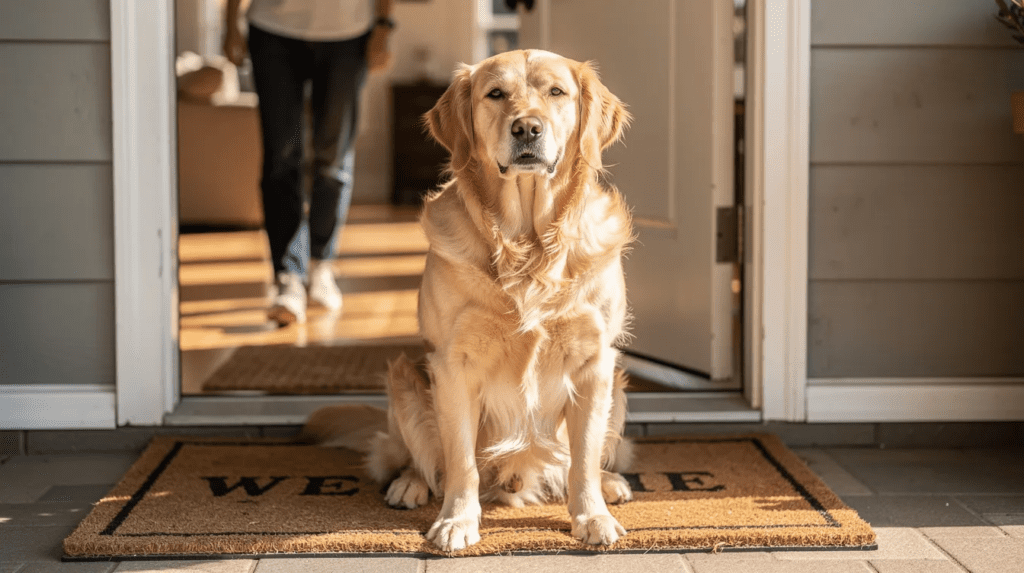
Why Dogs Jump on Guests
Jumping up on people is a normal but unwanted behavior that develops as a habit because it works. Dogs jump to get attention from people, and almost every form of human response, even negative ones, can feel like a reward.
Here is why jumping becomes a default greeting behavior:
- Dogs jump because it earns attention, touch, and eye contact. Even when people say “no” or push the dog away, the dog still receives a reaction, which can reinforce the jumping behavior.
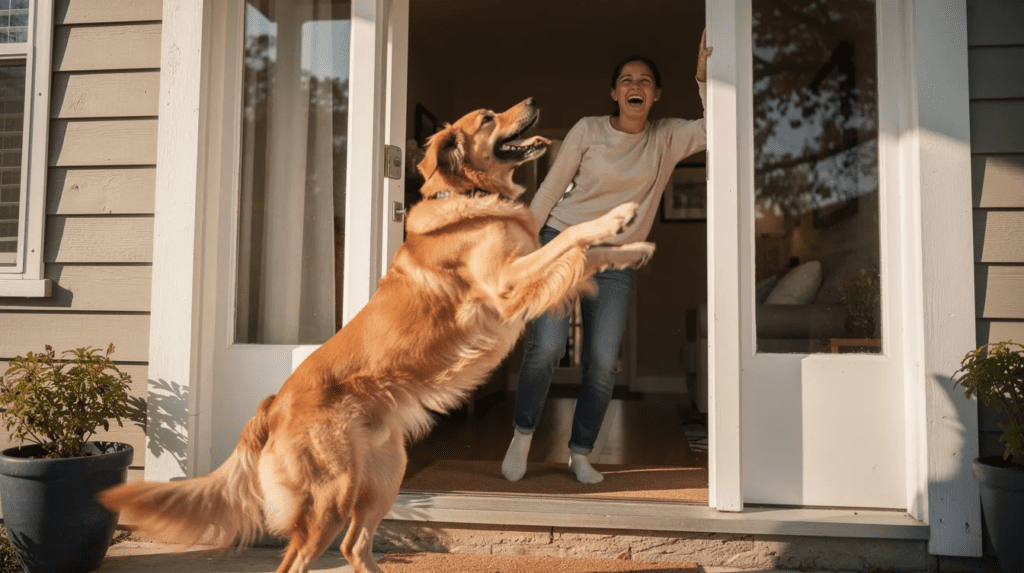
- The greeting behavior pattern usually starts with a trigger. The doorbell rings or someone gives a knock, the dog runs to the door barking, and then the dog jumps when the guest enters.
- Some guests accidentally reward dog jumping by laughing, bending over, calling the dog’s name, or petting while four paws are still off the ground. Ignoring jumping behavior helps eliminate the reward for it, but most visitors do not know this.
- Jumping can become problematic as dogs grow older. What seemed cute when your pup was small can become dangerous for children, older adults, or anyone caught off guard by a large, excited dog.
When jumping is repeatedly rewarded, it becomes the dog’s go-to way to greet people and can spill over into walks, public behavior, and interactions with new people and strangers.
How to Stop a Dog From Jumping Up on Guests
To truly stop dogs from jumping, owners must change the entire greeting routine, not just say “off” after the jump has already happened. The fix involves three things: management, teaching an alternative behavior, and consistency from every person who interacts with the dog.
Management first. Use management techniques until your dog is trained not to jump. Keep a leash on during greetings. Use baby gates to control access to the door. Place the dog in a separate room or crate before opening the door if needed. Self-rewarding jumping behavior can be curbed by temporarily isolating the dog from guests until the dog is calm. Using a leash can help control jumping when guests arrive.
Teach an alternative. Give your dog something better to do. Teach your dog to sit for greetings, because a dog in a good sit cannot also be jumping. You can also teach an alternative behavior, like retrieving a toy when visitors arrive. Reward your dog while it is sitting or keeping all four paws on the floor, before jumping happens. The “four on the floor” approach is simple: no attention until all four feet are on the ground.
Consistency is critical. Everyone in the house must follow the same rules. If one person pets the dog while it jumps and another ignores it, the dog learns that jumping works sometimes, which is enough to keep the behavior pattern alive. Ignore your dog when they jump to reduce the behavior. Avoid yelling, kneeing, or pushing the dog, because these responses often feel like exciting play and keep the unwanted behavior going. Training should be consistent across all interactions with the dog.
Obedience Skills That Support Calmer Greeting Manners
Solid dog obedience makes it easier to control greeting behavior, especially around distractions like doorbells and visitors. Here are the key skills that support calmer greetings:
- Sit. Teaching sit can replace jumping as a greeting behavior. Your dog should learn to sit automatically when a person approaches. A good sit is the foundation for proper behavior at the door. Teach sit in quiet settings first, then add distractions gradually.
- Down. A down position creates a deeper state of relaxation. Use it when guests are staying longer or when the dog is especially excited and needs to settle.
- Place command. Training dogs to go to a designated area can redirect their energy away from the door. The place command means going to a specific bed or mat and staying there until released. This gives the dog a clear job to do when guests arrive and helps prevent jumping, rushing the door, or crowding visitors.
- Heel and recall. These skills help dogs return to the owner and stay close without lunging or jumping when the door opens or when a guest enters the house.
- Impulse control. Exercises like wait, leave it, and delayed reward build a dog’s ability to stay focused under distractions. This carries over directly into greeting manners at home and in public.
How to Practice Calm Greetings at Home
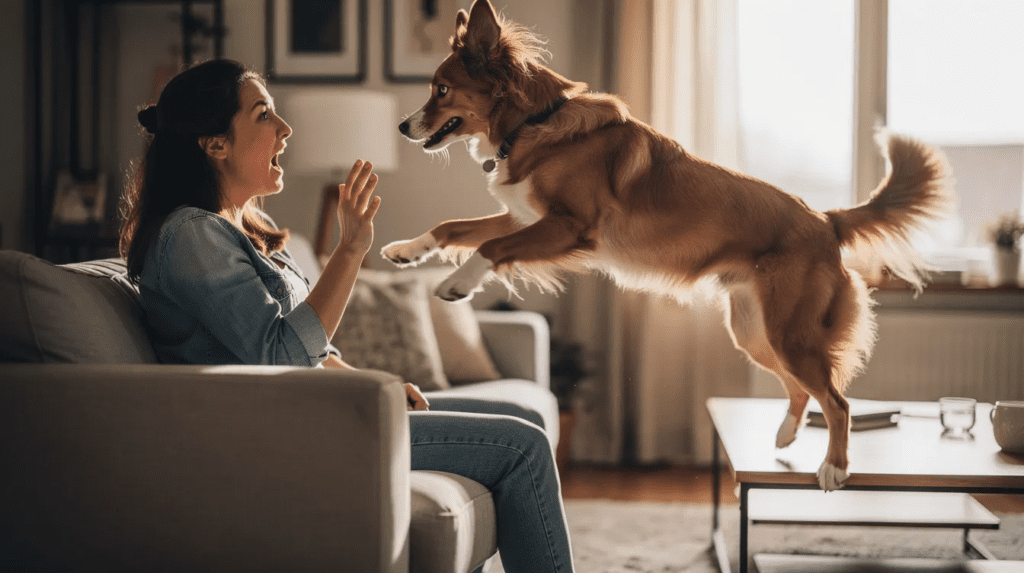
Start with low-pressure “mock visitor” sessions before expecting perfect manners with real guests. Practice proper greetings consistently to reinforce good behavior over time.
Here is how to set up effective practice:
- Put the dog on a leash with enough slack for comfort, but keep enough control to prevent jumping before it happens. Have a family member or friend play the role of the visitor. Ring the doorbell or knock, then send the dog to its place. Reward calm behavior with quiet praise or food. The leash should be used as a management tool, not as a way to jerk, pull, or let the dog hit the end of the leash.
- Open the door only when the dog is in sit, down, or on place with all four paws on the floor. No pulling, no barking. If the dog breaks, reset and repeat.
- Use treats on the floor to encourage four on the floor and prevent jumping. Utilizing high-value treats can reinforce desirable behavior during training, especially in the early stages.
- Run several short sessions per week. Have different family members or friends take turns as the “guest.” Slowly increase difficulty by adding movement, talking, or walking past the dog. Practice with controlled meetings to reinforce training.
- Gradually allow polite greetings. The dog stays sitting or in place while the guest approaches calmly. The dog only earns attention when it keeps its paws off and maintains calm behavior. Guests should ignore the dog until it calms down to discourage jumping behavior.
- Never practice uncontrolled greetings where the dog rehearses door rushing, barking, and jumping. Every time the dog successfully jumps, it makes the habit worse. Manage the environment so that good choices are the only option.
Signs Your Dog Needs More Training First
Not every dog is ready to greet guests right away. Some dogs need a stronger dog obedience foundation before real-world greeting practice will work.
Watch for these signs:
- Intense barking at every sound, lunging toward the door, or ignoring basic sit or down cues, even in calm environments.
- Dogs that mouth, nip, or grab clothing when excited. This makes jumping on guests unsafe, especially around children, older adults, or anyone unfamiliar with the dog.
- If a dog cannot hold a sit or place command for at least one to two minutes without guests present, it is usually too early to attempt real-world greetings.
- The dog shows fear-based reactions, stiff body language, or snap-like behavior when people approach the door.
If any of these apply, spend extra time strengthening obedience, leash manners, and impulse control in quiet environments before moving to complicated door-greeting situations. Consistent training is essential to stop jumping behavior, and building the foundation properly saves time in the long run.
Final Thoughts
Understanding how to stop a dog from jumping up on guests comes down to changing the entire greeting behavior pattern, not just reacting after the jump. Dogs jump because it has worked for attention, and they will keep doing it until a better option is taught and consistently reinforced.
Build calmer greeting manners by removing rewards for jumping and reinforcing sit, down, and place instead. Consistent structure, calm handling, and regular practice sessions can gradually turn jumping behavior into calmer greetings at the front door and beyond.
If you feel stuck with greeting manners, impulse control, or distractions around guests and real-world environments, professional dog obedience training can help improve progress. A qualified dog trainer can help you and your dog build clearer communication, stronger obedience, and more reliable behavior around distractions. Reaching out for a consultation is a practical next step when home practice is not producing the results you need.
FAQ
These FAQs address common questions not fully covered in the main article.
How long does it usually take to teach a dog to stop jumping on guests?
Many dogs show improvement once the household becomes consistent, but the timeline varies. Some dogs respond quickly to daily practice, while dogs with a longer history of jumping, higher excitement levels, or inconsistent guest interactions may need more time. Setbacks are normal when changing a long-term behavior pattern, so owners should focus on steady progress instead of expecting instant results.
What should I do if guests ignore my rules and pet my dog while it jumps?
Keep the dog on a leash or on place until guests are seated. Calmly explain that the dog is in training and can only be greeted when all four paws are on the floor or when sitting. If a guest cannot follow the same rules, manage the situation by keeping the dog in a separate room until the greeting energy settles.
Is it okay to let my dog jump on me but not on other people?
Most dogs cannot reliably tell the difference between people who allow jumping and people who do not. Allowing any jumping usually makes it harder to prevent jumping up on people in other situations. For the fastest and most reliable results, encourage all family members and friends to follow the same standard.
Can older dogs learn to stop jumping, or is this just a puppy problem?
Dogs of any age can learn new greeting behavior patterns with structure, consistent rules, and practice. Older habits may take longer to change, but they are not permanent. A puppy with light jumping history may change faster, but even senior dogs respond well to clear obedience work and regular repetition.
Should I use special equipment, like a harness or head collar, to manage jumping?
A properly handled leash can help prevent jumping while you teach sit, place, or four paws on the floor. Use equipment that fits correctly and that you understand how to handle safely. Because the training tools included vary by program, owners should follow the trainer’s instructions for their selected package rather than relying on equipment alone.
